
Liquor execs look to recapture the spirit
BizWest CEO Roundtable
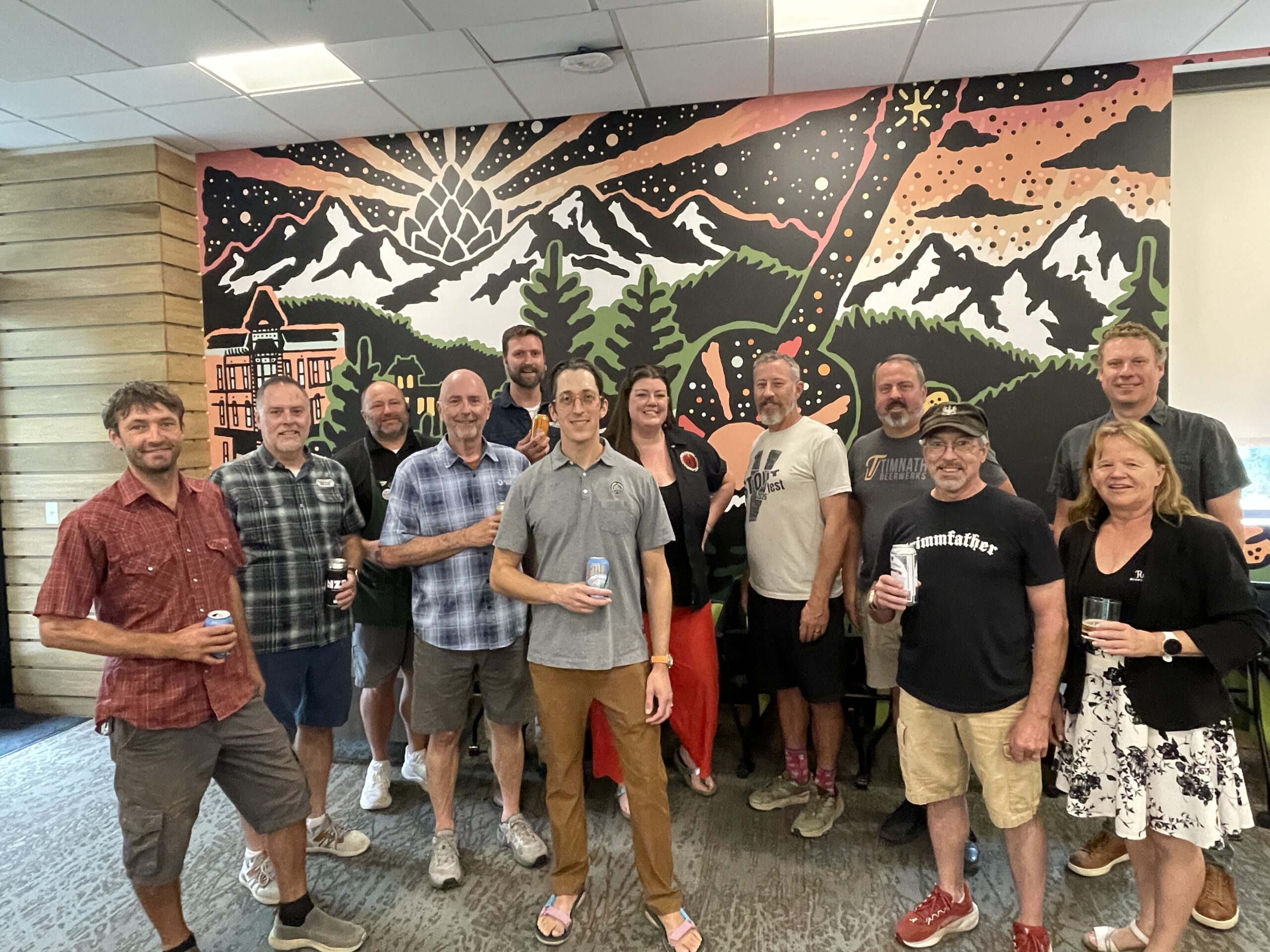
FORT COLLINS — They face challenges with distributors, rising prices and competition from grocery stores. But a much more upbeat group of liquor executives than in previous years gathered in Fort Collins Tuesday for a BizWest CEO Roundtable on the brewing industry and seemed most interested in putting more fun back into the customer experience.
The focus, said Josh Grenz, owner of Verboten Brewing, should be on “recapturing the excitement and energy that were there before COVID, not only within ourselves as brewers and business owners but customers.”
Part of that, the executives said, is adding experiences.
“We finally got some traction for our taproom by adding a couple of events,” said Cy Bevenger, owner of Timnath Beerwerks, a strategy echoed by Tatum Cochran, general manager of Horse & Dragon Brewing Co,.
“We’ve added a couple of additional events,” she said. “Nothing crazy, and two events are not a huge revenue stream, but it’s a community space, and we’re seeing a lot of engagement with that, which is awesome.
Both Cochran and Frezi Bouckaert, owner of Purpose Brewing, said their taprooms got a boost from the recent World Cup men’s soccer tournament, with Bouckaert calling the crowds the matches drew “a good thing” and Cochran adding that “I wish it happened every year.”
Even though Grenz admitted that, “some days it’s damned hard to stay excited with the grind,” he added that to keep a brewpub vibrant, “I think it starts with me, it starts with management, it starts with your employees, and that’s got to trickle down to your customers, your retailers. It’s got to be up to us to create that excitement, and hopefully it carries down to the community and customers.
“And part of it’s being open to ideas,” Grenz said. “I rely on my team quite a bit. I don’t make decisions on my own. New ideas are OK and I always try to hire people smarter than me.”
Even more than experience in a new hire, he said, is if “they’re excited about the industry.”
Grenz noted that his Loveland operation “has been flat the last couple years,” largely because of downtown street construction, “but we’re up 10% this year.”
Joel Gustafson, founder & head distiller at Seed & Spirit Distilling has only recently opened a tasting room, but found an answer to enhance customer engagement by needing to fill a large space.
“For us, it takes a maturation period to get our products ready for market, so we weren’t really eager to jump into that tasting-room space,” he said. “We had some downtown visions (in Fort Collins), but ultimately Funkwerks going out of business (at 1900 E. Lincoln Ave.) was a great opportunity for us.”
To fill the extra space Funkwerks had, Gustafson said, “we leaned more into elevated food, like oysters and tartare. It’s a fine-dining experience on a small distillery level, knowing that our back-end profit margins would come from our ability to produce alcohol at much lower rates. Therefore, our per-shot revenue would be greater than if we just were to be selling alcohol and making up cocktails.”
Gustafson said he’ll hold an opening party in a month or a month and a half.
“As everyone who runs a tasting room knows,” he said, “once you go forward with that, you’ve got to do it right or you might as well stop doing what you’re doing.”
Newcomers Jack Lackey and his brother, Brian, are learning as they go as their Konstruct Brewing enters its third year.
“We’re a neighborhood brewpub, so we have food, wine and liquor on top of beer,” Lackey said. “As a neighborhood destination, we really built a loyal following in the past two years, and we’re up 16% year over year through July.”
The downside of that, he said, is that his cost of sales is up 13%, “but beer sales are up 12%, and I will take a double-digit increase in any sector.”
He said the number of sales at his pub is up, “but the average ticket is down.
“I keep telling my team, ‘If we could just sell one more $8 beer per ticket, it would be life-changing for our brewpub.”
So far, the brothers “aren’t paying ourselves yet,” Lackey said, “so is it really a profit if you’re not paying yourselves or getting a return on your investment? No, but on paper we have a profit.”
Cochran noted “a little bit of a leveling out” in customer spending. “People are being a little more choosy about where they spend their dollars,” she said.
For Eli Kolodny, technical director at Odell Brewing Co., remaining relevant means “changing the programming out, adding new products, adding new blood.
“We feel like we’ve stabilized” since the pandemic, he said, and now ‘we’re trying to focus on where we can have an impact.”
Grimm Brothers’ sales are “up 35% year over year,’ said co-owner Guy McConnell, “but we’ve ramped down production and stopped canning.”
Distribution of the beers and spirits they make has been challenging lately, the executives said, especially in the run-up to Dallas-based Southern Glazer’s Wine & Spirits’ closing last week on the acquisition of nearly all the assets of Eagle Rock Distributing Co.’s Colorado operations, including the $64.3 million purchase of Eagle Rock’s facility in Loveland.
“The distribution side right now is a little more volatile than the supplier or manufacturer side,” said Neil Fisher, CEO of WeldWerks Brewing Co. “Eagle Rock is another big shift, and we’re all wondering what’s going to happen there.”
“We were with Eagle Rock initially,” Gustafson added. “We went through that whole transition period, and it was rough. Eagle Rock basically folded about 2½ months ago, and our numbers were nonexistent with them.
“Luckily we’re now in with New Belgium’s Brewery Direct Services,” he said. “We’re the first and only spirit they’ve brought in, and we have a great relationship with them. They’ve really carried the momentum for us, and the intellectual knowledge they share with us is vast.”
Gustafson said they’re now working with Southern Glazer’s.
“Our distributor is difficult, but I think they all are,” Cochran said,
“It’s very difficult to predict,” she said. “They’ll have a really down trend on a specific brand, and then one month they’ll say, ‘We want three times as much as we normally go through,’ and we’re like,‘Well, it doesn’t come out of thin air.’”
Engaging with the distributors is key, she said.
“We always want them to be representing products that we know are going to stand up to their timeframe, because their timeframe is different from our timeframe,” she said. “Their margins are a lot lower. But narrowing the focus of the portfolio we give them has helped.”
The retail liquor front suffered a double whammy from the COVID pandemic and new state laws that allowed grocery stores to sell beer and wine. Still, however, said Mat Dinsmore, who owns Wilbur’s Total Beverage in Fort Collins and Wyatt’s Wet Goods in Longmont, “we’re starting to approach an equilibrium.
“The last few years, it feels like it’s been a freefall. All our costs are going up. The costs of distribution, the cost of labor. How do you keep this thing in the black? Because once it goes red, we’re all going to have a problem.”
Before the grocers’ competition, he said, “we traditionally were 50% wine, 25% beer and 25% spirits. With wine in grocery stores, we’re now 45% spirits, 35% wine and less than 20% beer. As stores, we’re down about 27% pre-COVID numbers.
“That’s the kicker,” he said. “When you put beer in 3,000 more accounts, it spreads it out and hurts pretty much everybody in this room. Wine, we’ve seen it commoditized.
“Wilbur’s is off 2% year over year, and Wyatt’s a little more,” Dinsmore said. “We were up in January; that was solely because the Broncos were in the playoffs, but we’ll take the win.”
Ready-to-drink canned cocktails “seem to be a bright spot,” he said, “but we’re starting to see it’s kind of cannibalizing spirits drinkers. Whiskey’s a problem now because there’s a glut of whiskey out there. But at least that doesn’t go bad, which is a good thing.”
What will save the industry overall, Gustafson said, is collaboration and innovation.
“It’s a collaborative town. It’s a collaborative industry,” he said. “It’s a hell of a good time when you have a good time.
“Owning a business is not for the faint of heart, and It’s never going to be,” Gustafson said, “so I think you embrace the challenges. Got an idea? Throw it against the wall, see what sticks, follow what you love, and dive into what’s making you money.”
Also attending the Roundtable were event sponsors Drew Mattox of Plante Moran and Travis Thornton of host Elevations Credit Union. Berg Hill Greenleaf Ruscitti LLP also sponsors BizWest CEO Roundtables.
They face challenges with distributors, rising prices and competition from grocery stores. But a much more upbeat group of liquor executives than in previous years gathered in Fort Collins Tuesday for a BizWest CEO Roundtable on the brewing industry and seemed most interested in putting more fun back into the customer experience.

Related Posts
-
DENVER — Spirit Airlines will cease flying to and from Denver International Airport in early…
-
The City of Boulder will conduct a Special Event Liquor Permit Workshop for nonprofit organizations,…
-

Weld County officials won't renew the liquor license for El Centenario nightclub.
-
An employee of a Greeley assisted-living center posts in a Facebook group, seeking donations of…
