
30 years that remade Northern Colorado
Celebrating 30 years of Northern Colorado Business Report and BizWest business coverage
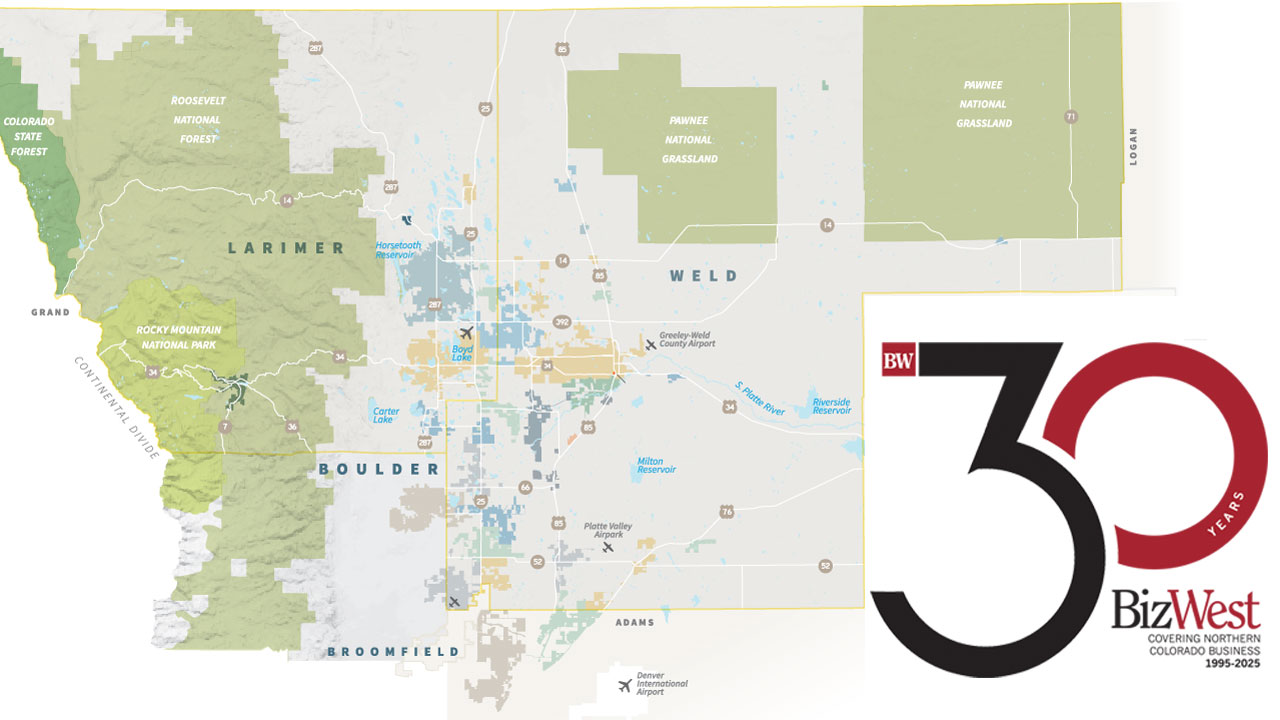
Northern Colorado’s transformation over the past three decades might seem familiar to those who have witnessed explosive growth in the Sunbelt: rapid population growth, new highway construction and sprawling subdivisions.
But the growth of Larimer and Weld counties tells its own, distinct tale, one that has seen the emergence of advanced manufacturing, traditional and renewable energy, agribusiness and ag tech, life sciences, brewing and other sectors, all nurtured by a robust university system.
Once-sleepy farming towns have exploded in growth, making the region one of the fastest-growing in the state and — at times — the nation.
Back in 1995, Larimer County’s population stood at 216,976, with Weld County recording 147,998 residents, according to the U.S. Census Bureau.
Fast forward three decades, and the population has doubled. Weld County totaled 369,745 residents in 2024, compared with 360,216 the prior year. Weld County ranks as the eighth-most-populous county in the state, but is right on the heels of Larimer County, with an estimated 2024 population of 374,574, up 0.8% from 371,530. Larimer added 3,044 new residents last year.
Weld County added more new residents than any other Colorado county from July 1, 2023, to July 1, 2024, beating out Douglas County.
Weld added 9,529 new residents during that 12-month span, compared with 8,854 for No. 2 Douglas County. Weld’’s population grew at an annual rate of 2.6% — No. 1 among Colorado counties with 1,000 or more population, and No. 2 overall, behind only tiny San Juan County, which recorded 3% growth.
More regional growth is anticipated, particularly in Weld County, where abundant land has fed a “drive ‘til you qualify” mentality, with would-be homebuyers fleeing more-expensive communities in Boulder County or the Denver metropolitan area.
Small towns east of Interstate 25 have seen enormous growth, with farmland giving way to subdivisions. Communities in Weld County have consistently ranked near the top in percentage population growth in the past decade, from Timnath to Johnstown, Severance to Firestone. On and on.
West of I-25, Erie, which straddles Boulder and Weld counties, ranked No. 15 nationwide in terms of one-year population percentage growth from July 1, 2023, to July 1, 2024, at 9.2%, growing to 38,594 residents. Robust growth has also been seen in Berthoud.
Demographics have shifted, too. Larimer County remains older and more college-educated than Colorado as a whole, perhaps reflecting the gravitational pull of Colorado State University, federal labs and a significant base of tech companies.
Weld County enjoys a younger population and a much larger Latino population than the state overall, with an economy rooted in agriculture and energy, but with advances in life sciences, aerospace and clean tech.
As the population and industry have grown, so, too, has demand for transportation. Interstate 25 — once dubbed Northern Colorado’s “Main Street” by The Group Real Estate founding partner Larry Kendall — has seen soaring demand.
Years of congestion prompted a concerted effort by business, civic and governmental leaders to “Fix I-25 North,” leading to the ongoing expansion project to widen the interstate from Fort Collins to the Mead exit at Colorado Highway 66.
Transit options have expanded in recent decades. Fort Collins launched MAX fixed-guideway bus rapid transit service along the Mason Street corridor in 2014, anchoring redevelopment around CSU. Bustang provides connections to the Denver area and beyond, and FLEX bus routes connect Fort Collins with Loveland, Longmont and Boulder.
Front Range Passenger Rail could provide rail service from Fort Collins through Loveland and Longmont to Boulder, Denver and points farther south, but funding mechanisms remain unclear for that project.
Overall economic output has soared in the past decades. Larimer County recorded real gross domestic product of $22 billion in 2023, double the $11 billion recorded in 2001. Weld County’s GDP totaled $22.7 billion in 2023, up 244% from $6.6 billion in 2001.
What’s behind those numbers? In Larimer County, a diverse mix of industries and major employers feeds economic growth, with semiconductor design, engineering, instruments and software companies mixing with consumer-products companies such as Otter Products. Brewers, too, remain a significant employer, from Anheuser-Busch to New Belgium Brewing to Odell Brewing Co. and many others.
In Weld County, JBS USA remains the dominant agricultural employer, alongside traditional energy companies and clean-tech manufacturers such as Vestas Wind Systems. The county also enjoys a growing life-sciences sector, with Agilent Technologies expanding its presence in Frederick, and aerospace, with Ursa Major Technologies Inc. expanding in Berthoud.
But huge growth has come from traditional energy. Hydraulic fracturing has seen oil production soar in Weld County, with production climbing from 8.49 million barrels in 1995 to almost 140 million barrels in 2024, according to the Colorado Energy & Carbon Management Commission.
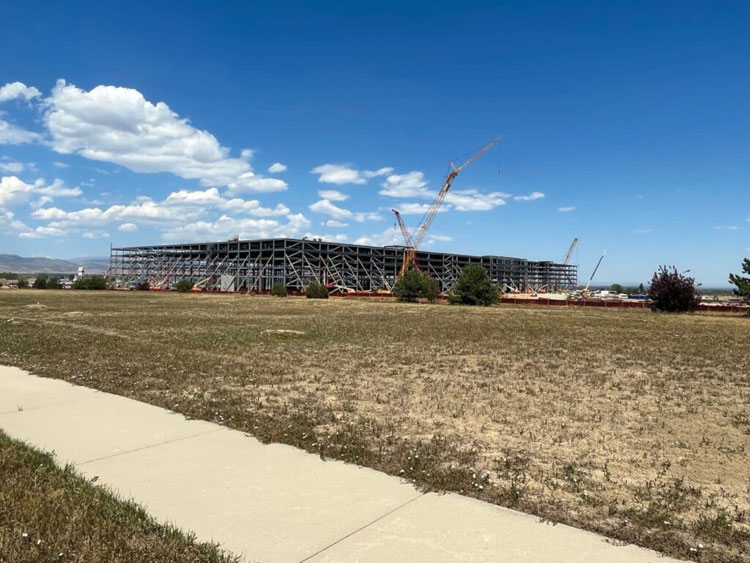
Recent years have also seen a proliferation of distribution centers, with millions of square feet of warehouse and distribution space built along the I-25 corridor. The biggest such project is Amazon’s 3.5-million-square-foot facility at 6425 Byrd Drive in Loveland. Originally scheduled to open in 2025, the project now is slated to open in late 2026.
Other distribution centers have opened in Johnstown, Mead and other communities.
Growth in Northern Colorado has not stopped at the factory gates or loading docks, however. Downtowns from Fort Collins to Greeley, Loveland and Windsor have weathered economic downturns and shifting consumer habits, with ongoing revitalization efforts that have seen new housing, retail, hotels, restaurants, entertainment and employers.
Retail has shifted from indoor malls to lifestyle centers and neighborhood shopping centers. Buc-ee’s and Scheels, both in Johnstown, attract shoppers from multiple states, and more such destination shopping is coming, such as Bass Pro Shops, under construction in Loveland.
Through it all, the region has struggled to keep up with demand for housing. Despite new developments such as Montava and Bloom in Fort Collins, and master-planned communities in Windsor, Johnstown and other communities, developers, home builders and governments have not been able to build enough housing for new residents.
That shortage — mirrored elsewhere along the Front Range and around the country — has led to surging home prices, with July’s median single-family sales price reaching $595,000 in Fort Collins, $435,000 in Greeley-Evans, and $580,000 in Loveland-Berthoud, according to Information and Real Estate Services Inc., the Loveland-based multiple listing service.
What’s to come in the years ahead? Larimer and Weld counties are expected to continue robust population growth, creating a need for additional housing, retail, restaurant, health care, schools and entertainment options.
One major project on the table is Cascadia, a mixed-use development in Greeley that would largely surround the $1.1 billion Catalyst project, a new arena, hotel and water park. The arena would provide a new home for the Colorado Eagles minor-league hockey team. But the project has faced challenges, including petition drives and lawsuits seeking to overturn approvals by the city council.
Both Northern Colorado Regional Airport — co-owned by Fort Collins and Loveland — and Greeley-Weld County Airport have unveiled extensive expansion plans and are seeking regularly scheduled passenger service.
And what one observer deemed the biggest economic-development project in Colorado is planned in Lochbuie, BNSF Railway Co.’s massive intermodal facility and logistics park. The project encompasses 2,700 acres along Interstate 76, with up to 20 million square feet of industrial-warehouse and distribution space possible.
Not too far away, Bandimere Speedway, operating through a nonprofit, has begun to acquire land for a new auto racing facility in Hudson, replacing the Morrison complex that was closed in 2023.
Overall, a balance of industries, available land, natural beauty, quality of life and other amenities mean that the next three decades in Northern Colorado likely will look a lot like the last three.
Mountain vistas will still be to the west. Growth will still shift east. New residents will come from the south. And the trends will still point north.
See more 30th Anniversary stories.
Wood: Fond memories of folding chairs in an attic
30 years that remade Northern Colorado
Suburban, online retail overtakes malls
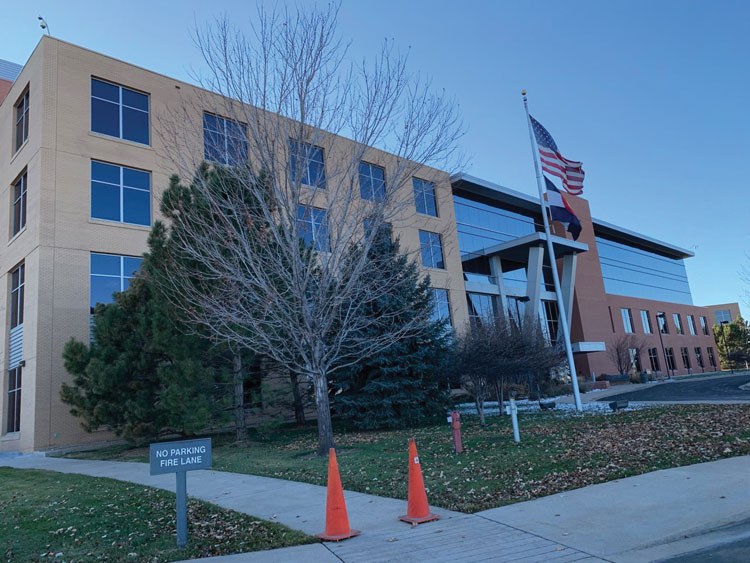
A picture in time: Kodak’s rise and fall in Windsor
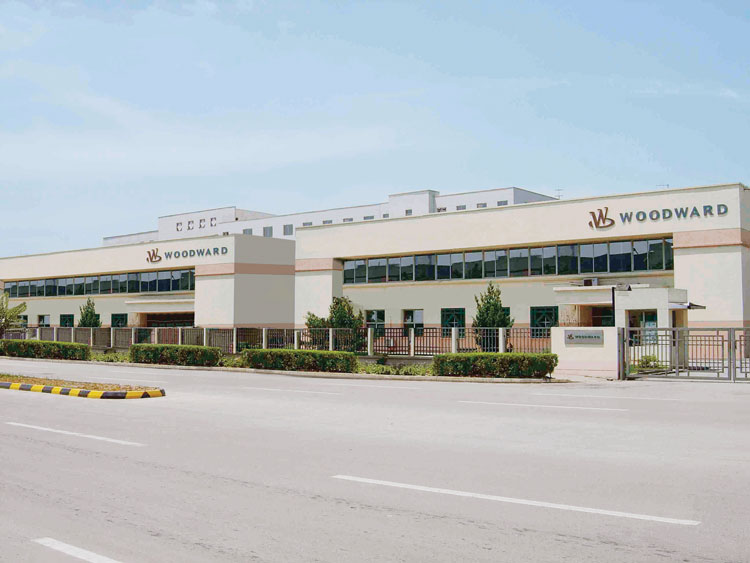
Hewlett-Packard: A tale of three cities
Can Colorado’s beer scene craft a comeback?
Weld County continues to dominate state’s oil and gas scene

Related Posts
-

Weld County’s economy grew at a 6.5% rate in 2024, seventh-best in Colorado.
-

Colorado’s seasonally adjusted unemployment rate was flat at 3.9% from March to April, according to…
-

DENVER — Colorado bankruptcy filings increased 12% in July compared with the prior year, continuing…
-

Colorado’s seasonally adjusted unemployment rate was 4.8% in May, flat from the previous month, according…
