
Construction execs navigate regulations, costs, labor pains
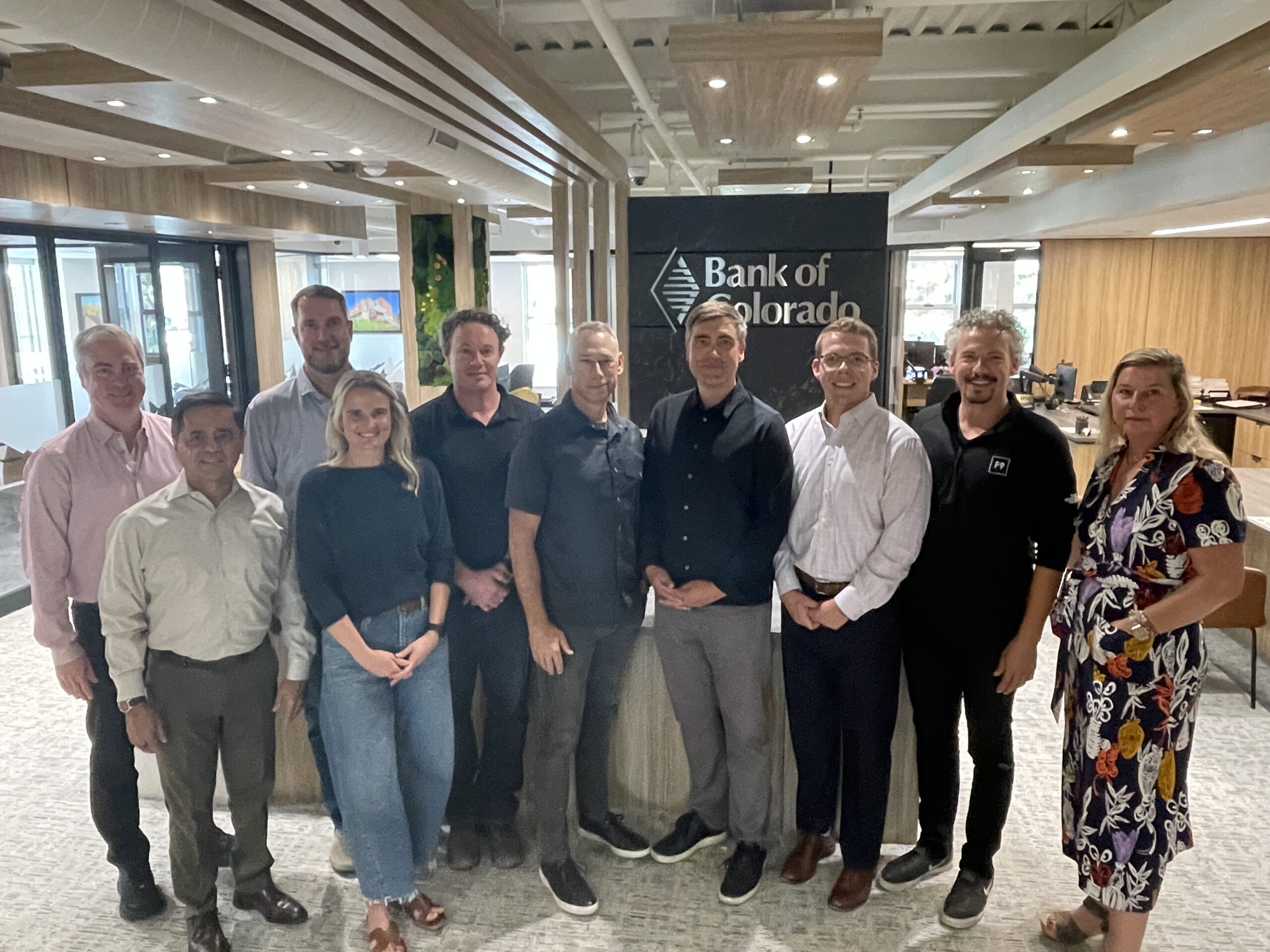
BOULDER — Construction executives who attended a BizWest CEO Roundtable this week say obstructive regulations, tariff-escalated costs and labor shortages combine to make their industry challenging in the Boulder Valley.
“If you see the industry as a blend, you see a small increase year over year, but if you actually break it down into the individual verticals, it’s the most uneven I’ve seen it in a long time,” said Alex Koenigseker, Sun Construction’s chief revenue officer, during Tuesday’s discussion in Boulder.
“Healthcare and data centers are going up like crazy, but then you’re getting pulled down by retail and multifamily that aren’t penciling out or aren’t going to development,” he said. “So you’re either doing really well in the verticals you’re at or you’re struggling and trying to pivot into something that you might not be familiar with or have less experience in.”
That’s been the experience for Brandon David, president of Skycastle Construction. He said mounting costs and the regulation climate have led his firm to focus on “remodels, which we don’t often dabble in. They’ve not always been our business model.”
Added Bill Campie, president of DTJ Design, “We were thinking multi-family was going to be there, and then it isn’t.”
An overriding problem, said Scott Rodwin, owner of Rodwin Architecture, a sister company of Skycastle, is that “there’s a general consensus that we’re not getting the results we want.
“We know as a society we want more attainable housing, and yet somehow we’re blocking every attainable-housing project that comes along. There’s a mechanism of policy and rules that makes building the things we want difficult, so we wind up getting luxury condos and luxury student housing because it’s the only thing that can financially support the risk involved.”
That means there’s a “backlog in multi-family projects right now,” said Brady Burke, owner and managing director of Burke Builders Inc. “Cost is a challenge across the board for all of us.”
One of the obstacles cited by Lance Cayko, co-owner of F9 Productions Inc., is Boulder County’s temporary residential development moratorium, which paused processing for applications exceeding the median residential floor area of a defined neighborhood rather than a fixed universal square-footage cap.
“We really fought hard against the moratorium, but Boulder County has just killed, effectively, a lot of houses people like us and Brandon at Skycastle rely on to design and then build,” Cayko said. “So now we’ve pivoted because of that regulation to leaning into additions and remodels throughout Boulder County and Colorado. That’s been our saving grace.”
Cayko said there seems to be “no light at the end of the tunnel for multi-family. Even in the public sector, it’s tough to get multifamily going. Everybody says they want affordable housing, everybody’s a YIMBY until they’re a NIMBY with that sort of thing.”
Danica Powell, owner and founder of Trestle Strategy Group, said Boulder’s housing goals are stymied by fees that penalize the upper floors of some projects. But for Longmont, the problem is just the opposite.
“Boulder and Longmont are an interesting contrast,” Cayko said. “In Longmont we did the opposite. We didn’t penalize the fourth and fifth stories, and now it’s called ‘Apartmont.’ Now, the citizens are going, ‘Whoa, maybe we overplayed our hand, and there’s too many apartments going up.’”
In response, he said, “the governments do seem to want to do the right thing right now.” Rodwin noted a “concerted and robust effort by the state to make housing easier and cheaper to build,” and Powell agreed that “there’s a lot coming down from the state that’s good,” but added that the stumbling block is “what the communities will do to adopt it.
“I know communities like Broomfield are going to fight it every step of the way,” she said. “They do not like the state’s heavy hand. Boulder thinks we’ve already done all the things; they say we don’t think we need to make all the changes because we’re already there.”
However, Rodwin cautioned that “this small chipping away is not having a substantial impact in improving the amount of time or the decrease in risk. Even when we think a project has checked every box, there’s still an endless number of boxes and hoops to jump through.”
How to improve that situation?
“The premise of abundance,” Rodwin said, “is that we start with the result that we want, and say, ‘All right, we want attainable housing. We want high-speed rail. We want vibrant communities. How do we write rules and code and process that make that the natural and easy result?’”
A tight supply of labor and the federal government’s erratic recent tariff policies also present hurdles for area builders, they said.
“The labor pool is a big challenge,” David said, “trying to find skilled labor and being able to maintain our schedules because of that because they’re being pulled in so many directions.”
Some builders from far-flung cities that have projects in the Boulder Valley have their own solution.
“These companies come in from out of town and self-perform,” Powell said. “They bring their crews with them.”
Because the workforce is aging and housing costs in Colorado exceed the national average, said Burke, “I think it’s great that we’re bringing in resources from other locations in the country.”
He noted that Colorado is “roughly 40,000 under what’s required for a labor force” in the state. There are apprenticeship programs, and I think that will make a big difference, but it’s going to take a lot of time.”
The developers working with DTJ Design “are self-performing right now,” Campie said, “and I think it’s given them an advantage because they feel like they have a lot more control over unknowns in terms of cost. That’s provided more confidence.”
But is that advantage worth it? Larry Myers, an attorney with event co-sponsor Berg Hill Greenleaf Ruscitti who often deals with the construction industry, isn’t so sure.
“The cost-benefit analysis is not all roses,” Myers said. “You do have more control, but when things go wrong and all the control is in your court, you eat all of the exposure.”
Besides, he added, “I don’t even want to know what it costs to bring a workforce in from Atlanta to come stay at hotels in Boulder County and build. I’m going to go out on a limb and say (that decision) couldn’t have been cost-driven. It must have been schedule-driven because there’s no way that’s cheaper.”
Costs of all sorts are top of mind for the builders.
“Fuel kind of got us this year,” Burke said, as well as increases in “year-over-year materials costs somewhere in the 6% to 7% range. That’s a pretty big jump because we were pretty flat for a number of years after a massive spike in 2021 and 2022.”
Additionally, he said, “we don’t know what these new tariffs are going to bring us.”
Because of the Trump administration’s mounting tariffs, Campie said, “we’ve had to redesign buildings to change sizing on framing because we couldn’t get the steel, so we had to reprice based on U.S. providers.”
In such a volatile situation, Myers noted, “there’s no way to totally protect yourself. If you barely pencil out, then you’re up a creek.”
At David’s company, he said, “we still offer a fixed price, which says that we’re OK managing that risk, but we do have to communicate with our trades (and) with our vendors to say, ‘This is the contract we’re entering into.’”
He also lets customers know that they’re responsible for much of what a project costs, and that means “putting the client in the driver’s seat.
“They need to understand that the decisions they’re making are not driven by design or driven by construction costs but driven by their decisions,” David said. “We have to reiterate that over and over. It’s fair and balanced for everybody to share the risk.”
Also attending the Roundtable were representatives of the event sponsors: Aaron Spear and Bonifacio “Boni” Sandoval of host sponsor Bank of Colorado, and Ashley Legan of the Berg Hill Greenleaf Ruscitti law firm. Accounting firm Plante Moran also sponsors the event.
Construction executives who attended a BizWest CEO Roundtable this week say obstructive regulations, tariff-escalated costs and labor shortages combine to make their industry challenging in the Boulder Valley.

Related Posts
-
Built NoCo, in partnership with Hartford Homes, Alpine Lumber, NoCo HBA and Careers in Construction…
-

Mike Hager has joined Pinkard Construction Co., a Lakewood-based construction manager, general contractor and design-builder,…
-
GE Johnson Construction Co. will rebrand as DPR Construction Co., four years after its acquisition…
-

The ownership of a larger Fort Morgan construction company has purchased the former Hexcel building…
