
Healthy-food execs see opportunity amid chaos
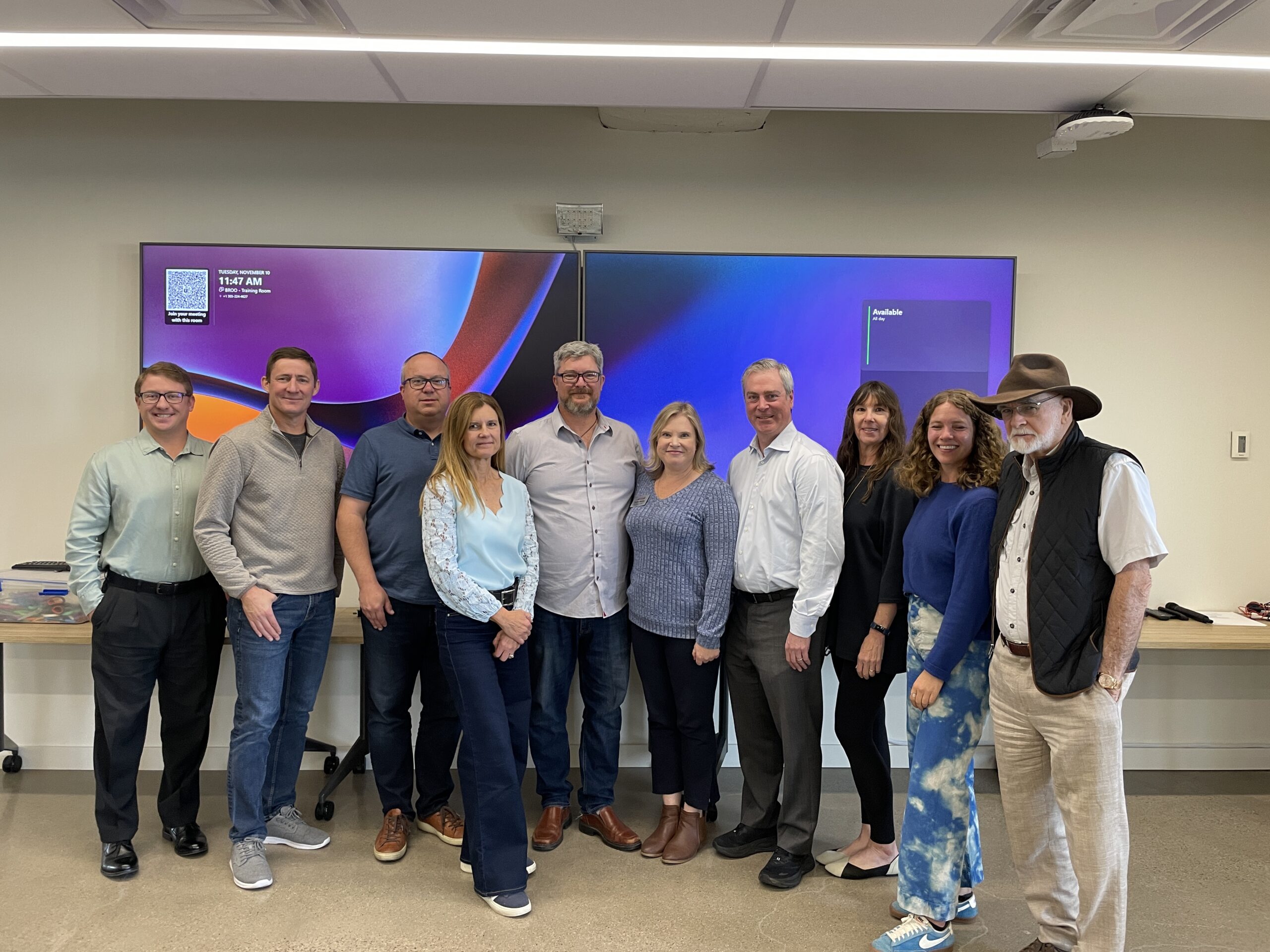
BROOMFIELD — Boulder may no longer be the singular mecca of the natural and organic food industry, and economic challenges remain daunting, but industry executives at a BizWest CEO Roundtable still see advantages and opportunities.
“It’s been six years of chaos, from COVID to supply-chain shocks to inflation to tariffs. Just continued business instability,” acknowledged Sweet Loren’s president Doug Radi, a 23-year veteran in the natural products industry, during the event hosted Tuesday by the Plante Moran accounting firm.
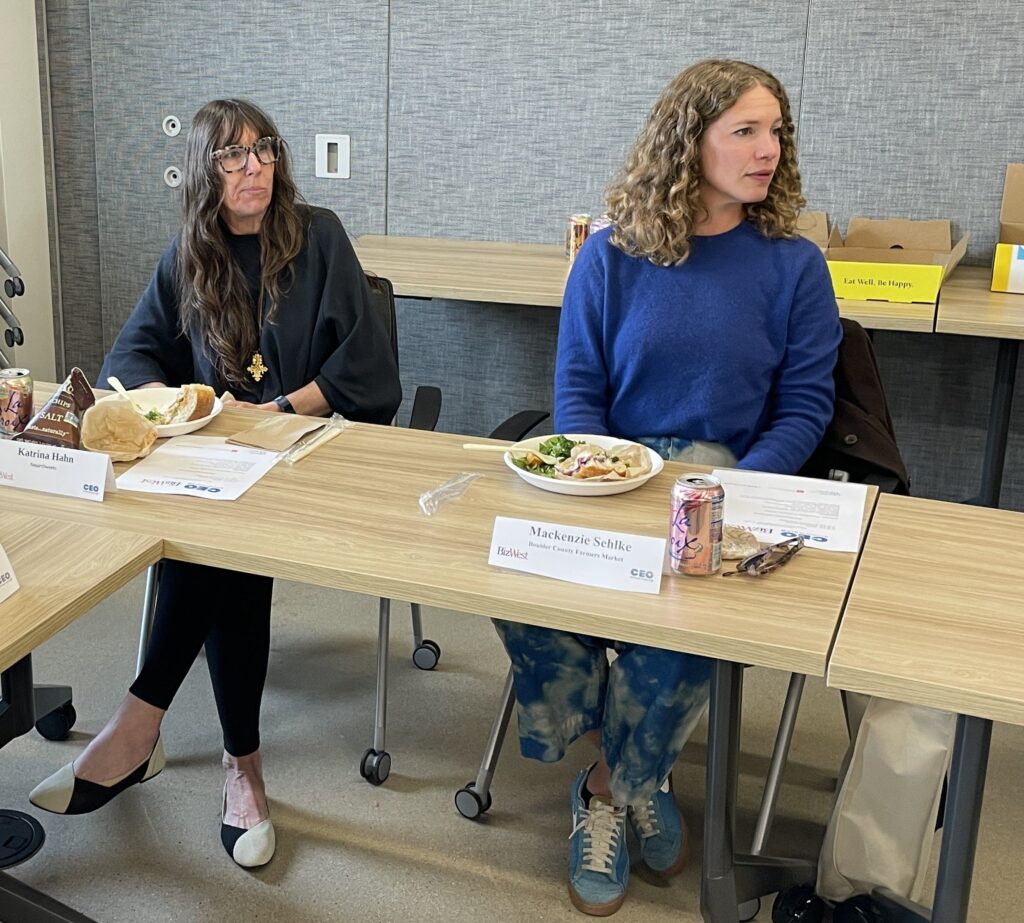
Katrina Hahn, co-CEO of SmartSweets, echoed the frustration, especially with the Trump administration’s on-again, off-again tariffs and trade barriers.
“It’s been a very chaotic period of time,” she said. “We manufacture across Canada, the United States and Mexico, so let that soak in for a second, and how that’s been over the last two or three years with all things tariffs. It feels like every day I’m walking on quicksand, and I don’t know where the landscape is going at any point in time. So it makes it very hard to grow a business under that set of circumstances.”
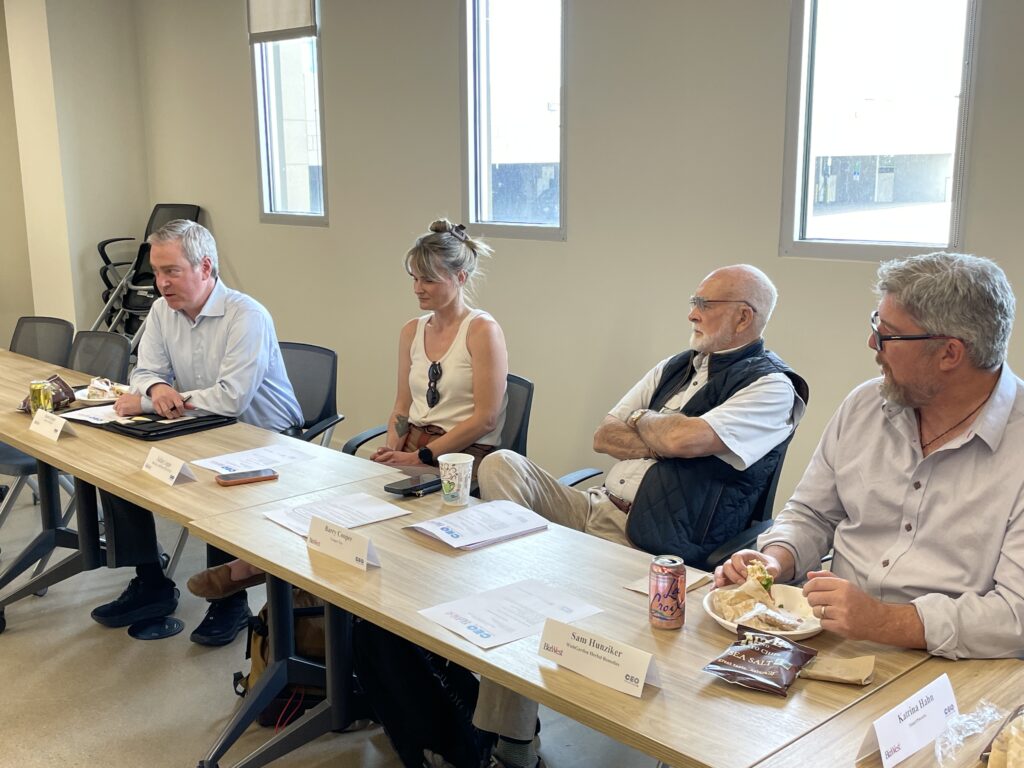
Barry Cooper, CEO of Cooper Tea, added that “you kind of roll with the punches because there’s not much you can do about it.”
“There’s the obvious financial impact, which we’ve had to weather,” Hahn said, “but I think probably more is the disruption of those changes, and not knowing what was going to happen and trying to hedge.
“And the hedging also creates bad behavior,” she said. “So we’re trying to project what might happen and make business decisions based on potential outcomes, doing silly things like moving inventory over a border before a tariff might drop. That’s not the way you should run your company, but we start making these bad decisions in order to try to mitigate what we think might be coming. And so it just makes for a very convoluted market.”
The Boulder Valley’s high prices, the impact of acquisitions and consumers who are ever more digitally oriented also create challenges, the executives said.
“It’s expensive doing business here, retaining staff, finding staff,” Cooper said, while Sam Hunziker, CEO of WishGarden Herbal Remedies, cited economic pressures from national grocers faced by manufacturers trying to get their products onto store shelves.
“As the different national and organic grocers have been purchased and gone into private equity, it’s much more difficult to do business with them,” Hunziker said. “We’re seeing rapid turnover in buyer positions. It’s hard to get anything executed.
“It seems like a very chaotic business place,” he said. “We’ve got pricing pressures pushing us down, and at the same time we’ve got tariffs and the cost of goods rising, so we have to be a lot more efficient and smart about how we are planning our growth.”
Kristine Carey, executive director of Naturally Colorado, noted that “a lot of consumers are backing off of loyalty because they see these companies selling. Everyone’s talking about the problem but no one is addressing it.”
Cooper was even more blunt.
“I run like a hare from a dog if private equity approaches me,” he said. “They are lethal. They are wolves. They’ll suck you in and suck you dry.”
Because of consumers’ embrace of technology and artificial intelligence, Hahn said, “attracting and retaining consumers is becoming exponentially more difficult.
“It is just too easy for people to tap into AI,” she said. “With the digital landscape the way it is, the younger you go, the more time they’re on their phones. They’re literally not looking up. They’re constantly looking down and being fed a stream of information.
“So how you build a brand in that environment is super hard, and it’s become even harder in the last five years to break through that noise,” Hahn said.
“Anybody can play the game of driving sales in a short period of time. I can do that. That’s different from building a brand.”
Although Radi acknowledged that the business climate has been “emotionally challenging,” he argued that “it’s always been chaos. This is cyclical.”
In fact, he said, “I think there’s never been a better time to start and scale a better-for-you brand.
“Conventional-food and strategic-food manufacturers are in big trouble,” he said. “There is not one strategic-food company growing right now. All of their growth in the past decade has come from price. They have unbelievable amounts of debt load, aging consumers with irrelevant brands, and push marketing that no longer works.
“I am optimistic as hell about building better-for-you,” he said. “The businesses that you see in our space, almost all of them are profitable, and they’re using investment in traditional ways like working capital and driving investment into growth long term. I think the industry is way healthier than it was a decade ago. I think the opportunities are bigger. We as business operators have gotten dramatically smarter about how to scale and build these businesses, and we’re healthier because of that.”
As for acquisitions, he said, “your business doesn’t have to be acquired to be successful. You can have a family-cottage regional business if you’ve got a good product and you can make it for a margin.”
That’s true “even more so today,” Radi said, “because you’re not as reliant on a brick-and-mortar store to be able to do it. You can have it online. There’s a lot of different ways to do it.”
He also contended that at least one part of the administration, the Make America Healthy Again initiative touted by Health and Human Services Secretary Robert F. Kennedy has been a boon for the health-food industry.
“MAHA opened people’s eyes about what we’re putting in and on our bodies as much as any force in the last 10 years,” Radi said. “This is awesome. We’re waking up to what we’re putting in our bodies, and I think it’s really good for our industry.
“Is it a threshold moment where we’re going to go to 50% of household penetration? No. But that’s what I love about this industry,” he said. “It’s not price, it’s volume. We’re competing against conventional food players that are really crappy innovators. And they have an entire business model and system that’s based on making this widget this way all the time. Eventually you lose so much volume that that whole system’s de-leveraged and they don’t make money doing it anymore.”
The executives also said the appetite-inhibiting GLP-1 weight-loss drugs such as Ozempic, Wegovy, Mounjaro and Zepbound also present some positive opportunities.
“GLP-1s are doing the same thing,” Radi said. “People are eating less of things, but they’re being more thoughtful and more premium in what they’re choosing.
“Then how do you as a better-for-you or organic or natural brand go to market in a more premium way that is delivering against the more thoughtful choices that people are making?”
His company has found an answer, Radi said.
“Cookie dough’s really interesting because our packaging comes in place-and-bake cups so you can just bake one,” he said. “That’s actually a benefit to GLP-1 users because they don’t have to open up a big pack of cookies.”
Overall, the executives said, the best idea is to keep promoting the industry and promoting Boulder. One place to do that is at farmers markets, which serve as de facto incubators for rising stars for budding businesses selling organic produce and natural products.
“We put the granola in Boulder. We’re the crunch that makes this space special,” said Mackenzie Sehlke, executive director of Boulder County Farmers Markets.
“We have seen a wave of acquisition, innovation and scale at some of our small in-house brands,” she said, adding that “I would like to see a reinvestment and a real strategic thinking about how we keep those spaces available to new businesses — everything from commissary-kitchen availability to mentorship. That connection of experienced CEOs to businesses feels to me like it needs to be strengthened.
“We have a lot of small businesses who come to us year over year and are excited and have great ideas,” Sehlke said, “but they don’t have the infrastructure and that sort of experience helping them navigate some of the challenges of going from concept to small to big.”
Her focus, Sehlke said, is on “continuing regional food security through ensuring folks have access to land and are able to operate their farm businesses, and that we continue to foster an innovation environment where small food businesses can come to us, incubate and then move on.”
Carey said “collaboration is the key,” and Corine Waldau, executive director of the Boulder Chamber Economic Council, agreed.
“I think we need to talk about continuing to protect this industry cluster, building on the Boulder brand, but thinking regionally and focusing on the challenges as a region to make sure we continue to protect the innovation, the investors, the people that make this such a robust industry in this region,” Waldau said.
“We also need to continue to build up the brand, the positives and the opportunities.”
A lot of building up that brand, the executives said, can happen in January with the arrival of throngs of visitors for the Sundance Film Festival.
“There’s a large number of investors coming in,” Cooper said. “It’s going to expose Boulder to a global audience. We really are unique. When you come in from the airport and see that Front Range, oh, boy.”
The festival “gives us a good opportunity to market the Boulder area brand in general,” Waldau said. “They don’t know ‘why Boulder.’ This is our opportunity to say, ‘This is why Boulder.’
“And food is one of our key areas, natural-products food,” she said. “We can use this as an opportunity to take that national stage and invigorate this sector.
“It’s a great opportunity for our business owners to engage people coming to town and show what makes Boulder special,” Waldau said. “They’re going to come in January. We’re hoping they come back in August.”
Also attending the Roundtable were representatives of its sponsoring organizations, including Jeremy Wilson and Matthew Schoewe from host Plante Moran, Ashley Legan from the Berg Hill Greenleaf Ruscitti law firm and Aaron Spear from Bank of Colorado.
Boulder may no longer be the singular mecca of the natural and organic food industry, and economic challenges remain daunting, but industry executives at a BizWest CEO Roundtable still see advantages and opportunities.

Related Posts
-

The Windsor Severance Food Pantry is relocating to 631 Birch St., Suite A (South Doors),…
-
Snarf’s Sandwiches has launched a food drive through the end of the year at every…
-
Feed Colorado, a food drive sponsored by Arc Thrift Stores and Denver7, continues through March,…
-
The Windsor-Severance Food Pantry will close this week and re-open in a new location Oct.…
