
Longmont’s lower downtown dreams finally taking shape
Transit, Front Range Community College projects drive redevelopment
LONGMONT — Downtown Longmont’s southern gateway was officially designated as blighted.
It soon could be a field of dreams.
There’s the dream of a modern transit hub that will unite local and regional bus routes as well as the long-promised commuter rail service that voters hoped for — seemingly in vain — when they passed the Regional Transportation District’s FasTracks sales tax hike 22 years ago.
There’s the dream of a new campus for Front Range Community College, expanding its course offerings and reach.
And there’s the dream for new economic vitality for downtown Longmont as well, spurred by an influx of students, commuters, residents and tourists.
A rapid-fire series of events this year has a chance to turn those dreams into reality, and if ground hasn’t already been broken by the time you read this, it will be shortly.
The latest doses of energy for the project were delivered in August and September, when the Longmont Urban Renewal Authority and Longmont City Council approved crucial pieces of the puzzle.
LURA unanimously approved several tax-increment financing agreements and advanced another with the Longmont Downtown Development Authority, and the council then formally endorsed the 29.5-acre 1st and Main Urban Renewal Plan that officially identifies the area as blighted under state law. The council also authorized the city to issue up to $38 million in certificates of participation to finance construction of the transit center’s five-story parking garage and other capital improvements.
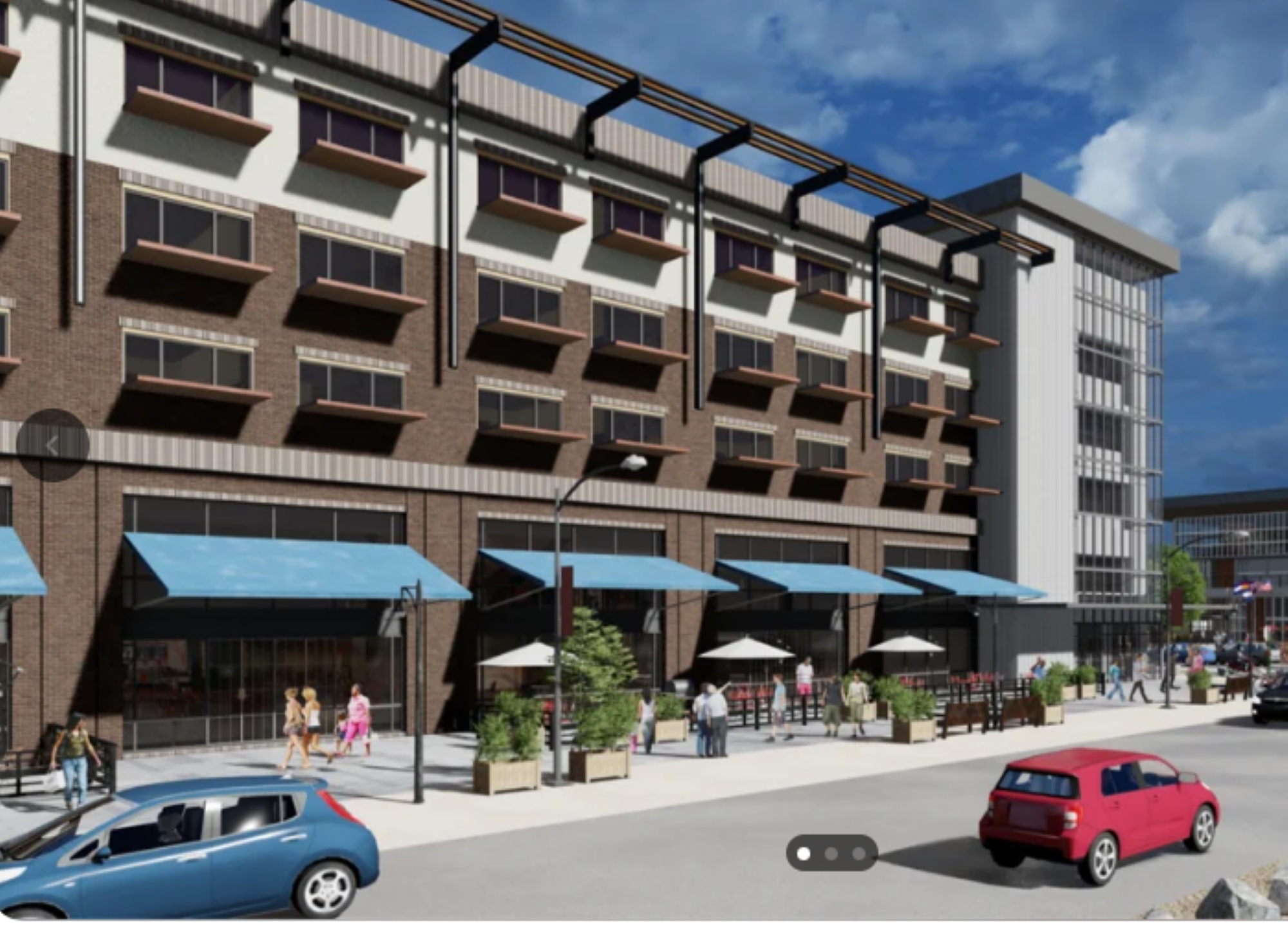
The structure will include a ground-level 10-bus station and roughly 600 to 700 public and commuter-dedicated parking spaces. It also is expected to have 225 to 300 residential apartments and ground-floor commercial retail space.
Bus routes serving the station will include local Longmont routes as well as regional services such as RTD’s new direct link to Denver International Airport, which made its debut Sept. 27, and the Bus Rapid Transit lines to Boulder along the Diagonal Highway to Boulder.
Also expected to be coming to the station by 2029 will be Front Range Passenger Rail service, dubbed “Colorado Connector,” or CoCo for short. Existing funding will pay for three daily round trips between Fort Collins and Denver with a stop in Longmont, and an extension of the line’s length and frequency of service will depend on voter approval of a third-of-a-cent tax increase in November.
The transit hub project includes $16.4 million in RTD FasTracks funding and more than $9 million in city land investment. The project also received a $4 million state grant through the Transit Oriented Communities Infrastructure program, part of more than $13 million awarded to Front Range communities to support housing development near key transit centers.
The funding will help cover early construction work, including site and utility improvements. Construction must be completed by the end of 2027, but site preparation has already begun.
The city hopes many of those riders and residents will have education as their destination.
Enthusiastic in their praise for FRCC’s plan, a unanimous Longmont City Council voted in March to support the blueprint for a public-private partnership that will bring the permanent college campus and regional transit hub to lower downtown.
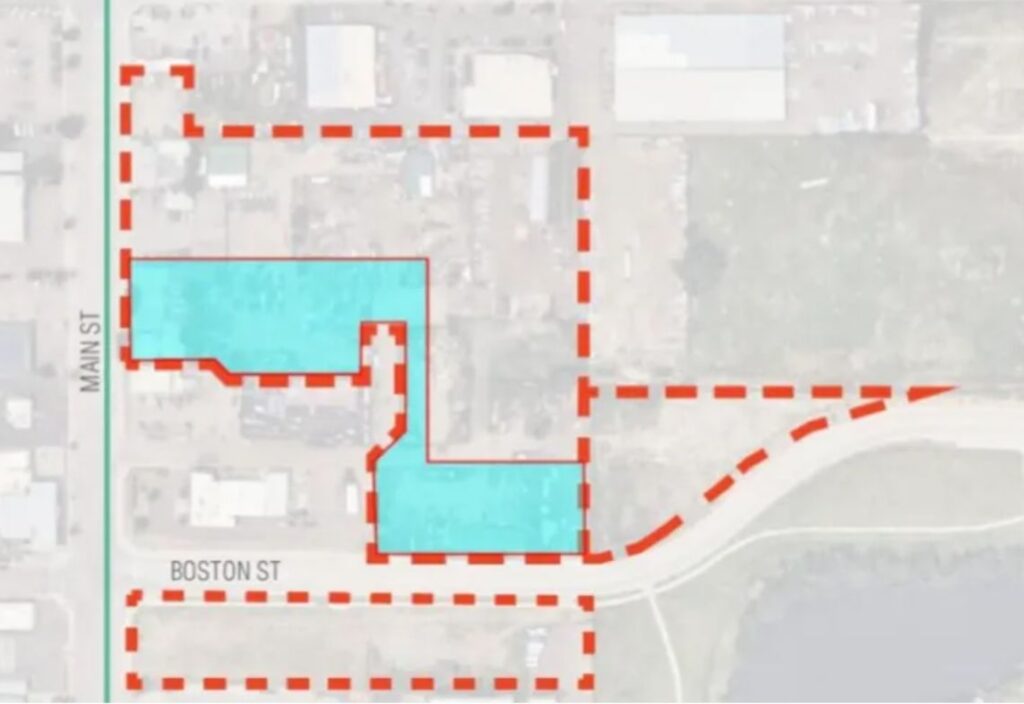
The college campus is to rise on 6.14 acres east of Main Street between First and Boston avenues, adjacent to the transit hub. The plan is to begin classes in August 2029, theoretically close to the time when CoCo begins regional rail service.
Since 1995, FRCC’s Longmont classes have been held in 144,000 square feet in three leased buildings on the city’s southwest side. That lease costs the college $2.4 million a year, or $112 million over 30 years in lease payments for space the school will never own, cannot fully customize for its needs and could lose at any future lease renewal.
Under the intergovernmental agreement for the first phase of the new campus, the city will allocate $50,000 from FRCC capital campaign dollars, first budgeted in 2019, and the college will contribute $499,000 toward the work identified in the agreement. A separate item is an additional appropriation from the city’s general fund for $549,000 for the exploratory planning effort.
This development agreement with Vertikal Richmark LLC also advances the first phase of predevelopment for the transit hub. Vertikal Richmark is a joint venture between Greeley-based Richmark Cos. LLC and Louisville-based developer Vertikal LLC. That consortium also will develop the downtown civic campus in Greeley.
The 1st and Main project also includes a separate development agreement with Boulder-based Tebo Properties.
Planning for the station began in 2012 with the 1st & Main Station transit and Revitalization Plan and continued through crafting of the Envision Longmont blueprint in 2016 and the Main Street Corridor Plan in 2019.
According to FRCC officials, the proposed campus will be a flexible, urban learning center focusing on science, technology, engineering, arts, mathematics, health technologies and advanced manufacturing. Instead of a traditional college building, the campus would bring classrooms, labs, employers and community services together in one place, and spaces could be rearranged to allow programs to evolve over time.
A permanent facility would allow FRCC to expand programs based on regional workforce needs. The downtown location is near existing and future transit connections that could link to FRCC campuses in Westminster and Fort Collins.
Vertikal Richmark approached the city with the project idea. It is under contract to buy nearby property and build the transit hub as part of the larger innovation district. Private development that would be built around the transit center garage is estimated at $100 million to $120 million and would be built separately.
“Not every city can bring together a community college campus and a regional transit hub in the heart of downtown,” city manager Harold Dominguez said. “We’re building this to make it easier for residents to get to school, get to work, and build careers here in Longmont.”
Downtown Longmont’s southern gateway was officially designated as blighted, but it soon could become a field of dreams.

Related Posts
-

GREELEY — Downtown Greeley will transform in late February into what its promoters call a…
-
BOULDER — The Downtown Boulder Partnership has unveiled the 50th Anniversary of the Pearl Street…
-

After closing its Colorado Springs location, Rock Bottom Restaurant & Brewery has unceremoniously shuttered its…
-

Finally Home, a Windsor-based nonprofit that supports foster, adoptive, and kinship families, has launched Step…
