
CSU unveils larger veterinary teaching hospital
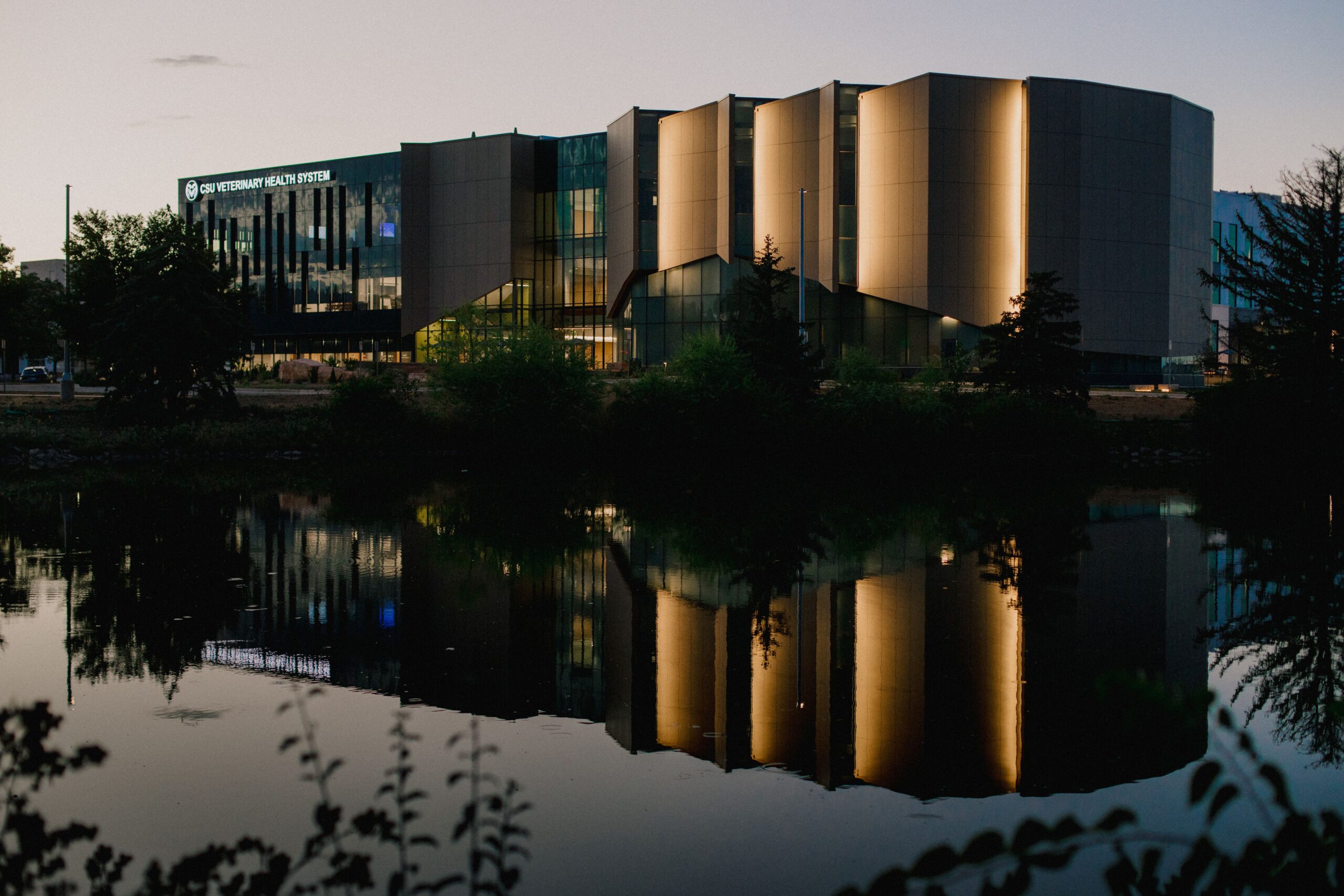
FORT COLLINS — Colorado State University is moving into its new $230 million Veterinary Hospital and Educational Complex, and will hold a grand-opening ceremony Thursday on the school’s south campus in Fort Collins.
Designed by Clark & Enersen and built by JE Dunn Construction Group, the 213,000-square-foot building at 300 W. Drake Road will house CSU’s Doctor of Veterinary Medicine “Ascend” curriculum, featuring hands-on clinical training that allows students to begin working with patients in their first year instead of their third.
The new facility will allow veterinary student enrollment to increase by 20%, adding approximately 30 students each year. The first-year class entering the program this fall has 174 students.
By adding 24 new examination rooms, more than tripling CSU’s primary-care exam space, the facility will be able to handle 42,000 patients and 500,000 diagnostic tests annually. More than 700 CSU Veterinary Health Systems employees will support more than 25 veterinary specialties, including oncology, ophthalmology and orthopedics.
“Our Ascend D.V.M. curriculum sets a new standard for how we will teach veterinary medicine at CSU,” Dr. Sue VandeWoude, dean of the College of Veterinary Medicine and Biomedical Sciences, said in a prepared statement. “We’re adopting new teaching approaches for professional training that build upon CSU’s longstanding legacy of excellence in veterinary education. I’m looking forward to our students experiencing an advanced veterinary curriculum that has been painstakingly designed by faculty and staff to maximally prepare our graduates for success.”
Revamping the curriculum, a process that began more than a decade ago, “has been a deliberate and iterative process, and I think that’s been at the root of our success,” said Dr. Melinda Frye, associate dean for veterinary academic and student affairs. “I’m very excited about what we’ve come up with; I think it’s going to be great not only for our students, but for the animals and people they care for.”
During the program’s first two years, D.V.M. students will be taught on a block schedule that focuses on specific body systems such as cardiovascular, gastrointestinal or respiratory, a plan that aims to present the material more efficiently.
“We know that every time a student revisits a topic, especially if it’s in a slightly different way, it helps cement that information,” Frye said. “And then if we offer them opportunities to apply that information to novel, authentic scenarios, it really helps them engage and develop their clinical reasoning muscles.”
Colorado State University is moving into its new $230 million Veterinary Hospital and Educational Complex, and will hold a grand-opening ceremony Thursday on the school’s south campus in Fort Collins.

Related Posts
-

Ent Credit Union has launched a monthlong campaign, “2024 Catalyst for Children,” to raise funds…
-

Chewy Vet Care is opening a new Louisville veterinary clinic on April 10.
-

The annual Cannabis Research Conference will be held Wednesday through Friday at the Colorado State…
-
Conga, a Broomfield-based software-as-a-service company, recently hired Dave Osborne as its CEO, replacing previous leader…
