
Home sellers grapple with new normal
Higher interest rates, slower appreciation force new approach to dealmaking
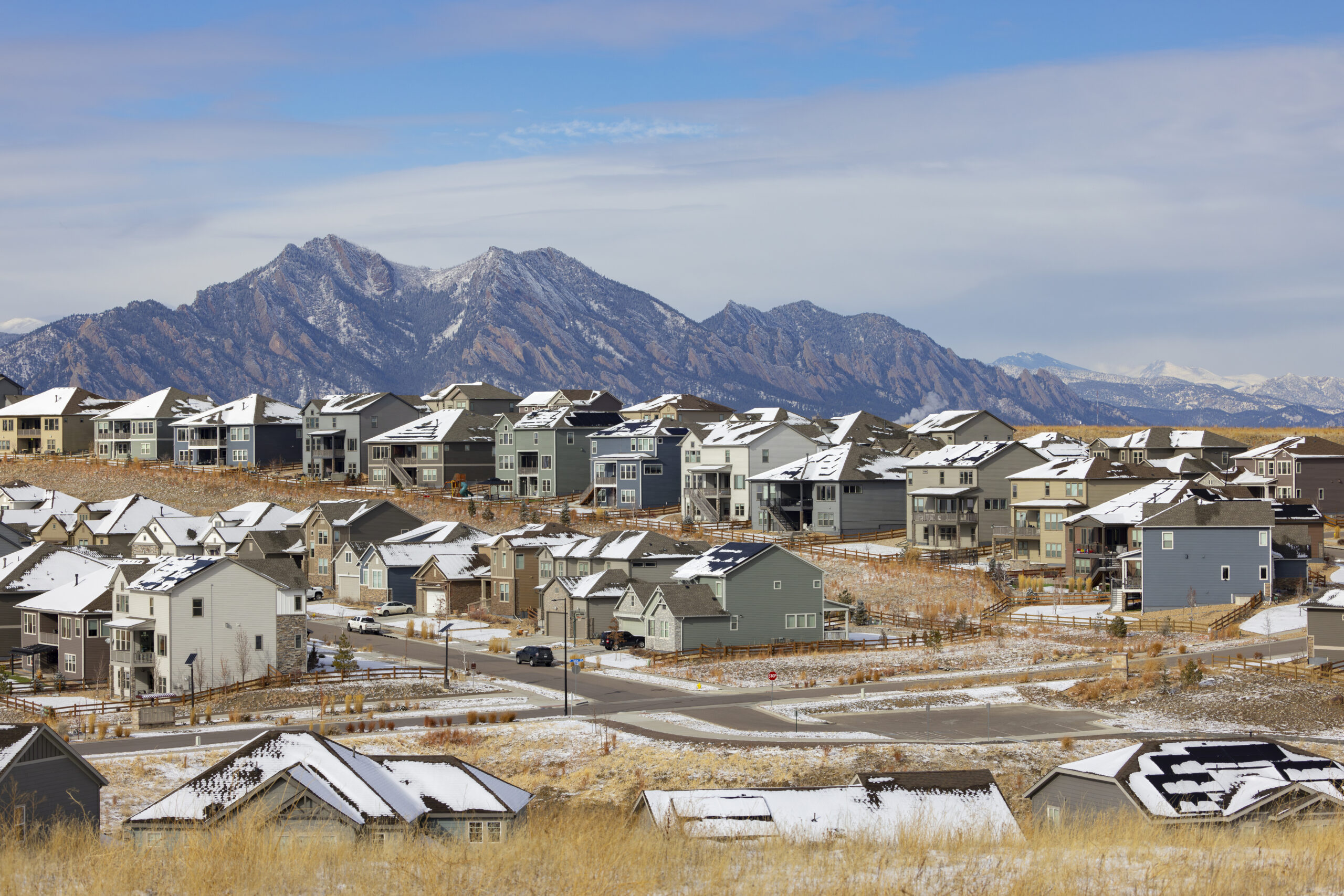
The heady days of the early 2020s, when homes would sell well above the asking price after a bidding war among multiple potential buyers, are long gone. Over the past three years, the residential real estate market has slowly transitioned from a seller’s market to a buyer’s market, and home sellers still grasping at those frenetic days will notice that there aren’t likely to be many takers if their home is priced too high for the current market.
“That instinct is a habit from a market that no longer exists,” said Brandon Wells, president of The Group Inc. brokerage in Fort Collins. “For most of the last decade a Northern Colorado seller could price ambitiously and let demand catch up. Today the buyer sets the pace, and the seller who prices as though that is still negotiable spends the fall finding out.”
Joel Ripmaster, Realtor emeritus at Madison & Company Properties and founder of Colorado Landmark Realtors, calls that “aspirational pricing.”
Ripmaster, who specializes in the Boulder County luxury market, said that there is too much inventory out there in that local niche, with more than 200 luxury listings with a median asking price of $3.2 million. The average home in that price point spends 109 days on market. During the week of Sept. 8-13, there were no sales in the $3 million range.
“Out of my last four sales I’ve had big chunks come off the listing price. That’s a pretty powerful message. You’re thinking that you’ve got a $3 million house and it’s competing with over 200 other houses, so it better be in pretty good shape. If the home is tired or has a complicated floor plan, you are going to have trouble,” he said.
In August, slowing demand drove down sales and extended marketing times, even as home prices and overall inventory remained relatively stable, according to the latest data from the Colorado Association of Realtors , or CAR. Rising interest rates, affordability challenges and economic uncertainty also affect the residential real estate market.
“With interest rates back over 7% we’ve seen a dampening of buyer activity in terms of showings and contracts and buyer activity in general,” said Jay Kalinski, broker/owner of Re/Max Boulder and owner of Re/Max Elevate. “We track our showings both in terms of total showings and showings for available listings. It is the lowest they’ve been this decade.”
He added that January and February started out strong but the geopolitical environment and war with Iran have forced up interest rates and negatively impacted the real estate market.
There is “not an appetite right now in the price ranges where interest rates really affect purchasing power,” Kalinski said.
In the seven-county Denver metro area, “new listings increased 4.4% year over year while pending contracts fell 7.3% and closed sales dropped 14.3%,” CAR’s latest Market
Trends Housing Report found. “Despite softer demand, prices remained remarkably stable, with the median sales price essentially unchanged at $574,400. Active inventory also declined 14.2% from last year, underscoring that greater buyer leverage is being driven less by excess supply than by weaker demand.”
The price is right
Kelly Moye, a Realtor with Compass, has been in the industry for 35 years. She said the current market feels a lot like it did in 2008.
“Our market has been correcting over the last few years, which it absolutely needed to do. There was no way we could sustain that,” she said, pointing out that there is an affordability issue in Colorado, with wages not keeping up with the price of real estate.
That has hit the condo and townhome market harder than single-family homes. Even though attached home prices have gone down, HOA fees have gone from an average of $250 a month to an average of $550 or more per month, she said.
“With affordability already a huge hurdle, particularly for first-time buyers, this segment of the market should be enjoying some activity. But instead, high HOA fees are making them even tougher to sell. Buyers aren’t just looking at the mortgage payment anymore; they’re looking at the entire monthly bill, and HOA fees can be a deal breaker,” Moye said.
In Boulder County, listings are down by about 10% while prices remain flat and well-priced homes are selling in about 62 days at 98.5% of asking price, according to CAR.
“For single-family homes, as long as it is priced appropriately, they are still going to sell,” said Teresa Lomax, a Realtor with Equity Colorado Real Estate and chairwoman of BOLO Realtors. “It is not a time to see if the market will play up to a price point. Pricing has probably never been more important.”
When working with sellers, Lomax said she coaches them to be patient. If their home is well maintained or has been recently upgraded, it might sell faster than others, but they will eventually sell if priced correctly.
Buyers have an opportunity in this market to get a better deal on a home. That could be offering a lower price than what the seller is requesting or asking for a concession in lieu of a price decrease.
The average concession is around $12,000, she said.
Kalinski said he works with the agents who represent sellers, helping them shift their mindset.
“That means offering incentives to buyers, rate buydowns, concessions,” he said. “We are close to 50% of all homes closed with concessions of one kind or another.”
If homes are in excellent condition, in desirable locations and well priced they can still garner multiple offers, he said, but fixer uppers or homes that aren’t priced correctly are
definitely sitting when that wouldn’t have happened in years past.
In response to the changing market conditions, agents are having to get more creative in how they advertise and market home listings. “It is bringing out a lot of creativity on the agent side, new and novel ways to market properties to make them stand out in an increasingly crowded field,” he said.
In Boulder and Broomfield counties, the townhome and condo market is the “weakest segment, with values down about 5% this year as high HOA fees compound affordability concerns,” CAR found.
“The cost of insurance is high for everybody but specifically in HOA-driven communities they are seeing dues go up dramatically,” Lomax said, which can push overall mortgage costs closer to single-family homes.
Boulder’s inventory of attached homes for the last month was 210 with 25 sold. The average number of days on the market was 90.
“Historically speaking, we are coming off an environment where you put your house on the market on Thursday and have 17 offers by Monday. Now it is more normalizing. It feels slow but if you look at it over the course of time, I’m not sure it is slow in general. It is getting back to balance,” she added.
In August 2026, there were 304 single-family homes on the market in Boulder with 62 sold listings at an average of 69 days on the market. In Longmont, there were 102 homes on the market with 20 sold listings.
Sellers need to understand that they shouldn’t be comparing their home to houses that have sold previously. “They are not competing against homes that sold a few months ago but against other sellers and how motivated they are to attract a buyer,” Wells said.
Buyers have more leverage than they had previously so they should not be afraid to make lower offers on homes they are interested in, he said. Even if a homeowner is not willing to budge on price, they are usually willing to make concessions.
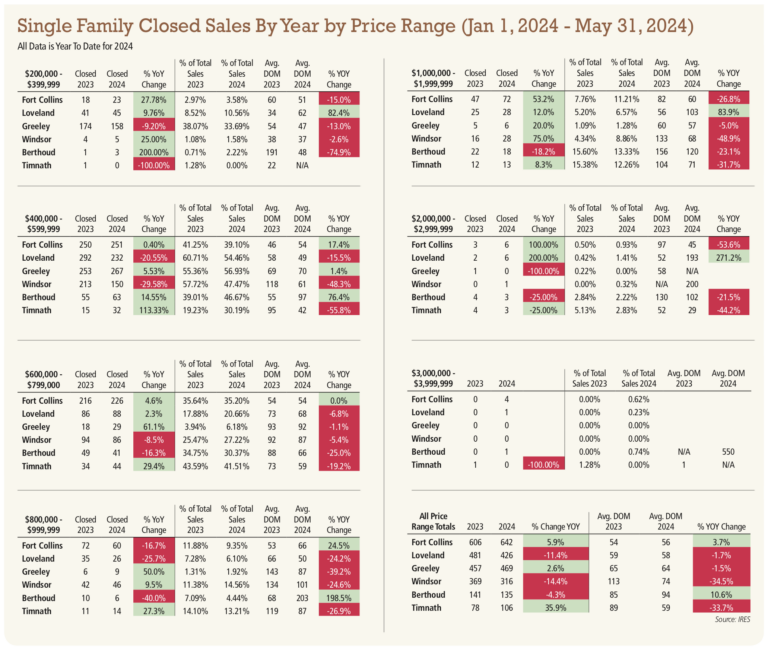
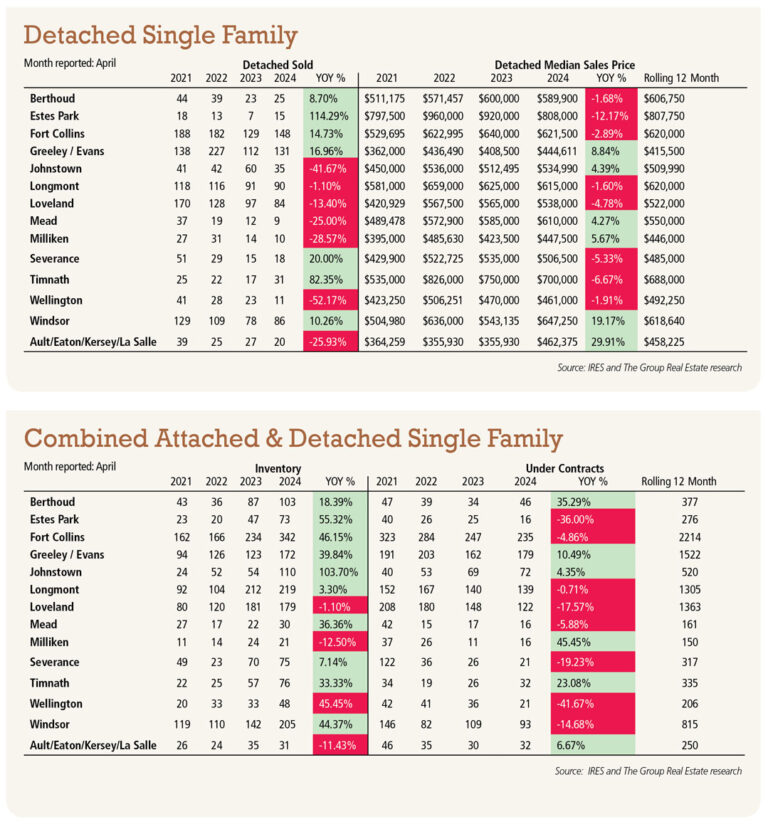
In Fort Collins, new listings of attached homes were up 22.4% year over year in August but pending sales were down 23%, according to IRES MLS data. The median sales price in August was up 5.6% to $367,500. Through late September, sales of attached homes were down 1% from 2025, with a median sales price of $385,000, off 3.5% from last year.
Single-family homes listings in the city dropped 11.8% from the prior year, while closed sales dropped 11.4%. The median sales price was $649,000, down 3.1% from August 2025.
“Greeley is a more affordable market relative to all of Northern Colorado,” Wells said, which makes it more price sensitive. If interest rates creep up, they have a larger impact on the home buyers can afford because they are more dependent on financing.
The median home price in Greeley dropped 3.1% to $435,000 over the past year. The median sales price in Loveland is $530,000, down 0.8% from 2025. Windsor’s median sales price year to date is $585,000, up 3.5% year over year.
In Timnath, Windsor and Fort Collins, 25% of buyers pay in cash so they are less rate sensitive, Wells said.
Cash buyers “have more negotiating leverage with sellers today in getting concessions,” he said.
The heady days of the early 2020s, when homes would sell well above the asking price after a bidding war among multiple potential buyers, are long gone. Over the past three years, the residential real estate market has slowly transitioned from a seller’s market to a buyer’s market, and home sellers still grasping at those frenetic days will notice that there aren’t likely to be many takers if their home is priced too high for the current market.

Related Posts
-
In the fast-changing world of real estate, sellers need to adopt a forward-thinking strategy. As…
-
There’s a saying we lean on at The Group that’s more relevant today than ever:…
-
On the surface, it might appear that housing demand is flat across Northern Colorado. But don’t…
-
Brandon Wells, president of The Group Inc. Real Estate, provides things to know to help…
