
Governments attempt to balance data centers vs other issues
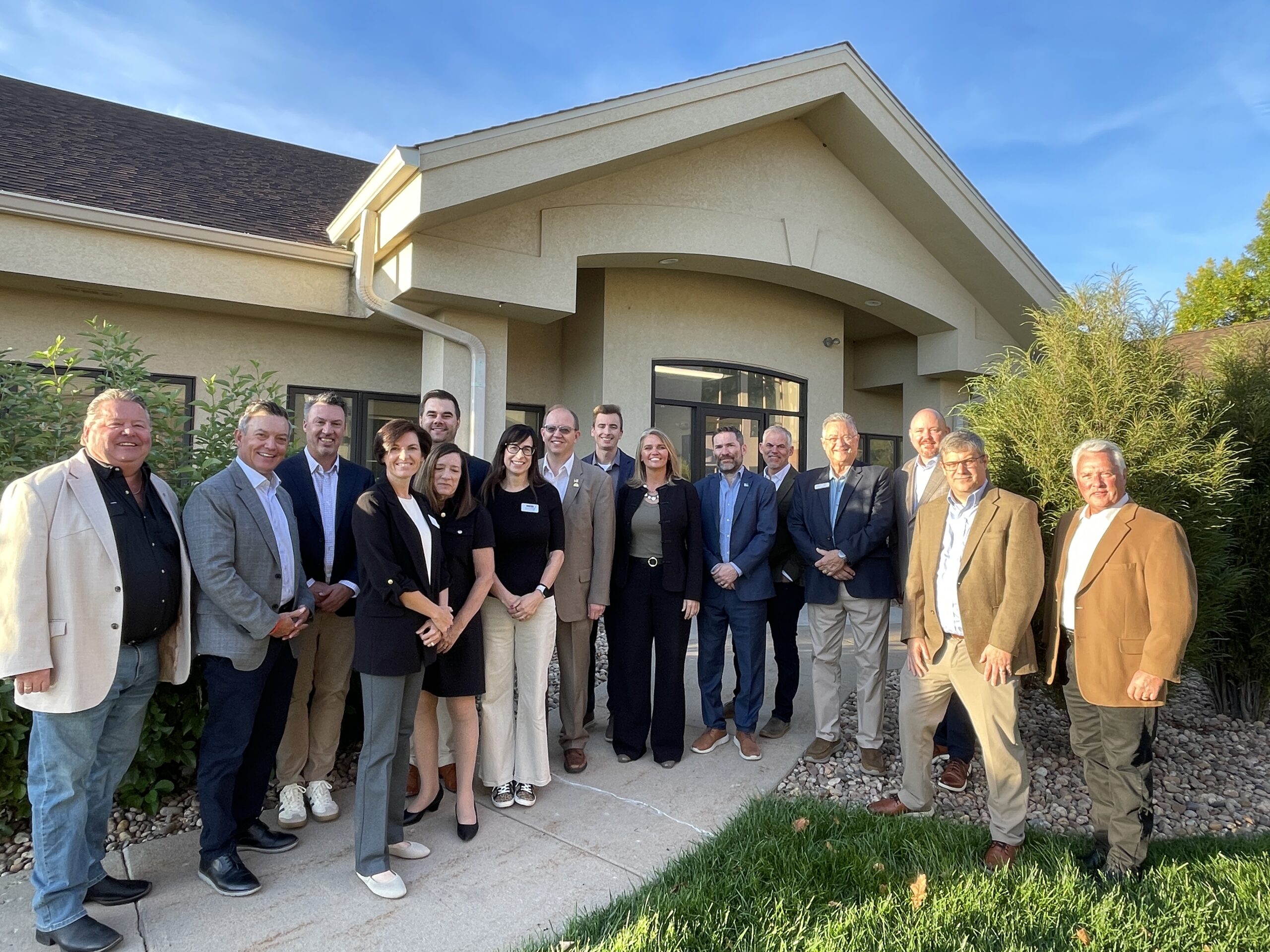
WINDSOR – Data centers may have eclipsed the attention of much of the public to the exclusion of other issues, but for government and utility operators, data centers are one of many top-of-mind issues that they have to juggle.
Mayors, managers, and utility executives from Northern Colorado gathered Tuesday morning at BizWest’s CEO Roundtable, hosted at the Better Business Bureau Serving Northern Colorado and Wyoming office in Windsor.
In fact, despite public discussions about data-center moratoriums at city councils around the region, the first top-of-mind issue expressed Tuesday was about affordable housing, something all the communities of the region see as a problem to be solved.
Public clamoring about potential data-center problems, however, has forced nearly every entity represented at the meeting to focus on how to protect constituents from what members of the public fear will be negative impacts.
Data centers
Fort Collins, the largest city in Northern Colorado, has yet to discuss pausing consideration of data centers, but the council might impose a moratorium soon, said Dean Klingner, deputy city manager. The city is considering policy changes, because the city’s land use code doesn’t address them. The city has had an application for a data center — which the developers have named an “inference center.” The difference, the developers say, is that the 20-megawatt facility will serve local computer and data processing needs, not worldwide artificial-intelligence operations.
Klingner said that data centers aren’t new, but hyperscale centers are new and that’s what is causing public concern. Still, cities need to “better understand the economic impacts of them,” he said, noting that construction jobs are important to communities while recognizing the long-term jobs at data centers may not be high-paying.
Greg Mills, mayor of Brighton, which may have a large-scale center to consider, said that the council has yet to receive a formal proposal, although city staff has been working with a developer. The city may take a pause, he said, so that when an application is filed, the city can address implications.
Greeley has a different scenario. Weld County has already approved a large data center to be built on the former Carestream property between Windsor and Greeley. Greeley plans to annex that property. Mayor Dale Hall said Greeley would accept the terms that Weld County imposed and may add additional requirements as part of the annexation agreement.
Matt LeCerf, town manager of Johnstown, said his council imposed a moratorium and has formed a citizen committee to prepare recommendations for council consideration. “There’s a lot of public emotion that comes out,” he said. He wants to assure that those who make the final decisions or contribute to them have the ability to recognize the facts untainted by emotion.
Windsor chose not to impose a moratorium, said Shane Hale, town manager. The community does not have any active proposals, but the staff is working to prepare revised code language that the town board can consider by the end of this year or early in the next.
Raelynn Ferrera, interim town manager at Firestone, said she is not a fan of moratoriums and she considers data centers to be an opportunity, if communities can “meet them in the middle” by addressing concerns and taking advantage of benefits.
Severance Mayor Matt Fries said from his perspective, Severance ought to be a leader.
“My fear, from what my citizens have heard, is that local governments are not prepared. We’re trying to get ahead of it,” Fries said.
He listed two things that are important to the topic. First, “most of the information out there is misinformation. The companies need to be communicating with your communities.” And second, communities should be embracing the potential for repeated use tax revenue. He said he’s heard that data centers have to replace equipment every two or three years.
“Put guardrails in place so the developer is paying 100% of the cost of that development. Protect others from potential rate increases.”
Patti Garcia, town administrator in Wellington, said that data centers could be economic drivers in rural communities that have land available.
Berthoud trustee Brett Wing also said that towns ought to consider the potential benefits of data centers. “My comments are mine, not the town board’s,” he said as he began his remarks. He said data centers represent the largest capital investment in the history of the world, larger than the interstate highway systems and other major investments. “You can get on board, or not. The technology is coming.”
He said that construction-equipment manufacturer Caterpillar now devotes more attention to the manufacture of electrical generators than it does to construction equipment.
“Be cautious of herd mentality. We can scare ourselves into doing nothing, or we can take a good look at it,” he said.
On the utility side, Robin Meidhof, chief legal officer for electrical cooperative United Power, said it would be “a disservice to citizens not to engage” on the topic. “We have an obligation to serve. We can’t say no. We have to find a way to provide.”
Utilities, she said, have to find ways to protect rate-paying members. “That’s incumbent on the utility,” she said. Tariffs and assessing costs on developers are key and are subject to federal and state oversight.
Hans Rodvik, Northern Colorado area manager for Xcel Energy, said Xcel has a tariff proposal before the Public Utilities Commission. Xcel considers 50 megawatts and more to be large loads and subject to tariffs.
“We’re 100% that existing ratepayers are not subject to and bearing the costs of data centers,” he said, with data centers responsible for paying the costs for additional generation capacity, for substations, and for transmission resources.
He said Xcel has imposed small fees on potential developers at the start “to weed out the tire kickers.”
Meidhof said United Power is feeling supply-chain impacts resulting from development of large-scale data centers. “These companies are buying up the equipment that we need to keep the lights on,” she said, referring to transformers and other infrastructure that both utilities and data centers use.
Fort Collins’ Klingner said another consideration for communities is the impact of data centers on decarbonization goals. If data center demand forces a utility to dramatically increase generational capacity quickly, it may delay goals toward elimination of carbon-based electrical generation.
“Large-load tariffs are one thing, but how that load is generated is another,” he said.
Rodvik agreed, saying that the state might be able to provide some clarity. Perhaps the state would offer incentives to a data-center developer if the developer agrees to something on the environmental side.
Brian Waldes, acting city manager in Loveland, which instituted a partial moratorium on Sept. 15, said residents of the city “want this conversation; they want to be protected from negative impacts while understanding the positives,” he said.
While water consumption of data centers is less of an issue now that developers have implemented closed-loop cooling systems that consume far less water, Pat Wells, water supply planning and protection manager at the Northern Colorado Water Conservancy District, said the issue revolves around transparency and openness.
He said that people have a limited ability to adapt to change, and “I’m concerned about the bandwidth” going into this issue at the expense of more important issues affecting water supply in the region.
The real challenges in the region have to do with water availability, water affordability and drought. He said of the 310,000 units in the Colorado Big Thompson water project, only 27,000 units remain in agriculture. It will be increasingly difficult to transfer water rights, he said, meaning that new supplies are needed.
Housing
Solutions for the housing affordability issue remain elusive, town managers and mayors said, and when it comes down to calculating costs, the impact of city fees constitutes a small share of the cost of new construction, they said.
While governments are sensitive to fee impacts on the price of new homes, they also said that they’ve had to make investments in water and sewer infrastructure that was financed by debt. The fees pay down the debt and are not optional.
Waldes said it is important for city fee structures to be proportional to the size of the home. “We thought our costs were a little high for smaller homes,” he said, so adjustments have been made.
Windsor’s Hale said towns need to “apply effort and revenue toward affordable housing,” but, “developers will talk about our fees, but there are other things in construction going up faster, such as concrete,” he said.
“We have debt on sewage treatment; we can’t waive those costs.” He also said other implications of growth such as expanded roadways factor into city costs. “There’s no easy button,” he said.
Fries said he doesn’t know what “affordable” means. “It depends on the income base. We’re a bedroom community; we don’t have a lot of primary jobs,” he said.
Wing said the issue of affordability has two sides, with costs to build on one side and ability of the homeowner to earn on the other.
“I’m not aware of any place that has negative inflation. Interest rates are at a 20-year high, doubling the mortgage payment,” Wing said.
One potential positive in the equation is that “we’re about to see the largest transfer of wealth in our history” over the next few years, as Baby Boomers pass wealth to children and grandchildren, Wing said.
BizWest CEO Roundtables are sponsored by law firm Berg Hill Greenleaf Ruscitti, Elevations Credit Union represented Tuesday by Derek Otte, and accounting firm Plante Moran, represented by Marcus Martin-Wegryn and Julie Miller.
Data centers may have eclipsed the attention of much of the public to the exclusion of other issues, but for government and utility operators, data centers are one of many top-of-mind issues that they have to juggle.

Related Posts
-

Increased use of data centers to store information drives electrical demand, which competes against climate…
-

Last week the Broomfield Town Council approved a 18-month moratorium on building permits for new…
-

A newly formed citizens group has launched a two-pronged attack on data centers in Weld…
-
City planners in Fort Collins will get the first look Thursday at a proposal to…
