
Editorial: Boulder City Council made right decision on municipal airport
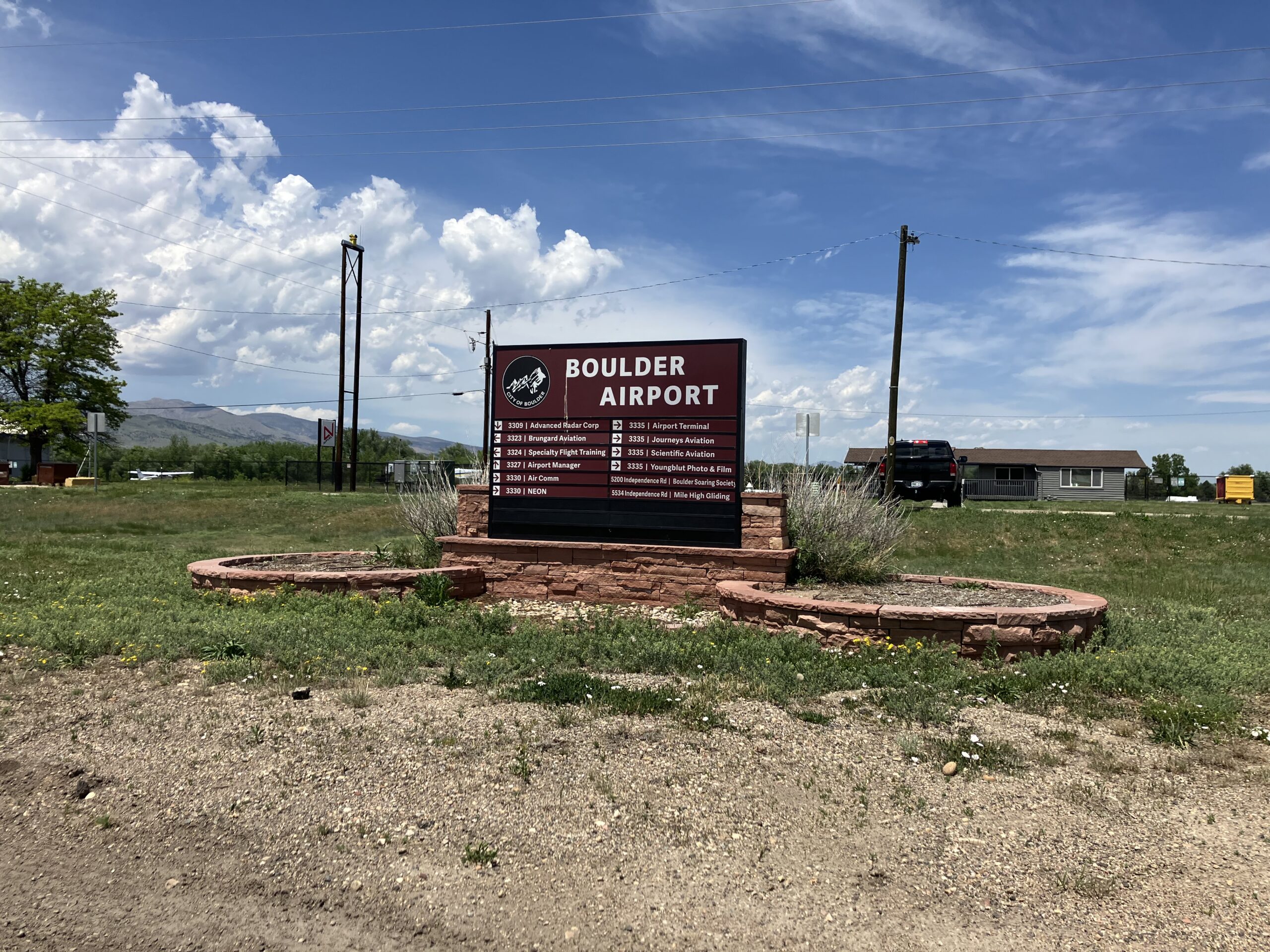
The Boulder City Council made the right decision when it voted 8-1 to resume pursuing Federal Aviation Administration grants for improvements to Boulder Municipal Airport. The decision came after years of uncertainty amid a proposal to redevelop the airport for affordable housing.
That idea had been promoted by Boulder City Councilmember Mark Wallach, who resigned moments after the July 23 vote. Wallach has been a thoughtful and principled member of the council, and his voice will be missed.
But the prospect of a protracted battle with the FAA over airport closure, as well as fierce opposition from aviation interests and business leaders, prompted the rest of the council to support the airport. It was the right decision.
Boulder Municipal Airport encompasses 179 acres on Boulder’s eastern edge. For years, debate over the airport’s future has been presented as a choice between aviation and affordable housing. In reality, the choice was between preserving a functioning public asset or embarking on an uncertain and immensely expensive process with no guarantee that the desired housing would ever materialize.
Closing the airport, which is owned by the city, would not immediately have produced homes for Boulder families. It would have launched years — perhaps decades — of legal challenges, environmental reviews, infrastructure planning and negotiations with the FAA over federal grant obligations. During that time, the public would likely have been responsible for maintaining the airport while receiving little in return — hardly a prudent use of taxpayer resources.
The airport itself provides benefits that often go unnoticed. It serves business aviation, flight instruction, aerospace research, emergency operations and wildfire response. In a region that already has experienced catastrophic wildfires, preserving aviation infrastructure is a matter of public safety, as well as economic development. Loss of the airport would have left an enormous gap in those areas.
None of this diminishes the reality of Boulder’s housing crisis. In a city where the median home sales price exceeds $1.4 million, attainable housing for workers, young families and seniors represents a critical need. But there is little evidence that closing the airport represented the best — or only — path forward. Boulder can encourage redevelopment and infill, increasing density where appropriate. It can also streamline the development-review process and carve months or years from development timelines. Zoning can be modernized and adapted.
The council’s decision also restores an element that has been in short supply: certainty. Airport users can be confident in the facility’s future. Airport grants can be pursued to enhance it as a community asset, including addressing deferred maintenance issues.
Reasonable people can disagree on fundamental issues. Wallach’s advocacy reflected legitimate concerns about housing supply, affordability and land use, issues that deserve continued attention.
But sound public policy requires weighing different interests, benefits and risks. Boulder City Council’s decision was the right decision for Boulder, both for today and for the future.
The Boulder City Council made the right decision when it voted 8-1 to resume pursuing Federal Aviation Administration grants for improvements to Boulder Municipal Airport. The decision came after years of uncertainty amid a proposal to redevelop the airport for affordable housing.
Related Posts
-
Backers of two ballot measures that would close the Boulder airport and use the land…
-
The Boulder City Council declined to take a specific position on whether members support closing…
-

BOULDER — Boulder City manager Nuria Rivera-Vandermyde recently promoted two employees to fill a pair…
-
Officials hired Eric Vences recently as the new Boulder Municipal Airport manager after completing a…
