
Brewers grapple with extra capacity as craft sales slow
Decline in sales, shifting consumer habits create ‘brutal’ situation

As craft-beer production and sales continue to contract, one result — beyond agita for brewers and their accountants — is an increase in barrels and fermentation tanks that are now sitting empty rather than pumping out fresh lagers, sours and stouts.
“It’s brutal,” Jeffrey York, associate dean for strategic initiatives at the University of Colorado’s Leeds School of Business, said of the craft industry’s over-capacity problem.
“It’s a very difficult situation to react to because you’ve been growing the business and forecasting the growth of your business based on” years and years of positive momentum in the sector, said York, who co-hosts “Creative Distillation,” a podcast that often focuses on entrepreneurship through the lens of the beverage industry. “Of course, we’re all human beings, so if things are going well, we don’t tend to think they’re going to turn really badly so quickly.”
“A pretty typical pattern”
An April report from Boulder-based trade group Brewers Association found that total craft production fell 5.1% across the country in 2025. Last year, 60% of breweries reported production declines, while 39% noted growth and 1% said they were holding steady. Employment was also down in 2025. Craft accounted for 189,000 jobs last year, 4% fewer than in 2024.
“This is a pretty typical pattern, what’s happening in craft brewing right now. You’ll have a very high level of growth and entry, and then eventually you’ll just have too many suppliers for the demand that’s there. Or the demand changes and the amount of suppliers that was right for the previous demand is forced to shrink,” York said. “In these cases, what you’ll typically see is consolidation and a lot of failures, unfortunately. Another aspect you’ll see is (companies) shifting to either expand their market or to differentiate themselves within the market a different way.”
“A very stressful and lengthy experience”
Brewers Association found that in 2024 “breweries were using about 55% on average of their capacity for beer production,” BA staff economist Matt Gacioch told BizWest this spring. “Now that doesn’t mean that 45% of their capacity was just totally not being utilized. Some chunk of that is being used for beyond beer products,” such as seltzers, ready-to-drink cocktails or non-alcoholic beverages.
BA is compiling figures for its 2025 production report, but “preliminary 2025 numbers look pretty darn close to what we were seeing in 2024,” Gacioch said.
But even if the average brewers’ capacity utilization is closer to 60, that’s still much lower than it had been for much of the past couple of decades and “lower than what you would typically want to see in most manufacturing settings,” he added. “There’s kind of a sweet spot, and it varies industry by industry. But as kind of a rule of thumb, somewhere near 80% (capacity utilization) allows you to tune up production in high seasons and not be too underutilized during low seasons.”
Finding and maintaining that sweet spot is, at its heart, an exercise in basic economics.
“In running a brewery, like many manufacturing businesses, there are some fixed costs that are just associated with keeping the lights on and keeping the pumps moving,” Gacioch said. “Then there’s the variable cost that relates to the amount of production. So the more you’re able to get closer to maximum capacity, your unit economics just get better.”
But getting that equation right has proved to be “a very stressful and lengthy experience of a lot of breweries that expanded right before the pandemic,” he said.
Capacity expansion probably seemed like a no-brainer for many crafters through the 2000s and 2010s. Sales and production were growing steadily each year, and “money was relatively cheap in terms of interest rates,” Gacioch said. “There was just a lot of optimism and available capital for expansion.”
BA’s capacity estimates might not be capturing the full underutilization picture because they don’t account for breweries that are no longer in business but still own unused brewing equipment.
“There are just so many fewer breweries opening” than had been the trend in recent decades, Gacioch said. “In the past, when there were more breweries opening, if a physical location at 123 Main St. closes the brewery, another brewery would have a business plan ready to take advantage of that and have another brewery in that space sooner than later. And we’re really just not seeing that as much. There are more of these (shuttered) locations where the brew systems are just sitting there.”
While no one likes driving past their former favorite brewery and seeing dust accumulate on the windows, there could be at least one silver lining to the upward tick in closures.
“All of those fermentation vessels sitting dormant right now means that if you’re looking to open a brewery right now, it’s about as cheap to get used equipment as it’s been at any point since the craft-beer revolution” began in the 1980s and 1990s, Gacioch said.
“Hopefully, we’ll see a sort of shakeout and this consolidation leads to a shift towards a focus on fantastic brewing,” York said. “Hopefully we’ll see this brewing equipment that comes back in the market trigger people to take the step” to launch new and innovative breweries.
“I’m very optimistic about the long-term future,” he said. “But I do think there are a lot of breweries that just were not very good. If you’re not making a really great product, then I think you’re going to be in big trouble.”
“As everything changes, we’re trying to be flexible”
So what is the industry doing with all of that extra brewing capacity? Some brewers are buying up smaller operators and consolidating production. Some are providing contract-brewing services for companies that don’t have manufacturing space of their own. Some — Longmont’s Left Hand Brewing Co., for example — are doing a bit of both.
Left Hand Collective, the brewery’s growing portfolio company controlled by Left Hand parent company Indian Peaks Brewing Co., absorbed Aurora’s Dry Dock Brewing Co. last year before inking a deal this winter to soak up Longmont neighbor Bootstrap Brewing Co.
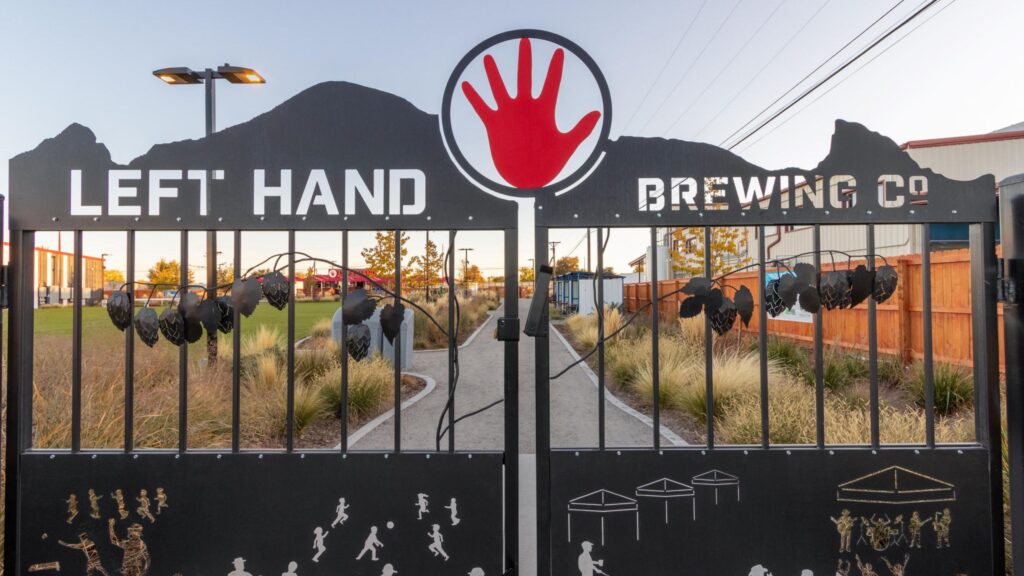
Production of both those acquired brands is moving into Left Hand’s facility.
“We’ve got plenty of capacity, which is one of the reasons we’re out here looking (for acquisition targets). We’ve got a lot of overhead to cover, so we need to keep the brewery machine running,” Left Hand founder and CEO Eric Wallace told BizWest in an interview after the Bootstrap acquisition in February. “And filling it up with brands with recognition and quality and potential is one way to do that.”
In chats with experts on the economics of brewing, Wallace said he’s been told that the “entire brewing industry is overbuilt by double” in terms of beer-making capacity as it relates to current demand.
“I think that’s about right,” he said. “There’s tons of capacity. And I’ve had a fair number of conversations with people like, ‘Oh, we’re gonna buy more tanks, or we’re going to build a production facility.’ Why? You can rent (both equipment and production capacity in existing facilities) so much more cheaply right now. Rent it and see if it works before you go and drop the big coin on all that stainless steel.”
During BA’s annual craft-beer conferences, contract brewing panels have been increasing hot tickets in recent years, Gacioch said. “It’s always a full house for those because this is something that folks figure, ‘Hey, if I can actually take advantage of the fact that I do have more capacity and bring in some revenue, that would be key.’ The challenge at this moment in the industry is that everyone wants to be the brewery that other companies contract with for their production, and very few want to be the ones that are contracting out their production.”
For that latter group, the challenge can sometimes be a psychological one, he added. “There’s something visceral about having your own brew house” and controlling every aspect of the production process.
But, Gacioch said, “in today’s ultra-competitive market, to make a business succeed, there may need to be some of those compromises.”
The Left Hand Collective’s framework is slightly different from the straightforward contract-brewing model in that its members — Dry Dock and Bootstrap, for example — are equity partners in the broader venture rather than clients who simply pay to have their beers brewed at Left Hand’s facility.
That said, the company does have “a straight contracting position” with other brands that aren’t minority owners in the collective, Wallace said. “Their interest is paying us to do a job for them and they haven’t graduated to collective status.”
He added: “This is an evolving mental state for us. As everything changes, we’re trying to be flexible.”
As a result of Left Hand’s success folding in other brands, “we really need to hire some people,” Wallace said. “We don’t have enough people, and we’ve been holding off (on hiring) because we knew (that these recent acquisitions were) coming at us. So we’re kind of dealing with the pain (of being understaffed) right now because we know that there’s people that are going to be needing jobs.”
As craft-beer production and sales continue to contract, one result — beyond agita for brewers and their accountants — is an increase in barrels and fermentation tanks that are now sitting empty rather than pumping out fresh lagers, sours and stouts.

Related Posts
-

Goat Patch Brewing Co. in Colorado Springs will acquire Monument’s Pikes Peak Brewing Co.
-

DENVER — Broomfield’s Noses Brewing Co. recently opened a second location in Denver’s Park Hill…
-

Odell Brewing Co. will promote river-conservation efforts by featuring the logo of Protect Our Rivers,…
-

Dozens of dogs descended on the avenues around Boulder Social in March to march with…
