
Execs say work needed to keep tech startups in Colorado
State regulations, luring investors among challenges
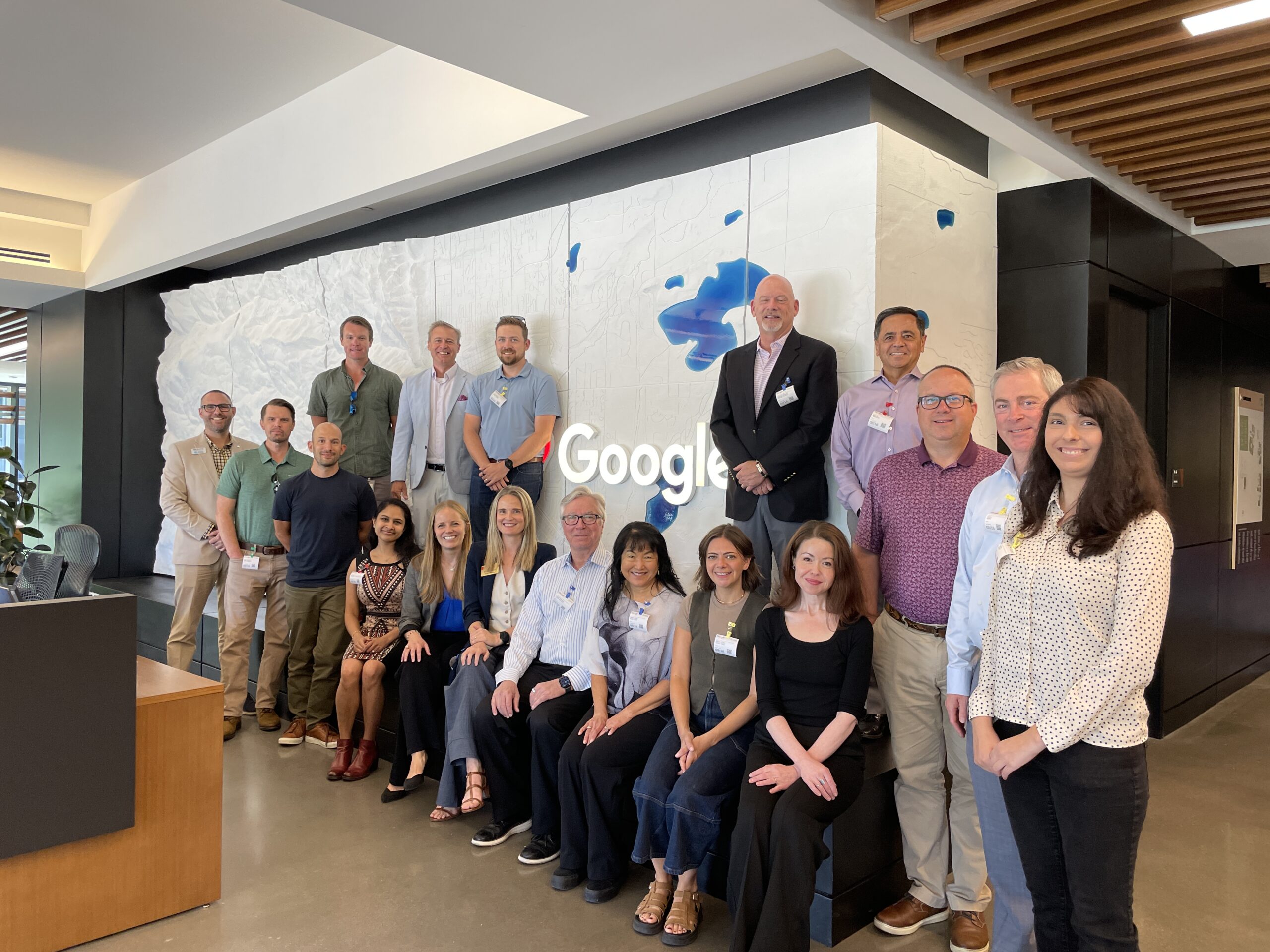
BOULDER — Colorado is a great place for cutting-edge technology startups, industry executives agreed at a BizWest CEO Roundtable. But most of them cautioned that keeping those companies here is going to take some work.
Colorado is “in a great position, but we need to be mindful of the trajectory we’re on and the business climate we’re setting for future startups and scaleups,” said Colin Larson, a regional manager of state and local government affairs and public policy at Google in Boulder, which hosted Tuesday’s roundtable.
“We have a fantastic investor community when it comes to Series A-stage companies, but once you get past Series A there’s two things that are pulling these companies away from Colorado,” he said. “One is those middle-stage to late-stage investors – Series B, Series C – most of them tend to not be here, and most of them don’t even have boots on the ground here. Secondly, the state of Colorado, especially for hard tech, is a laggard in that space, and our neighbors – Oklahoma, Texas, New Mexico – are opening up their wallets to invite Colorado hard-tech companies in.
“We’re seeing that with our own portfolio,” he added. “I think Colorado has lots of reasons for companies to stay, but we do see more and more companies having options elsewhere that they didn’t have years ago.”
Dede Willis, president and CEO of Orbit Genomics Inc., said the life-sciences industry in Colorado “has been incredibly strong over the years in terms of the number of startups, but very lacking in terms of investors.
“People are very surprised when I talk to them and they don’t realize how strong the economy here is,” she said. “But we still struggle on the investor side. It used to be if you had clinical data, that was great. Now people say, ‘No, I want to see even more clinical data.’ That’s nationwide as well as in Europe.
“But I think the focus on trying to bring more life-science investors into Colorado is a key,” Willis said. “There’s lots and lots of efforts that go on to try to bring more investors in. There are certain tech investors who are straddling and moving over, and I’m talking to a lot of them, but it’s still a challenge and there’s a huge effort by the Colorado Bioscience Association to be one of the top five in the country for life-sciences startups.”
Part of finding investors is building your own network of them, said Jacob Segil, co-founder of Afference Inc., a 3-year-old, venture-backed company that is building a semiconductor for wearables.
“We’ve had three rounds of financing in three years, and the lead investor in all of them was a Colorado-based venture capitalist,” he said. “I don’t know many other entities that have done that, and I don’t know if that was really possible years ago. We have a strong enough local network that these are people we’ve known and have worked with who are following us and let us grow here.”
The environment for angel investors “is terrific, but it’s sometimes also challenging to build on that. A lot of that has to do with the infrastructure associated with Boulder,” said George Douaire, CEO of Stride Tech Medical Inc., which produces attachments that help prevent falls by seniors using walkers to aid their mobility.
His founding team used resources from CU Boulder, including Catalyze CU and the New Venture Challenge, to develop their technology and business concepts.
“The infrastructure, the housing, the cost of doing business here is a bit challenging for the early-ups,” Douaire said. “I’m funding basically everything now and doing it out of our house, which is fine and it’s part of the grind that’s associated with a startup, but the incubators in the space that we used to have are a little bit less than they were. The options for those kinds of things are different.”
Stan Hickory, director of the McNeil Center for Entrepreneurship and Innovation at the Colorado School of Mines, agreed about the incubators and more.
“Pre-COVID, our startup ecosystem was wonderful,” he said. “COVID decimated it, and it’s taken a long time to recover. Foundry was gone, Techstars was gone, but it’s been slowly kind of building and building. We’re getting to the point where it’s going to be even better than it was before.”
The technology sector is “exploding in that startup space, but then the later stage, those are the pain points right now,” he said. “How are we going to keep companies here that were built here, and then keep them going?”
That search for investment applies to some of the smallest companies as well, said Erin Hoard, executive director of TinkerMill in Longmont.
“I come from a teeny, tiny perspective,” she said. “At TinkerMill, we are a place where you can come and make anything that you can dream up, and so every day there are people that are showing up and starting businesses. But finding funding once they actually make it and get up to that next level has been interesting.”
Hickory attributed a lot of the technology sector’s recovery to collaboration, noting the ecosystem being built by the University of Denver and the University of Colorado’s Denver operations. And the Colorado School of Mines “is a sleeping giant,” he said, where “kids are building a quantum refrigerator right down the hall.”
Quantum computing has been one of the brightest spots recently for Colorado’s technology climate. Noted Larson, “We really are on the map nationally.”
The Boulder Valley — with its powerhouse federal labs and CU’s world-class physics department — has become, over the past few decades, a global epicenter for quantum research. That’s why the U.S. Department of Commerce’s Tech Hub program in 2024 granted Elevate Quantum, a nonprofit consortium of about 70 stakeholders who represent industry, academia, capital and laboratories in Colorado and New Mexico, a Phase 2 Tech Hub designation that unlocked $127 million in state and federal funds, which are expected to generate several billion more dollars of private investment in the region’s quantum industry.
Quantum theory attempts to explain the behavior of matter at atomic and subatomic levels. Because quantum computers take advantage of special properties of quantum systems such as superposition, their computing power and speed is exponentially greater than a traditional computer. Applications of quantum science could revolutionize the way humans discover new drug therapies, map the cosmos, protect sensitive data, combat climate change and maybe even discover new forms of life in deep space.
“It’s an extremely exciting time to be working with quantum here in Colorado,” said Alison Karp, senior program manager of the Colorado Quantum Fund at the state’s Office of Economic Development and International Trade. “We do have an incredible opportunity to tell our story, to demonstrate to the country as well as the world the century of work that we’ve already put in in the quantum industry. So really now is the time to capitalize on what that looks like and how we can continue to be on the forefront of quantum.”
A century of work in quantum? Yes, indeed.
“Quantum is not new. Quantum science is over a century old now,” said Chris Muldrow, executive director of the Colorado Quantum Incubator. “We’re now in Quantum 2.0. That’s where there’s a lot of energy around federal investing. Colorado has been a quantum epicenter for over 60 years, so we’ve been doing quantum through CU Boulder and NISP here.
“We have this great strength here and this great history,” he said. “We’re the epicenter for a lot of quantum technology in the U.S, Right now we’re in the lead position, but we are at risk of potentially losing that because of the investment by other states.”
He acknowledged that “the state has invested in quantum here. We have a $74 million matching fund to our tech hub designation.
“While all that’s great, and it’s a huge chunk of money, other states are putting in $200 million, $500 million. They are trying to catch up to us,” Muldrow said. “Where’s our strategy now? If we don’t continue to make sure the companies that are here stay here while also trying to recruit companies to come join our ecosystem here, we have the potential to lose our quantum leadership position.”
Valerie Eastman, CEO of WinterWinds Technologies, a trade name for WinterWinds Robotics Inc., said “there’s a good ecosystem here. We are very fortunate.” She added, however, that investment isn’t the only challenge for the sector. The ever-evolving nature of artificial intelligence presents its own hurdles.
“I think that there is a warranted overfocus on startups right now in tech, and not every tech company is a startup,” she said. “What I’m seeing in the non-startup tech companies is that buying cycles are becoming longer due to micro- and macro-economic forces. Buying cycles are getting really stressed out for a lot of reasons, and some of the non-startup companies that still work on tech are getting a little bit rare.
“Also, there’s a little bit of unease,” she said, “as in where do we go next? Every week there’s a new AI model, and if everything’s AI then nothing’s AI, and which one do we adopt this week?”
Amy Dodenhoff, director of venture development at Venture Partners at CU Boulder, the University of Colorado’s technology transfer office, described the state’s technology sector as “thriving.”
“The Colorado ecosystem is really something special,” she said. “One of the things that really stood out to me when I moved here is that the full ecosystem leans into “How do we help each other?”
According to a recent study, she said, CU Boulder alone has a “$5.1 billion impact on the Colorado state economy.”
The area’s research universities continue to be a driving force behind keeping Colorado’s technology sector strong and innovative, said Puja Gupta, executive vice president of Munich, Germany-based Marvel Fusion
Under an emerging partnership between her company and Colorado State University, Fort Collins is poised to become home to one of the most powerful laser facilities in the world and an international epicenter for research into laser fusion energy and high-energy density physics. The $150 million venture created a public-private partnership to support construction of a next-generation, high-power laser and fusion research facility on the CSU Foothills Campus.
“Our main reason for building it here was the existing laboratory at CSU,” Gupta said. “We started off with some experiments there, and we thought it would be great for us to do our laser technology demonstration there. CSU stood up in a big way to help us do that because it required major investment from the university.
“Now as we build Atlas, for us Colorado has become that center of gravity where it is much easier for us to grow here,” Gupta said.
“Overall, the state is doing an excellent job of attracting high-tech sectors,” she said. “We have been hearing a lot from sectors we would benefit from.”
One company spun off from CU Boulder’s research is PrecisionTerra Inc., which is commercializing a cutting-edge algorithm that enhances GPS signal coverage in challenging environments. Its founder, Maithreyi Gopalakrishnan, said her biggest challenge is “finding hiring pipelines” because “we want to do as much hiring as possible in Colorado.”
Willis added that, “from a hiring standpoint, we actually don’t have issues in finding the right talent. In fact, I’m trying to help quite a few friends whose companies were either acquired or shut down find positions because they don’t really want to leave Colorado.”
Loren Burnett, president and CEO of Prometheus Materials, agreed that those acquisitions present a challenge.
“What we see a lot in Colorado,” he said, “is that people start companies, the companies do well, the company gets acquired, the acquiring company doesn’t have any desire or operations in Colorado, and that company then disappears – as do the management team and the engineers and staff associated with it. So ultimately we lose. Through our success, we end up losing.”
It’s important in the long term, he said, “for companies to be able to sustain operations and for us to have not only cash but talent, and keeping the talent that we have.”
Burnett’s company is developing a carbon negative cement for construction and working with six hyperscale data centers.
“I’m a serial entrepreneur,” he said. “This is the sixth company that I’ve started over a career. I love the entrepreneurial community in Colorado. I think it’s fabulous. My concern is what happens after that.”
Part of ensuring stability is attracting larger employers, Burnett said.
For instance, “I love seeing Google having operations in Colorado,” he said. “So to me, being able to sustain the infrastructure going forward, we need to have companies that are larger that get attracted into Colorado. If you look at some of the states that are net importers of companies, like Texas, North Carolina and others, I think that’s where we need to get to, and I don’t feel like we’re there yet. I think we might be improving, but I think we’ve got a long way to go.”
Gupta said state incentives for clean energy have been important for Atlas, but “there’s still a lot of research that needs to be done on the front end. We don’t generate any revenue until then. When we get hit by sales tax, use tax, it makes us wonder.”
Incentives are important, Burnett said, but a big consideration for new tech companies is, “Are they welcomed or are they not welcomed?”
That’s especially true “from a zoning perspective, where you can actually build out your operations and do things,” he said. “Look at Texas. They are very welcoming to companies of all sorts to come in. They make it very attractive for those companies to be located there. That will then spawn additional resources and additional startups and additional technology.”
“We can typically get our arms around regulation,” Larson said, but “I would suspect most people at this table don’t have a large army of regulatory-affairs attorneys to do compliance, especially with nuanced technology. I really think that has had a damping effect on people looking for site selection here.”
The key, Burnett said, “is that we really need to have public policy in place that makes it attractive so companies that are midrange companies up to larger-scale companies want to come to Colorado and have operations in Colorado.”
Public policy has been a recent focus of Dan Caruso, whose Boulder-based company, Caruso Ventures, strives to be the leading venture-capital firm in Colorado.
In late April, Caruso and more than 230 Colorado business leaders sent an open letter titled “Ensuring Colorado’s Innovation Future” to state leaders including Gov. Jared Polis. The letter urged the leaders to “conduct a thorough and honest assessment of the structural, regulatory, legislative, and rhetorical factors contributing to Colorado being categorized by founders, investors, and business leaders as an environment losing ground to competing states — not only for technology investment and company formation, but also for company retention, headquarters relocation, and inclusion on shortlists for expansion and capital deployment.”
The letter urged them to “recalibrate public rhetoric in a manner that demonstrates authentic partnership with — and sustained commitment to — innovators, builders, and growth-oriented businesses, restoring confidence among those considering whether to invest, expand, remain, or relocate in Colorado.”
It called on them to “implement policy adjustments informed by that assessment to remove barriers and reestablish Colorado as a preferred geography for technology investment, company formation, business expansion, and long-term capital deployment” by modernizing and streamlining “land-use, permitting and development frameworks to significantly increase housing supply and improve affordability through market-driven growth.”
Polis endorsed and signed the letter himself, acknowledging concerns that excessive regulations and unfriendly business rhetoric are driving companies and talent out of Colorado.
“Dan’s intention with the letter was that he doesn’t have the solution,” Cody Moore, vice president of Caruso Ventures, told executives at Tuesday’s roundtable. “He’s here to tell those currently in office and those coming into office to acknowledge that we have a problem, and the trajectory that we’re on, if we stay on it, is going to lead to more problems. He lays out basically a 12-point plan, and each of those 12 points is basically a different item we need to focus on, and the solution for each is different.
“His underlying purpose with that is to say that in Colorado, we’re always tooting our own horn, and we should. It’s a great place to live. We’ve done great things. But I think we need to pause and reflect and acknowledge the fact that we are losing ground to other states in some of these measures. That’s the first step in solving the problem, is acknowledging we have one.”
Moore said Caruso “did get a lot of traction out of that, and he got plenty of opposition. But our goal, our mission at Caruso Ventures, is to make Colorado the number one investment destination between the coasts.
“Similar to Dan’s letter, there’s some areas you can point to that we are best,” Moore said, “but we’d be lying if we didn’t acknowledge that in some areas our trajectory is moving us farther away.”
From a state perspective, OEDIT’s Karp said, “we acknowledge the headwinds that Colorado is facing. There’s a lot we’re doing to be responsive to those headwinds, to listen to business sectors throughout the state in all industries and gather recommendations and try to be responsive to not only demonstrate Colorado’s strengths but to demonstrate our resilience.
“We have ongoing listening sessions that are current throughout the state,” she said.
Matt Wiggins, associate vice president for economic vitality at the Boulder Chamber, has been listening as well.
“A week and a half ago, we were touring around four different locations,” he said. “We heard from businesses from aerospace, quantum, clean tech and life sciences. They were saying a lot of things that people are saying here, like too much tax, We heard the same thing from site selectors: We need Colorado to focus on speed to market and energy.
“The governor’s office executive order to target permitting is a step in the right direction,” Wiggins said. “Some of our investors we sit across the table from, they’re telling us how many offers they’re getting from other states. Those states are saying ‘Here’s some land.’ But eventually the states that are giving up everything, it will come back to bite them.
“But I think we’re moving in the right direction,” Wiggins said. “We’re making the right plays. There was a strong Quarter 1 for investment here in Colorado, and Quarter 2 was a little bit smaller than Quarter 1.
“I think that the investment is coming back,” Wiggins said, adding that the return of the Techstars startup accelerator to Colorado helps.
“We’re seeing a lot more business recruitment activity,” he said. “Roughly 30 different prospects came across our desk in 2025; we’re on pace to grow that by 50% this year. So lots of activity.
“Colorado is where people want to be,” Wiggins said. “That’s where the talent is. That’s where the networks are. I think there’s a really strong, promising future.”
Also attending the Roundtable were representatives of those companies who sponsor the event. They included Ashley Legan of the Berg Hill Greenleaf Ruscitti law firm, Jeremy Wilson and Mallory Garcia of the Plante Moran accounting company, and Aaron Spear and Bonifacio “Boni” Sandoval of Bank of Colorado.
Colorado is a great place for cutting-edge technology startups, industry executives agreed at a BizWest CEO Roundtable. But most of them cautioned that keeping those companies here is going to take some work.
Related Posts
-

Members of BizWest’s inaugural Startups to Watch class and other Northern Colorado business leaders gathered…
-
The University of Colorado spun out 35 startup businesses in 2024 based on school intellectual…
-

Colorado Companies to Watch has launched Colorado Nonprofits to Know, a statewide recognition program honoring…
-

Solid Power was selected this month by the U.S. Department of Energy to receive grant…
