
Life-sciences execs cite area’s advantages, challenges
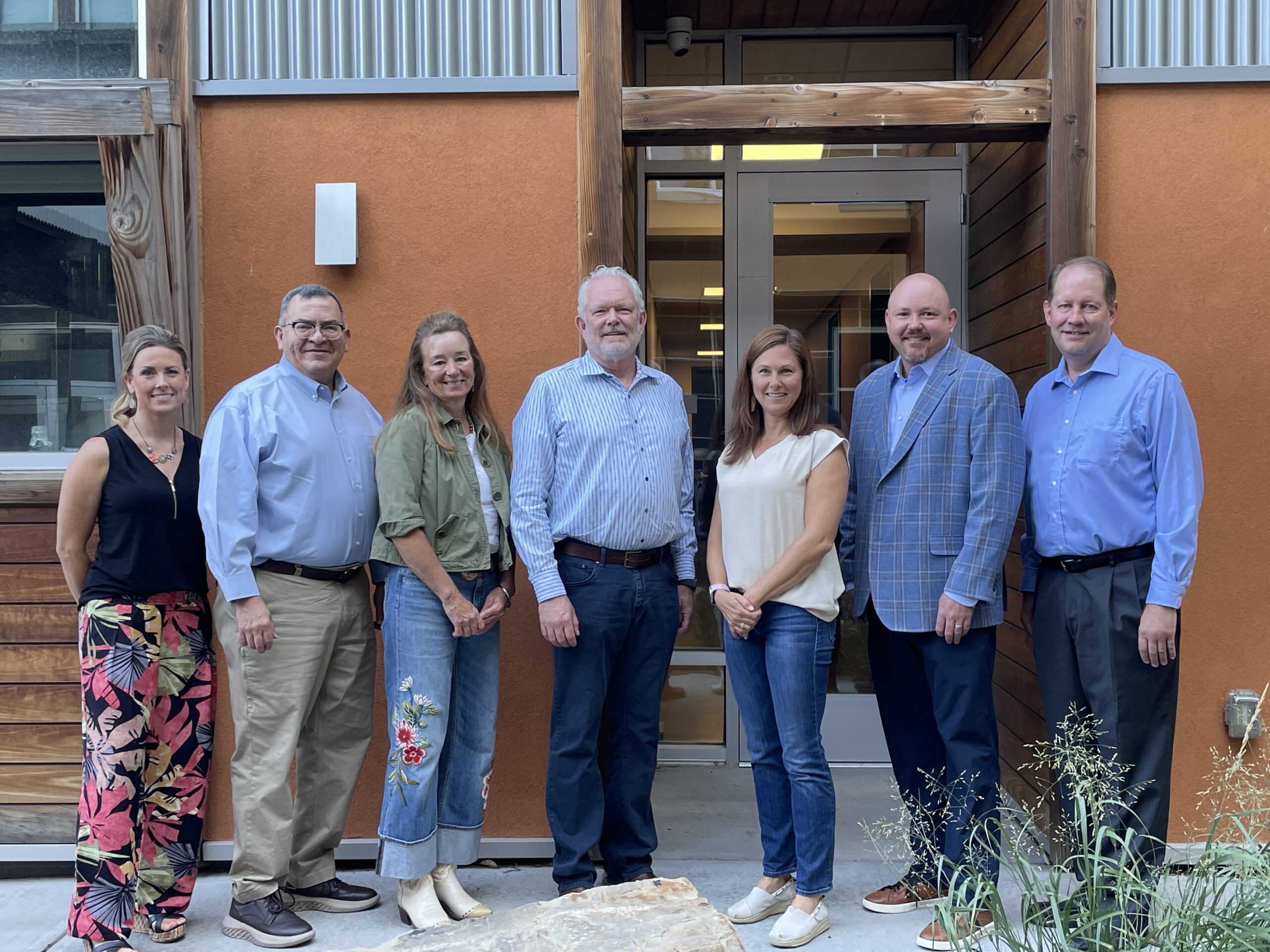
FORT COLLINS — Executives in life-sciences industries in Northern Colorado are bullish on the infrastructure the region provides. But at a BizWest CEO Roundtable event held this week in Fort Collins, they said they still face challenges with getting investors interested, dealing with the current uncertainty around federal grants and coping with the high cost of living.
For Kevin Noble, director of the life-sciences incubator at Innosphere, the technology accelerator that hosted Tuesday’s discussion, the mission is what it’s always been.
“How do we drive more growth for life sciences in Colorado and create the environment that attracts companies here,” he said.
For Lyndsey Linke, CEO and founder of SiVEC Biotechnologies, the challenge is more specific.
“How do we make this area attractive to investors and get them to understand we have the resources to be successful,” she said. “Often there’s this thought that if we’re not in the Bay Area or Boston, we don’t have the resources to be successful and sustainable, and I absolutely disagree with that.”
The challenge is what Noble called the “scale gap.”
“When you look at Massachusetts, North Carolina and California, we’re just not in that same weight class yet. We don’t have any big-dollar state life-science tax-incentive or capital programs,” Noble said. “When you look at states that are actively pursuing life sciences, they do have those programs.
Colorado State University, the University of Colorado Boulder, the University of Northern Colorado and Colorado School of Mines are among those “looking to expand their life-science programs,” he said, and programs run by the state Office of Economic Development and International Trade “are really good to help founders to get their footing.”
Linke agreed that the number of “incredible institutions” is “very unique to Colorado.
“We’ve got access, for that reason, to a lot of talent,” she said. “We’ve got a very collaborative environment. We have a really healthy startup community as well, so I don’t think innovation is our problem. We’ve got a lot of incredible entrepreneurs and a really healthy, innovative ecosystem here.
“It’s just, how do we scale that? How do we take that to the next stage? How do we nurture the early stage?”
Linke also noted the number of wealthy people who live in Colorado. “We need to figure out how to pull the right levers and bring resources together,” she said. “I think we’re collaborative, but how do we communicate in a way that gives those wealthy individuals the opportunity to invest in the state?”
The talent and research base “is really great here,” Noble agreed. “While we have companies like Pfizer leaving, their people stay.”
However, he added, “while OEDIT can give these grants that are very positive, they cap out at $150,00 or $250,000, when you’ve got other states that are up in the millions trying to get life sciences to come in. Indiana just launched a billion-dollar fund to attract life sciences to the state.”
While access to capital is always a challenge, he said, “the momentum in capital is positive. We’re employing, now, more than 41,000 life-sciences professionals in the state, and the ecosystem is going to raise over $1 billion for seven consecutive years. Venture funding was up 28% year over year in 2024, so the signal there is strong.”
Those in the agriculture side of life sciences have a different view of the business climate in Colorado, said Lisa Herickhoff, president of Membrane Protective Technologies Inc. Her family-owned company works to improve reproductive success in livestock by developing a technology that makes breeding using artificial insemination more effective.
“Our biggest challenge is cost of living,” Herickhoff said.
Noting that Linke and Noble had mentioned competition from coastal markets, she contended that “Colorado is right on board with cost of living. It’s a deterrent, especially for people in agriculture to come and live in Colorado. It’s an impediment to us hiring people. We’ve had some great candidates who’ve said, ‘No, I can’t afford to live in Colorado.’
“Colorado in general for ag is not terribly friendly,” Herickhoff said. “It’s an impediment. Not only the cost of living but the political climate against agriculture has impacted us in terms of people looking at us.
“We had a potential acquisition a couple years ago and they were going to take us and move us out. They were not going to stay here because of the political climate,” she said. “Some of our customers are here, although many of them have moved out.
“Colorado is someplace we actually have actively looked to move out of,” she said. “I don’t love that, but that’s the reality. You look at the governor’s policies against agriculture in terms of an industry. Look at the wolves, for example. That’s driving ranchers and cattlemen to move out of Colorado. You say you’re from Colorado, and that’s a negative. That’s unfortunate.”
However, she said, “We’re actively hiring right now, and we have a great applicant pool. But CSU traditionally was an ag school, and they’re moving a little bit away from that, so we’re not having the applicant pool we used to have locally. Colorado doesn’t seem to be the draw it used to be. It’s still beautiful, but there are other issues.”
Although she reiterated that the area’s cost of living is a deterrent, she noted an interesting trend as she considers applicants.
“The people that we did have from Colorado actually are asking for a little less salary than the people we’re bringing in from out of state,” Herickoff said. “Maybe some of the ‘cost of living’ issue is perception based on what they’re seeing online.”
Rich Gonzales, co-founder and CEO of MOLA Biotechnologies LLC, a company that works to make blood products safer, also cited the state’s political leanings — but from a different perspective.
“Our biggest concern is the lack of grant opportunities. They’ve dried up,” he said. “We still have to compete, with or without grants, but for us, it’s Northern Colorado vs. the coasts. Our technology, the critical skill sets we need, are here, but the current political climate in the country is impacting us.
“The government finally admitted that, no matter what the research was, if you’re a red state, you get funding. If you’re in a blue state, you don’t,” Gonzales said. “That’s the reality we’re operating in right now, so in that perspective, we’re in a survival mode. You shouldn’t have to be thinking about that in that perspective if we’re going to move the industry forward.
“All the previous rules of engagement are gone,” he said, “and we have to see how we’re going to have to maneuver.”
Noble said Innosphere’s clients and cohorts “haven’t seen that contraction yet, but that seems to be more of a last-12-months phenomenon, so it’ll certainly be something to look for going forward.
“It certainly stresses different people that are aware of it,” he said, “and they have to incorporate it into their expectations.”
In that light, Linke said, a focus should be on “wanting to be more active in helping companies that are, for the lack of a better word, suffering and need that early-stage funding.”
Noble said Colorado’s life-sciences ecosystem’s dependence on grants such as those from the National Science Foundation “has made us a little more exposed to some of this volatility we’re seeing in the marketplace compared to other states who are offering things that aren’t so dependent on those levers.”
He said the Trump administration’s erratic stance on grants has altered how Innosphere advises its cohorts about seeking federal aid as well as venture capital.
“We’ve changed our approach to guide our founders to work on this concept of capital optionality,” Noble said. “We lay out the landscape of all the different options of capital. If you’re a grant-targeting company, what’s your Plan B if you don’t get it? How long can you go or what can you do? Where can micro-VCs or angel networks or family foundations or other players come into the mix. The strategy is much more complex than what you would have done in 2019, 2020. It takes a lot more work, a lot more sophistication. You have to show investors you can talk about the returns they’re searching for and the value they would get investing in you.”
Noble explained that what he called micro-VCs “can write smaller checks. They’re earlier in their lifespan. They tend to have some connections to the industry but they also are a little younger in their own lifespan.
“It just means now that you have to turn over stones you didn’t have to before,” he said.
Nicola´s Anzellini, CEO of Cardiost, said his medical-device company is still in a research phase, and “it’ll be a little while before we go to market.”
Anzellini said “we’re preparing a $5 million funding round in the next few weeks and will need the money by January or February, but I’ve heard from the people at Innosphere that it will take longer. If we’re not successful, we may be able to form an entity in Germany.”
Herickhoff said state and federal matching funds “were pivotal in getting our product out the door. Now it relies on grants from the U.S. Department of Agriculture.
And yet some applications “have been sitting in the hopper for — it’ll be a year next month. So that’s pretty brutal.”
Her company no longer seeks venture-capital funding, she said.
“We backed away from that,” she said. “Agriculture is a little bit different. We are a family-owned company, and that narrative didn’t play very well in the VC world” because of their bad experiences with family dynamics. ”We got a lot of pushback initially, so we had to be very particular.”
Gonzales pointed out that “there are so many other agencies that have funding opportunities,” adding that his company’s initial work was funded by the Food and Drug Administration.
“The FDA is not a funding agency, but they funded it because they saw the importance of it. Now we’re commercializing it,” he said. “Our big investment now is going to come from the Department of Defense because there’s a need for this (blood safety) on the battlefield, and if they don’t invest, it’s never going to happen.”
The main thing to remember about seeking investors, Gonzales said, is that “we want to be controlling our destiny. They can be in the car, but I don’t want them in the driver’s seat.”
Also attending the Roundtable were Mike Grell of Plante Moran and Derek Otte of Elevations Credit Union. Both companies sponsor the Roundtable, as does the Berg Hill Greenleaf Ruscitti law firm.
Executives in life-sciences industries in Northern Colorado are bullish on the infrastructure the region provides. But at a BizWest CEO Roundtable event held this week in Fort Collins, they said they still face challenges with getting investors interested, dealing with the current uncertainty around federal grants and coping with the high cost of living.
Related Posts
-

Innosphere’s 2026 Life Sciences Incubator will feature a cohort of 38 startups from nine states…
-

Arjun Desai has stepped down from the board of directors at TriSalus Life Sciences Inc.…
-

TriSalus Life Sciences Inc. (Nasdaq: TLSI), a Westminster-based life-sciences company, has appointed David Patience as…
-
BOULDER — Biodesix Inc. (Nasdaq: BDSX), a life-sciences company that specializes in developing tools to…
