
2 new accelerator cohorts target environmental resilience

FORT COLLINS — Two accelerator cohorts designed to advance environmental intelligence have been launched by the National Science Foundation’s ASCEND Engine, and applications will be accepted through July 31.
ASCEND, or Advance Sensing and Computation for Environmental Decision Making, is a regional innovation engine led by Fort Collins-based Innosphere and focused on the Interstate 25 “innovation corridor.” The ASCEND Engine connects Colorado’s and Wyoming’s federal laboratories, universities and technology companies to develop scalable solutions for wildfire, drought, extreme weather and environmental resilience.
The cohorts will be focused on supporting entrepreneurs who are building solutions with Engine-aligned technologies. These accelerators include access to testbed infrastructure for real-world validation and deployment and $300,000 in prize money for the top program participants.
“Innosphere has offered industry-specific accelerator programs for more than two decades and has served 400-plus companies during that time,” Bud Michael, program director for the NSF ASCEND Engine, said in a prepared statement. “This dual-path accelerator will allow us to provide programming that addresses the specific needs within the ASCEND technologies focus areas as well as the common challenges faced by startups in R&D-intensive industries.”
The accelerators will align with two ASCEND programs.
One, called ARID, or Asset Resilience through Intelligent Digital Twins, is driving impacts for power and water utilities facing the growing threat of wildfire. According to an Innosphere news release, “the program provides access to a simulation platform for integration and validation of high-resolution wildfire-relevant weather conditions, fuels monitoring and built environment to inform proactive and real-time utility risk management.”
Its relevant areas of focus will include power systems, water systems, smoke and air quality monitoring, wind monitoring in complex terrain, quantum sensing, continuous asset stress monitoring, transportation infrastructure management, and insurance and reinsurance planning and management.
The other program, called SHIELD, or Soil Health Innovation, Evaluation, and Demonstration, is an operational-scale living laboratory to incubate soil health measurement technologies in a rigorously validated testbed environment. The program accelerates scalable measurement technologies, novel soil health characterization and adaptive management capabilities powered by environmental digital twins.
Its relevant areas of focus include adaptive livestock grazing management, quantum sensing, and watershed and water quality management as related to soil health.
ASCEND’s ARID and SHIELD eight-month accelerator programs will leverage Innosphere’s model to help 14 to 20 U.S.-based companies within the defined technology framework move from early prototype to commercially viable offerings. The accelerators will address a broad number of topics curated specifically for companies in later stages of technology development.
The program will include access to test facilities at which companies can conduct live environment testing and obtain use-case feedback for technology and business-model refinement.
A prize for the top three program participants in each cohort will be awarded at $80,000, $50,000 and $20,000 for first, second and third place, respectively. Prizes will be based on program participation, test-bed utilization and final presentations.
Innosphere will host applicant webinars at 11 a.m. July 8 and 11 a.m. July 22. More information and a path to submit applications are online at innosphere.org/accelerator.
Two accelerator cohorts designed to advance environmental intelligence have been launched by the National Science Foundation’s ASCEND Engine, and applications will be accepted through July 31.
Related Posts
-

Integral Consulting recently acquired Kinnetic Environmental Inc., a California-based company that performs sediment and water…
-
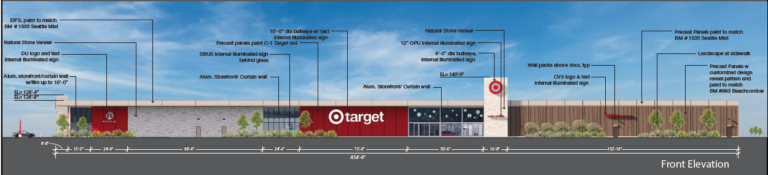
FIRESTONE — The 128,000-square-foot Target store just west of Home Depot in the City Centre…
-

Target will open is giant new distribution facility in Thornton this week.
-

Silvis Material, a Boulder developer of a bio-based adhesive for packaging and construction, was selected…
