
ROI of Live: What Sundance means for Boulder’s independent venues

Here’s what nobody in the film industry will tell you: For the hospitality industry, Sundance really doesn’t run on screenings. It runs on meals, panel discussions, cocktail hours and private gatherings that never appear on the official schedule.
The short version: Sundance creates an enormous secondary economy, and the preparation window for independent venues is already narrowing. The venues that come out ahead won’t be the ones scrambling in December. They’ll be the ones who started now.
In January 2027, Boulder becomes ground zero for one of the most culturally significant film festivals in the world. The Boulder Chamber has already launched a business activation portal. Venue upgrades are underway across 11 screening sites. The machine is moving.
And for most smaller, independent venues — the ones not on the festival circuit, not on the official partner list and not in the first wave of announcements — the window to prepare is closing faster than many may realize.
Eight months sounds like plenty of time. It really isn’t.
What Sundance actually brings to a host city
The official Sundance program is the tip of the iceberg. Beneath it is an enormous secondary economy of private events, corporate gatherings, sponsor activations and celebrations that unfold across the host city, largely invisible to the public but very real to venue operators paying attention.
In Park City, Utah, Sundance’s longtime home, boutique event spaces built meaningful revenue strategies around festival week without hosting a single official screening. The secondary market became its own ecosystem — one that rewarded prepared venues not just once, but year after year. The venues that showed up well in the early years built reputations that brought clients back.
We have an analogous opportunity, and unlike Park City, we can learn from that history before the first curtain goes up.
“The arrival of Sundance is a defining moment for our entire hospitality ecosystem,” said Visit Boulder CEO Charlene Hoffman. “The economic ripple effect will extend far beyond the official theaters and screening rooms. This is an unprecedented chance for our independent venues, restaurants and local businesses to step onto a global stage and show exactly what makes Boulder’s hospitality community so extraordinary.”
The two-part planning process
The first planning window is already happening. Unlike Park City, Boulder’s spread-out geography makes securing adjacent venues difficult for sponsors seeking strategic visibility. This “chicken or the egg” dynamic delays bookings as groups wait for others to commit first.
While some sponsors are observing the first year before participating, this carries risk. Boulder is relationship-driven; year-one alignments will shape the future landscape, and waiting means missing the chance to establish foundational partnerships early.
The second wave arrives in November and into December. According to Sundance’s submission guidelines, decisions on accepted projects are made in mid-to-late November, with notifications going out to all submitted projects in the first week of December. Many of those selected will quickly begin looking for spaces to gather for celebrations, private screenings and time with the people who helped bring their projects to life. These bookings tend to be time-sensitive and are often planned on short timelines. They’re also some of the most memorable events a venue can host.
Two distinct planning windows. Both require you to be ready before they open.
What ‘ready’ actually looks like
We’ve spent years navigating Boulder’s event economy, but Sundance introduces a different level of complexity. The venues and teams that will come out ahead won’t be the ones scrambling in December — they’ll be the ones who have already pressure-tested their systems well before January 2027.
“Ready” in this context is highly specific. It’s knowing exactly how your space functions for a panel at 10 a.m., a brand activation at 2 p.m. and a reception that same night—and being able to flip it seamlessly. It’s having A/V partners locked in who understand the pace and expectations of media-driven programming, not just social events. It’s clear load-in and load-out plans that can accommodate tight turnarounds and overlapping schedules.
It means having trusted catering and bar partners who can execute at a high level with minimal lead time while accommodating a wide range of dietary needs. It means contracts that already account for NDAs, media presence, security requirements, and brand sensitivities. It means a team on-site who is not just experienced, but calm under pressure and solutions-oriented when plans inevitably shift.
And just as importantly, it means having your relationships in place and knowing who you want to work with before the inquiries turn into fast-moving decisions.
The practical checklist
Before Sundance season arrives, independent venues should work through five specific preparation areas.
- Audit your AV and production capability. High-stakes events will stress-test your system immediately. If your setup requires workarounds, address them before they become a problem during a high-visibility moment.
- Dial in your partners – caterers, beverage service and everything else – starting immediately. Getting on the same page now reduces the chance of last-minute misalignment during a high-profile event.
- Build a clear event package. Don’t wait for an inquiry to figure out what you’re selling. Create a tiered offering — half-day, full-day and multi-day options with defined inclusions — so you can respond quickly and confidently when the moment comes.
- Get into the Boulder Chamber’s activation portal early. The portal is exactly the kind of infrastructure that puts smaller venues in front of qualified buyers who wouldn’t otherwise find them.
- Identify and reach out to your warm network now. Many event bookings move through event management companies, production firms and executive assistants who’ve worked in the region before. If you have relationships in that network, this is the moment to reach out.
- Prepare your team for a faster-paced inquiry process. Run a tabletop scenario. Work through what a compressed, high-stakes inquiry looks like from first contact to signed contract in 48 hours. The time to discover the gaps is before the festival.
The window is real — and it opens every January
It’s tempting to frame Sundance 2027 as a singular event: A once-in-a-generation moment that Boulder’s venues either capitalize on or miss. That framing is both wrong and dangerous.
Wrong because the Sundance Film Festival is returning to Boulder, not visiting. If all goes well, January 2027 will be Year One of a 10-year contract between the City of Boulder and one of the world’s most recognized cultural institutions. The real opportunity isn’t the first festival. It’s the second one — and the fifth, and the ninth — built on the reputation this community earns the first time around.
Dangerous because treating it as a singular windfall leads to exactly the kind of short-term thinking that poisons long-term relationships. Visitors who feel genuinely welcomed tend to come back. The ones who feel like a transaction tend to remember that as well.
The foot traffic surge, the media attention and the density of decision-makers in a small geographic area aren’t a one-time moment. They’re a first impression.
The question for independent venues isn’t just whether you’re ready to capture what January 2027 brings. It’s whether you’re ready to build something from it.
The spotlight is coming. What you do with it sets the tone for everything that follows.
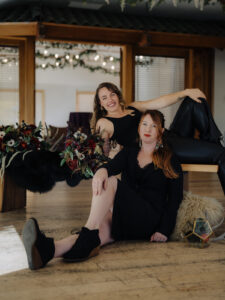
Lianne Van Wagner and Morgan Lifner are event professionals with extensive experience producing high-impact events. For more information, visit www.rembrandtyard.com.
Here's what nobody in the film industry will tell you: For the hospitality industry, Sundance really doesn't run on screenings. It runs on meals, panel discussions, cocktail hours and private gatherings that never appear on the official schedule.


Related Posts
-

The City of Boulder and Boulder County will host a community roundtable on April 12…
-

A bipartisan quartet of Colorado lawmakers introduced legislation this week that would establish a framework…
-

BIFF is set for April 9 through April 12, 2026.
-

Boulder and local transportation-tech company Commutifi Holdings Ltd. are partnering to launch Boulder Clean Commute,…
