
State backs campaign-finance complaint against Cascadia foes
We Are Greeley, Greeley Demands Better have chance to cure violations

GREELEY — Evidence to support allegations of unlawful acts by two groups supporting Ballot Issue 1A in the city’s Feb. 24 special election has been found by the Elections Division of the Colorado Secretary of State’s office.
In a ruling issued Wednesday, the state office found merit in Greeley-based homebuilder Tony Belfiore’s campaign-finance complaint against citizens group Greeley Demands Better and its associated nonprofit group, We Are Greeley. Those groups supported the ballot issue that was passed by voters, repealing the city-approved zoning for the Cascadia and Catalyst projects on the city’s western edge.
As of late last year, We Are Greeley had contributed at least $97,800 in in-kind donations to the zoning-repeal ballot issue, as well as a previous one that would have asked voters to repeal the city’s financing agreement for the project but was struck down in court.
“The Division initially determines that Complainant alleges sufficient facts to support a factual and legal basis for the violations of law alleged in the Complaint,” the ruling said. It gave the groups until March 25 to submit a “Notice of Intent to Cure” form to the division and to “cure any deficiencies specified in this notice or provide other relevant information on how Respondents have cured the alleged violations and substantially complied with the law.
“If Respondents dispute the allegations, Respondents may also provide the Division with such information for further review,” the ruling said. “The Division may ask Respondents for additional information including the production of documents or other tangible items during the cure or investigation.”
If the groups’ method to cure the alleged violations is judged sufficient, the state could dismiss the complaint. Otherwise, according to Wednesday’s ruling, “the division could “file an administrative complaint with a hearing officer.” Penalties could result, possibly including a determination that We Are Greeley is an issue committee that would be required to list the donors it has been shielding.
Reached Wednesday afternoon, Denver-based attorney Christopher Beall, who represents Belfiore as well as others who supported the Cascadia and Catalyst projects, told BizWest that “We are pleased the case is moving forward, and we hope We Are Greeley takes the opportunity to cure its failures.”
Tony Belfiore, owner of Belfiore Construction Co., had alleged in his complaint that Greeley Demands Better, which successfully petitioned the zoning-repeal question onto the ballot as Issue 1A, “has either paid for or received the benefit of in-kind contributions for substantially more campaign activity than it has reported in its disclosure reports.”
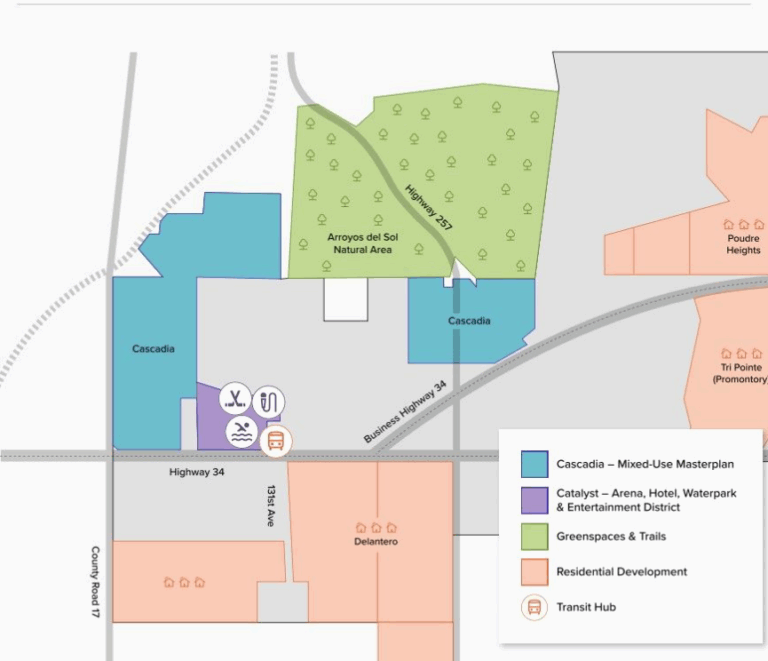
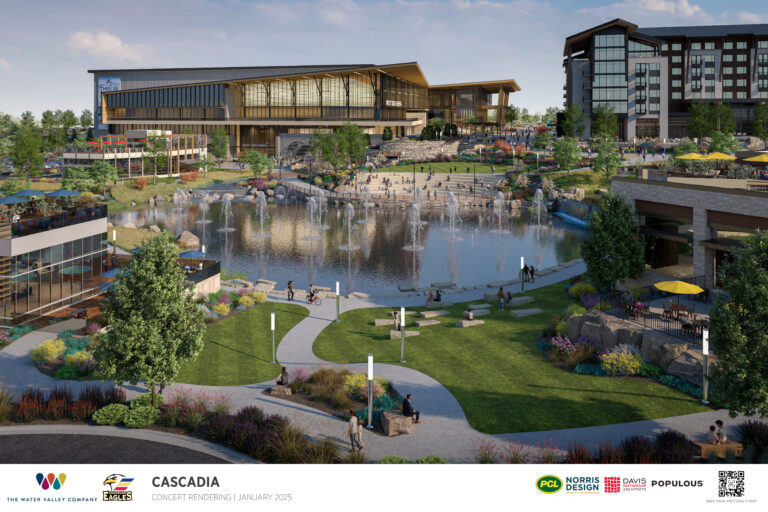
In the election, voters repealed the City Council’s Sept. 16 vote to approve a planned unit development for more than 833 acres of the city-owned Catalyst entertainment district and the Cascadia project, which would largely surround it. The projects, being developed by Windsor-based Water Valley Co., would be located on the north side of U.S. Highway 34, east of Weld County Road 17.
Citing finance disclosure reports filed on Jan. 26, Jan. 29 and Feb. 9, Belfiore’s complaint noted that Greeley Demands Better listed spending totaling $25,223.06 thus far, but monetary contributions of only $3,908.73.
The complaint also targeted the nonprofit group We Are Greeley, citing a belief that it “is providing material financial support for the ‘Yes’ campaign” to repeal the planned unit development ordinance, “and that financial support has not been disclosed either in a disclosure report by Greeley Demands Better or otherwise in a disclosure report by We Are Greeley.”
It alleges that “We Are Greeley and Greeley Demands Better are conspiring to avoid required campaign disclosure obligations by arranging to have campaign expenses paid by We Are Greeley that benefit Greeley Demands Better, without having such expenses reported by either organization, thereby hiding such spending by We Are Greeley through the mechanism of not reporting it to Greeley Demands Better or otherwise in campaign finance disclosure reports submitted to the Greeley City Clerk.”
Under the state Fair Campaign Practices Act and the Colorado Constitution, Belfiore’s complaint continued, “a ‘group of two or more persons’ that has ‘a major purpose’ of supporting a ballot measure and that has made ‘expenditures in excess of $200 to support’ that ballot measure is an ‘issue committee’” and thus must report all donations and expenses but hasn’t done so.
The complaint alleges that “discovery through the power of subpoena in an administrative hearing in this case will reveal communications between agents or representatives of We Are Greeley and agents or representatives of Greeley Demands Better, as well as others, showing that the nonprofit corporation was formed and has operated as a conduit to funnel donations to support the campaign to block the city’s master-planned community in West Greeley. all without disclosure of where that financial support is originating.”
The complaint charged that We Are Greeley meets the definition of an “issue committee” under the Fair Campaign Practices Act but has failed to register as one or file any campaign finance disclosure reports concerning its campaign activities. Additionally, it charged that “Greeley Demands Better has failed to file complete and accurate disclosure reports that reveal the in-kind contributions that have benefited it by We Are Greeley.”
Belfiore’s complaint echoed a similar one filed in November against We Are Greeley by former Greeley city manager Leonard Wiest, a former employee of Water Valley Co., and former reporter Tom Hacker, who also had worked in public relations for the City of Loveland and its police department.
Greeley Demands Better attorney Suzanne Taheri has contended that We Are Greeley lawfully does not report its donors and was formed deliberately to shield supporters of the repeal from “retaliation” within the community. Responding to the complaint by Wiest and Hacker, she said that 501(c)(4) nonprofits such as We Are Greeley, “unlike political action committees (PACs) or super PACs, are not required to reveal their donors to the public. They must file annual IRS Form 990 returns, which disclose contribution amounts but not donor identities (unless the donor is another nonprofit or certain types of entity). The IRS collects donor information on a confidential schedule, but this is not released to the public.
“Also,” Taheri wrote, “per the donations supporting Greeley Demands Better, there were no donors that earmarked a donation for a specific purpose; so again, no disclosure is needed in this respect for this case.”
Beall countered then that “the fact that We Are Greeley is a nonprofit doesn’t create an exemption.
“Its main purpose is supporting a ballot issue,” Beall said, pointing out that Taheri in a news release stated that “she formed We Are Greeley to shield donors. That means it’s an issue committee. Whether they are a nonprofit is immaterial.”
Decisions on that complaint, as well as a series of others related to Ballot Issue 1A and a previous effort by citizens group Greeley Deserves Better to repeal the city’s financing agreement for the Catalyst entertainment district, remain pending in the Colorado Secretary of State’s office.
The targets of the complaints get a “notice of opportunity to cure” or mitigate the issue at hand, Beall said. “Once the respondent submits, it’s up to the Secretary of State’s Elections Division staff to take the next action.”
Beall said the groups targeted in the complaint by Wiest and Hacker did respond in December and offer a cure, but that the nature of that cure wouldn’t be made public until the Elections Division either dismisses the case or sends it to the office of state Attorney General Phil Weiser for prosecution.
For the period from Feb. 9 to March 1, Greeley Demands Better reported $20,225 in contributions, including $20,000 from Centennial-based Defend Colorado. Among that nonprofit group’s targets are what it calls “the extreme policies of anti-energy groups” including proposed municipal fracking bans in Boulder and Longmont.
Taheri could not be reached for comment Wednesday afternoon.
Evidence to support allegations of unlawful acts by two groups supporting Ballot Issue 1A in the city’s Feb. 24 special election has been found by the Elections Division of the Colorado Secretary of State’s office.

Related Posts
-

he Group Inc. Real Estate LLC has opened a new Windsor office at 517 Main…
-

Greeley has gained another retailer that will be a part of the city’s burgeoning residential…
-
Voters in Greeley’s special municipal election Tuesday night are likely to have repealed the city-approved planned-unit…
-
A referendum petition to overturn the zoning for the Cascadia project in west Greeley has…
