
Flexibility, innovation, speed urged for affordable housing
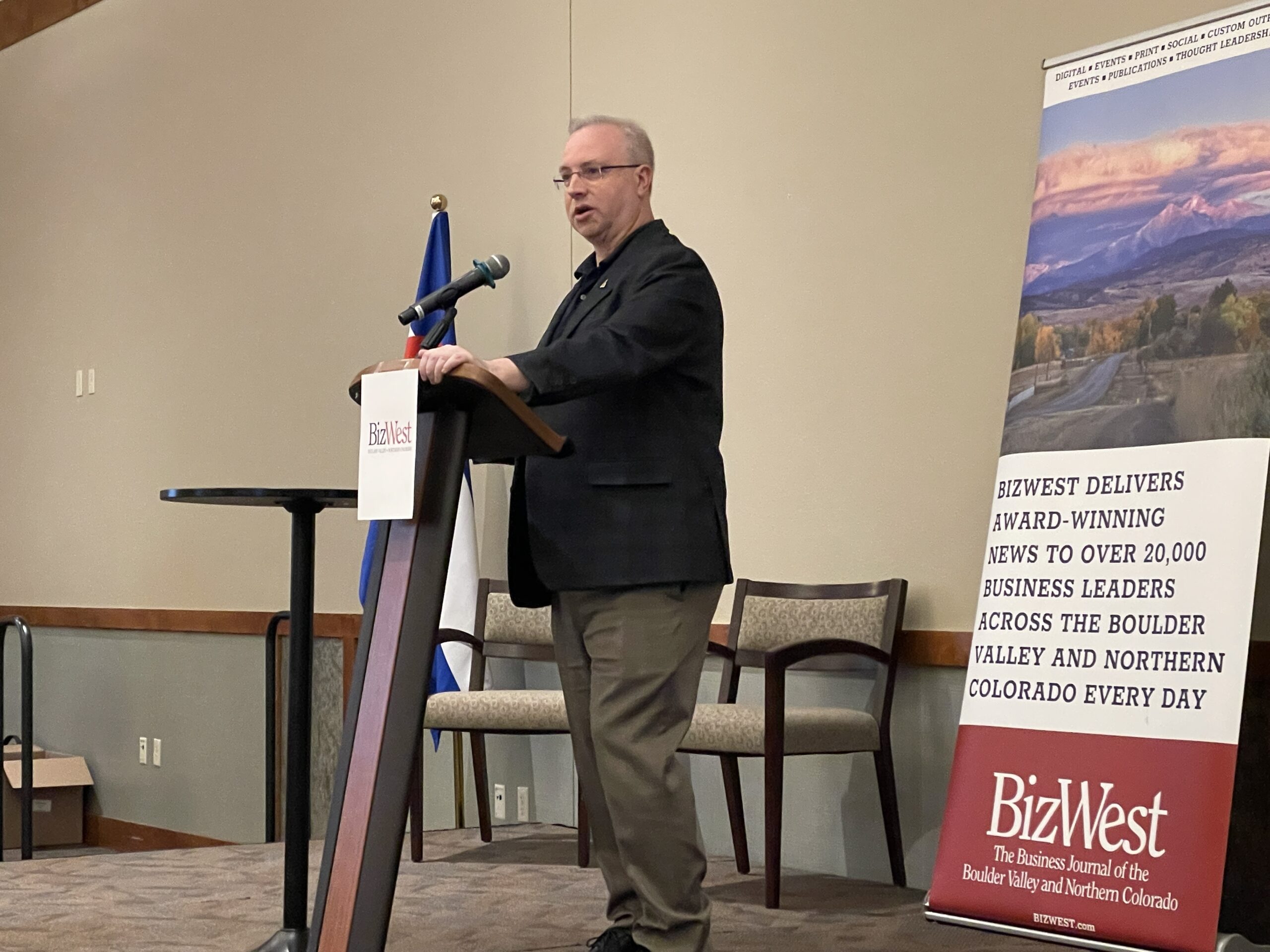
FORT COLLINS — Whatever solutions can be found to provide more attainable home prices need to be implemented promptly, panelists agreed at BizWest’s Northern Colorado Affordable Housing Summit.
“We have to do all the things at the same time, and at the same time we’re doing all those things, we have to do them quickly,” said Deb Callies, the City of Greeley’s director of housing, at the event held Tuesday at the Drake Centre.
“The clock is ticking every day,” she said. “The best time to do this was yesterday, and the second best time is today because the costs will never go down. They’re always going to go up. So the longer we take to hem and haw about what we want to do and what we think we should do and what’s in the code, the harder it’s going to be.”
Time is of the essence, said Robert Paulsen, development services director for the City of Loveland, because “we are in a position right now, and it’s clear to everyone in this room that there is a growing gap between family incomes and the cost of housing.”
DJ Summers, director of communications and research operations for the Common Sense Institute, noted that “Colorado used to be, 10 years ago, the most popular state in the union, maybe with one or two exceptions. We were vying for that top spot. Everybody wanted to come here. They came here in droves and started businesses here. We had some of the highest economic growth in the nation. We experienced some of the best demographic booms in the nation, for better or for worse.
“That is not the case anymore,” he said. “That is not our environment any more. As a matter of fact, we’re near the bottom of the national rankings.”
However, for Larimer and Weld counties, “there is good news,” Summers said. “Very, very good news, as a matter of fact. It is cheaper here than it is in most of the other cities that we analyzed.”
He cited administrative fees, stormwater fees, water and tap fees, sales and use taxes, land-review fees, all of which are cheaper than the averages in other Colorado cities.
However, building-permit fees are 2% more expensive in Larimer and Weld, he said, and impact fees are 38% more expensive.
“When we are thinking about ways to solve the housing affordability costs and how some non-market forces like policy decisions are incurring a lot of those damages, this is a place to start,” Summers said.
“We need to be innovative,” Paulsen said. “We need to right-size our fees. We need to make opportunities available for the development community. We need to do everything we can to figure out how to get people into homes. There is no silver bullet.”
Kristin Todd, president and CEO of the NoCo Foundation, reminded the audience of lawmakers, government officials and developers that the core issue is people.
“We often get caught up in AMI (average median income) and numbers and units and supply and fees,” she said, “but there’s a human community aspect that we can’t lose sight of. Housing affordability used to be a low-income issue, but now it’s an all-income issue.
“What we’re talking about is our neighbors, our teachers, our first responders and people that make our community tick that are no longer able to live here.”
Steve Byers, CEO of Energy Logic, echoed her concern. “It’s not just my lower-income neighbors. It is everyone,” he said. And yet he added that part of the solution lies not just in streamlining regulations but reining in litigation as well.
Developers, he said, “are not going to build if it’s too damned risky to build.”
Andy Smith, redevelopment manager for the City of Fort Collins, praised bipartisan efforts to reform construction-defects laws, noting that “there are no solutions; there are just tradeoffs.”
Part of those tradeoffs, said Russell Baker, principal of Black Timber Builders, involve communities “needing to decide who they want to be and what they want to prioritize.”
For builders, he said, “we need to decide whether we want to prioritize high design and a higher price point or volume and a lower price point.”
Even so, cautioned Lori Schwarz, deputy director for planning at the City of Fort Collins, “one of the things I don’t think we want to do is be prescriptive. I think we need to create flexible design standards.”
Added Kyle George, director of business development for EPS Group, “when you arrive at a community, you want it to feel like home.”
That comes down to numbers, said Mike Welty, vice president of Landmark Homes.
“For cities and municipalities that really want to focus on affordable housing,” he said, “every $1,000 in costs that we add to the price of a home, basically 1,500 families in Colorado are priced out of a home.”
Robert Dietz, chief economist for the National Association of Home Builders, said “the challenge of housing attainability is really a supply-side issue. The ultimate solution is going to come from building more houses at a lower cost.”
He estimated that the national housing deficit has shrunk to 1.2 million homes, but attributed that deficit to “the five Ls”:
- The lack of labor in the construction industry.
- The lack of lots to build on.
- The lack of lending, and the higher cost of lending.
- The lack of lumber and building materials.
- Legal and regulatory costs.
He said his survey revealed that 26% of the cost of a newly built single-family homes comes from “regulatory burdens.”
To help encourage more new developments, he cited the familiar “Yes In My Back Yard” and “No In My Back Yard” factions.
“What we as housers need to do is work with the YIMBYs, convince some of the NIMBYs to come over to our side, and then outright fight what I call the BANANAs – Build Absolutely Nothing Anywhere Near Anything.”
To address housing affordability, “there’s no simple, scalable solution,” Dietz said. “We’re going to have to make progress on all of those five Ls to increase the supply of attainable housing and improve housing affordability. Those solutions are going to require policy changes, particularly at the state and local level, and they’re going to require market innovation.”
For developers, Paulsen said, “Everyone should be talking to their municipal leaders as well as their state representatives. Tell them what you can do if given the opportunity.”
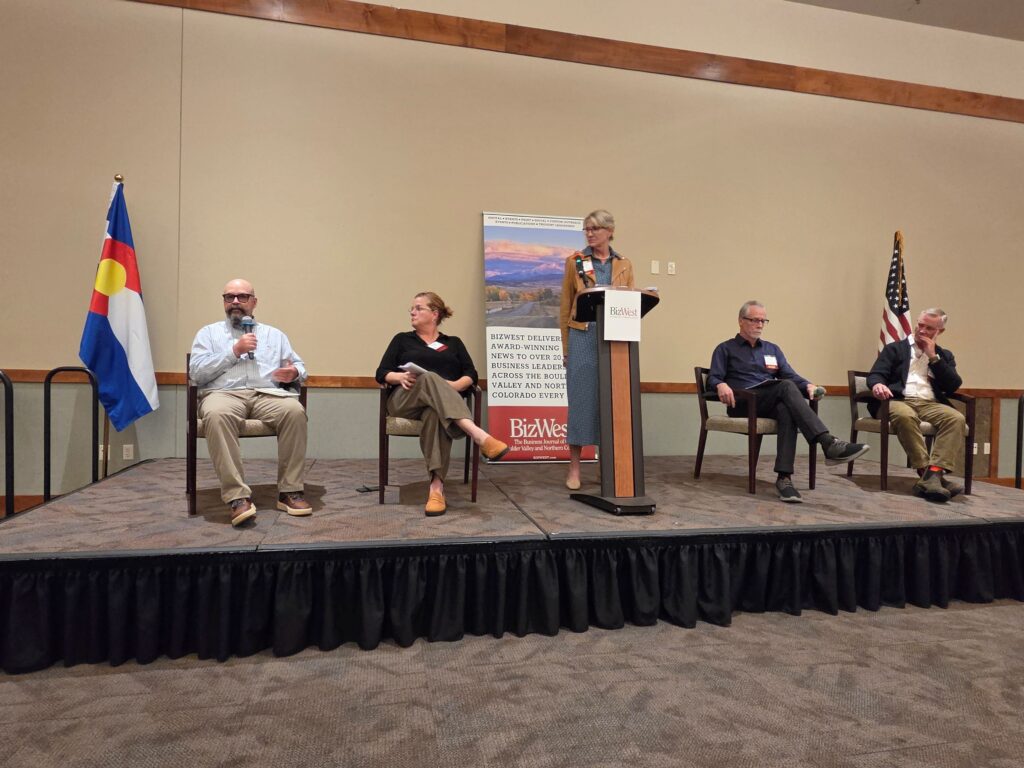
Whatever solutions can be found to provide more attainable home prices need to be implemented promptly, panelists agreed at BizWest’s Northern Colorado Affordable Housing Summit.

Related Posts
-
Get ready to click that “Submit” button. BizWest once again seeks nominations for the IQ…
-

The University of Colorado has been selected to take part in the Wells Fargo Innovation…
-
Not much time remains to register for the second annual Northern Colorado Affordable Housing Summit,…
-
Colorado’s advancement in two new federal research initiatives will further cement the state’s culture of…
