
Renovare targets osteoarthritis with regenerative therapies
Boulder startup restored joint tissue in animal studies after single treatment
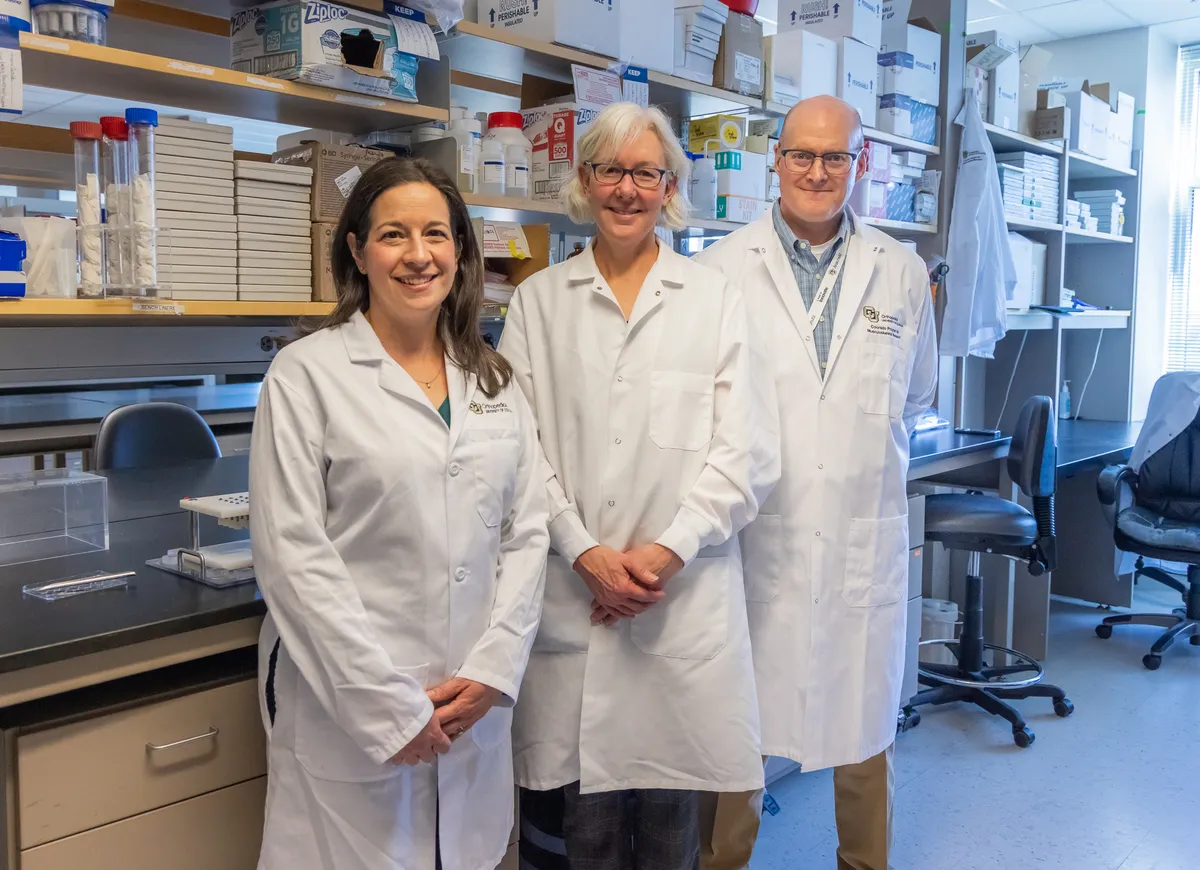
BOULDER — Renovare Therapeutics Inc. launched in early April to pursue breakthrough osteoarthritis regenerative therapies, one of which fully restored joint tissues in animal studies in as little as four to eight weeks following a single injection.
The therapies target a disease that affects 32 million Americans yet has seen little meaningful innovation in treatment for decades.
“Most of the treatments today, which include pain medication like NSAIDs, topical analgesics, corticosteroid injections, they just mask the pain, they don’t actually treat the disease,” said CEO Liz Scott.
Renovare Therapeutics’ therapies are designed to stimulate the body’s own repair mechanisms.
The privately held Colorado biotechnology company spun out from a University of Colorado Boulder-led research initiative funded through the Advanced Research Projects Agency for Health’s (ARPA-H) Novel Innovations for Tissue Regeneration in Osteoarthritis (NITRO) program.
The company was just named as a “Startup to Watch” in July by BizWest. It was also recently accepted into Innosphere’s 2026 Life Sciences Incubator, a Fort Collins-based program that selected 38 life-science startups from across the country. Supported by a U.S. Economic Development Administration Build to Scale grant, the accelerator provides mentorship, commercialization support and access to investors.

Addressing a complex disease
Osteoarthritis remains one of the most-common causes of pain and disability. Despite its prevalence, Scott said researchers still do not fully understand the disease because there is not a single pathway that is responsible for it.
“A lot of people think that osteoarthritis is from wear and tear, but I think research is showing that not to be the full story,” Scott said. “It’s a process of aging, degeneration over time, the result of inflammatory environments in the joint, and potentially a genetic component. This is part of the reason that there hasn’t been any sort of meaningful innovation in over half a century.”
That complexity has contributed to the failure of many experimental therapies. Numerous companies have attempted to create disease-modifying treatments by targeting individual pathways involved in the disease process, Scott said.
“I think a lot of companies are looking for a single approach; create a molecule, create a protein, or a biologic that targets a pathway,” she said. “Unfortunately, because osteoarthritis is so complex and so heterogeneous, that simplistic approach just doesn’t work.”
The Colorado research team broke ranks by pursuing a strategy focused on tissue regeneration.
“What our efforts have focused on are, irrespective of how the joint came to be degenerated, how do we restore it? How do we provide it what it needs to convince the body to heal itself, to recruit stem cells that then become cartilage cells, for example?”
From six products to two lead therapies
Led by Stephanie Bryant, a professor of chemical and biological engineering at CU Boulder and Renovare Therapeutics’ chief scientific officer, the multi-institutional research team received up to $33.5 million through the NITRO program to develop regenerative approaches to osteoarthritis.
The consortium includes co-principal investigators Karin Payne, associate professor of orthopedics at CU Anschutz and director of education for the Colorado Program for Musculoskeletal Research; Mike Zuscik, vice chair of research in CU Anschutz’s Department of Orthopedics and director of the Colorado Program for Musculoskeletal Research; and Dr. Laurie Goodrich, director of the Orthopaedic Research Center at Colorado State University.
Over the past two years, researchers advanced six potential therapies and identified two products that demonstrated the ability to regenerate joint tissue in preclinical studies funded under the NITRO program. While not all of those therapies were expected to advance through NITRO, researchers established proof of concept on all six potential therapies, and Renovare intends to continue research and development, Scott said.
“ARPA-H has very, very high bars,” she said. “Basically if we did not show complete full regeneration of tissue in that time, they would no longer support the program.”
Two therapies met or exceeded those requirements. The first, known as RNV-100, is delivered through an injection directly into the joint. The treatment combines an already FDA-approved drug with a proprietary controlled-release system designed to extend its therapeutic activity.
“What’s really novel about this is our delivery technology,” Scott said. “We use a novel polymeric particle drug-delivery technology that precisely controls when the drug is released.”
Rather than requiring repeated injections, the controlled-release system is designed to deliver the drug over an extended period, allowing patients to receive either a single, one-time treatment or one treatment annually.
Preclinical studies have produced encouraging results. “In animal models, it has fully restored joint tissues in as little as four to eight weeks following a single injection,” she said.

The second lead program, RNV-300, takes a different approach. The therapy uses an implantable hydrogel composite designed to repair large cartilage defects that often result from osteoarthritis or traumatic injury.
“Our product can be put in a defect of any size or shape, and it has these engineered proteins that recruit stem cells into the matrix and promote them to become cartilage cells,” Scott said. “Meanwhile, the hydrogel itself degrades over time as new cartilage is being regenerated.”
Scott described the technology as a type of cartilage repair platform that works with the body’s own regenerative capabilities rather than relying on transplanted stem cells.
“Many of our products use engineered proteins that have immunomodulatory and pro-regenerative effects so that they actually stimulate the body to regrow the cartilage and bone,” she said.
Preparing for clinical trials
Scott joined the project in September 2025 as a fractional CEO before becoming Renovare’s full-time CEO in April. A Colorado native who grew up in Steamboat Springs, Scott studied molecular biology before earning an MBA and building a career in biotechnology commercialization. Her experience includes leadership roles at Genentech, Array BioPharma, Reata Pharmaceuticals and several clinical-stage biotechnology companies.
The company is working to license intellectual property developed through the universities involved in the NITRO program.
“ARPA funding, while significant, only covers minimal study costs,” Scott said. “Renovare was formed to raise funding to augment that, including all of the regulatory, manufacturing and business initiatives that are going to be necessary.”
The company’s two lead therapies are now entering studies required to support an investigational new drug application to the Food and Drug Administration. These studies include toxicology and safety testing that must be completed before clinical trials on patients can begin. The first trials are expected to begin toward the end of 2027.
Because RNV-100 incorporates a drug already approved for another use, the company hopes to pursue an accelerated regulatory pathway. If development proceeds as planned, the therapy could reach the market by 2031, she said.

Like most early-stage biotechnology companies, Renovare’s future will depend heavily on its ability to secure funding to support development through later-stage clinical trials.
“I think at this point our success is going to be dependent on our ability to raise capital, out-license our technology, and/or partner our assets,” Scott said.
Bryant and her research team just received a $150,000 grant through the Colorado Advanced Industries Accelerator program to continue development of the lead candidates.
Designing therapies around patient needs
After media coverage surrounding the success of the therapies in animal studies, more than 600 prospective patients contacted the company through its website seeking information about future clinical trials, Scott said.
Renovare team members have also been attending health fairs and visiting senior-living communities to engage directly with patients.
“We have been going out and doing patient listening sessions and OA road shows, just to interact with patients and understand what their journey is like, what their unmet needs are, what they would want in a treatment,” Scott said. “We are just trying to make sure that the therapies that we’re bringing to market are really what patients want.”
That patient engagement is shaping how Renovare designs its clinical studies. Scott said the company also plans to incorporate patient-reported outcomes — standardized measures that evaluate how participants feel and function in their daily lives — alongside traditional clinical endpoints.
“It’s not just, did the study show structural benefit to the joint?” she said. “Did patients actually feel better? Did they report a quality of life improvement? Were they able to do activities of daily living in an improved way?”
The disease’s impact is one Scott knows firsthand. Osteoarthritis has affected multiple members of her family, including her mother, father and stepmother.
“My mom’s osteoarthritis has gotten bad enough that she can barely garden without being in severe, excruciating pain,” Scott said, noting that her stepmother used to teach yoga and volunteer in prisons. “The way that I think about OA is first it starts to sort of steal your hobbies, and then over time it actually can kind of steal your identity. What we do is so much a function of what brings us joy and who we are as people. If we can no longer do those things, then who are we? So it’s really … it’s a thief.”
After years helping biotechnology companies bring therapies to market, Scott said the opportunity to work on a disease that has affected so many members of her family carries special significance.
“My family reminds me every day: can you please get this drug to market tomorrow,” she said. “I would absolutely say this is more personal for me than previous companies. One hundred percent.”
Renovare Therapeutics Inc. launched in early April to pursue breakthrough osteoarthritis regenerative therapies, one of which fully restored joint tissues in animal studies in as little as four to eight weeks following a single injection.

Related Posts
-
Accurately labeling the potency of cannabis flower products can be a tricky process, researchers have…
-

Fort Collins and Greeley are among the municipalities being eyed by Colorado Springs-based Venu Holding…
-

The Colorado Eagles appear poised to move from Loveland to Greeley starting in the 2028-2029…
-

Boulder business owners and advocates are pushing back on a petition effort that aims to…
