
Public media filling the funding gap
Federal cuts spur collaboration, creativity
Executives of public media outlets in Northern Colorado and the Boulder Valley want to clear the air.
They say congressional votes to cut federal funding will not disrupt their missions. In fact, they add, the creative solutions the news from Washington has sparked have the potential to make their products even better and more responsive to Colorado’s listeners, viewers and readers.
The loss of federal financing “is not getting in our way,” said Amanda Mountain, president and CEO of Rocky Mountain Public Media. “It’s not an obstacle that continues to define our future.”
Those creative solutions include a proposed merger between her organization and Community Radio for Northern Colorado, a move of CRNC’s two FM stations from Greeley to Fort Collins, and a modern new facility for public radio station KGNU in Boulder that will have its ribbon cutting on Friday.
“Since federal funding was rescinded by Congress last summer, it’s been a time of huge upheaval and transformation for public media,” Mountain said. “In this state alone,we’ve lost over $9 million in direct federal funding. It has inspired, in some ways, a lot of creative conversations that we’re all having with each other as a public-media ecosystem.”
And for at least one organization, Rocky Mountain Student Media in Fort Collins, there’s been no impact at all.
KGNU finds a way, again
KGNU-FM 88.5, known for an eclectic music mix and alternative reporting, lost $155,000 in funding beginning last October — “about 16% of our operating costs for the foreseeable future,” said station manager Tim Russo — because of what he called “vicious federal cuts” pushed by President Donald Trump that stripped $1.1 billion worth of previously allocated funds for the Corporation for Public Broadcasting.
“We would have had even more because CPB matches your capital campaign,” he said.
Last August, CPB announced that it would take steps toward closing itself down after being defunded by Congress.
Citing the First Amendment, a federal judge in late March agreed to permanently block the Trump administration from implementing a presidential directive to end federal funding for National Public Radio and the Public Broadcasting Service, two media entities that the White House has said are counterproductive to American priorities. However, the operational impact of U.S. District Judge Randolph Moss’ decision was not immediately clear — both because it will likely be appealed and because too much erosion of the public-broadcasting system has already been done, both by the president and Congress.
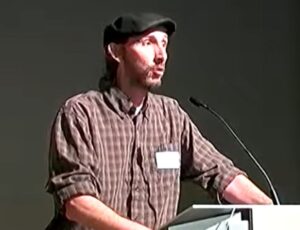
As for KGNU, the scrappy station has faced challenging financial times before, however. Founded by some University of Colorado Boulder students and community members in 1978, it ran out of money and shut down three years later after losing $20,000 in CPB money because of budget cuts in the Reagan administration. However, the silence only lasted about three weeks because the fledgling “Friends of KGNU” resuscitated it.
KGNU started in part of Boulder’s Harvest House on 28th Street. “After what we call ‘the shack behind the Harvest House,’ we moved downtown just off Broadway and Spruce above the Aristocrat, which was a restaurant in Boulder for a long time,” Russo told Westword’s Michael Roberts. “Then we moved to Walnut and Folsom, next to Mike’s Camera” before ending up at its current location, a 5,900-square-foot facility at 4700 Walnut St. that, according to a KGNU news release, “is bulging at the seams, has older technology, and limited community space for the plethora of activities that KGNU hosts, including over 200 live in-studio artist on-air musical performances to date in 2024.”
A new, larger and more modern space was in order.
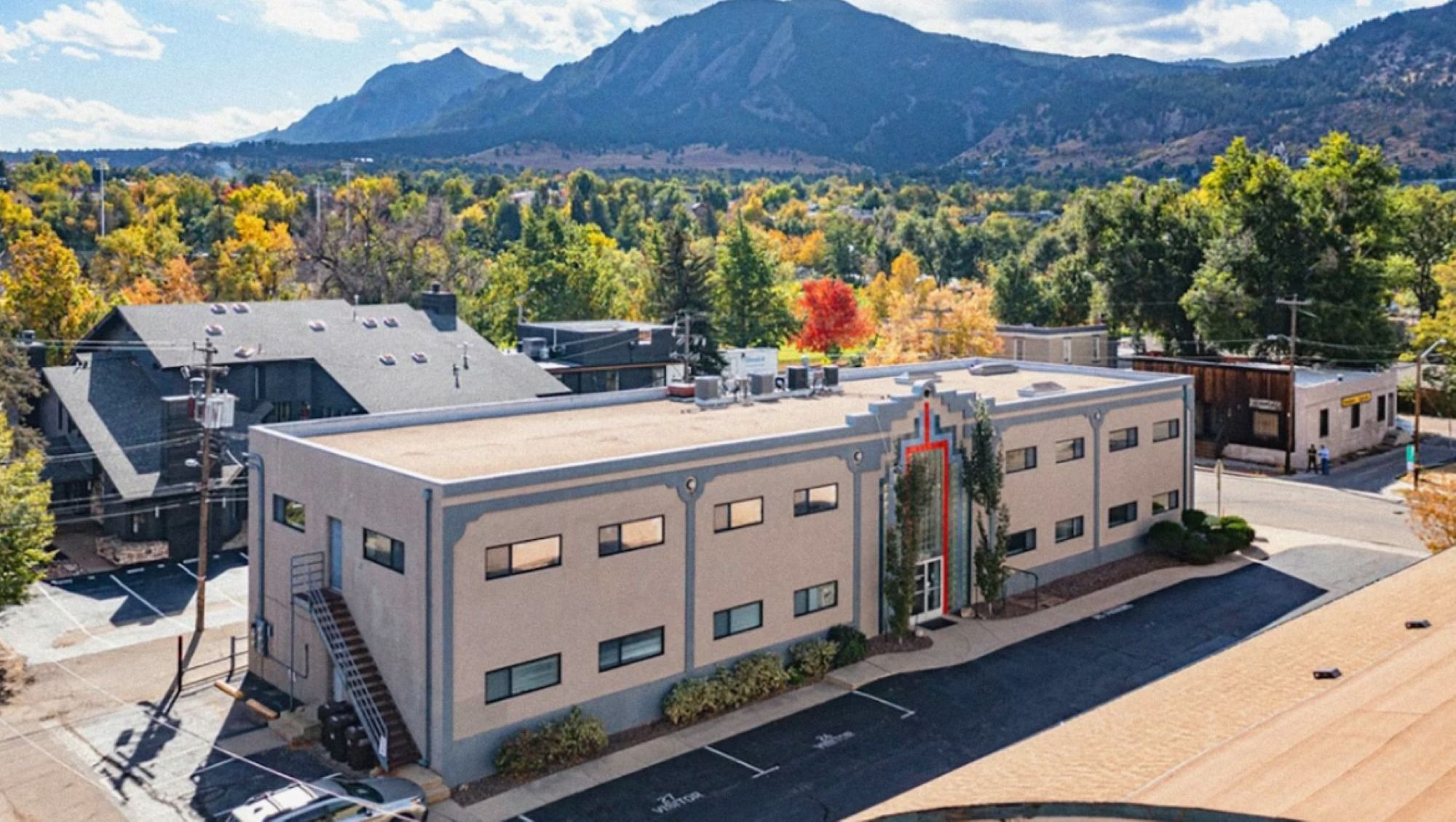
KGNU received support and awards from the City of Boulder’s “Community, Culture, Safety” tax initiative as well as the state Office of Economic Development and International Trade’s Community Revitalization Tax Credit, and the Colorado Housing Finance Authority’s selection of the project to receive the first New Markets Tax Credit award in the City of Boulder. Hundreds of individual donors and small foundations also collectively helped to seed-fund the renovation, readaptation and repurposing of a previously vacant 10,000-square-foot downtown Boulder commercial office building at 1720 14th St.
KGNU, through holding company Boulder Community Broadcast Association LLC, bought the building from 1720 Building LLC in 2023 for $3.3 million, Boulder County real estate records show.
The culmination of that project will be the official dedication of the renovated building called the “GNU Community Media and Cultural Center and Resilience Hub” this Friday — the station’s 48th anniversary — as part of “KGNU Radio Week” which started Saturday and extends through next Saturday.
“This KGNU site will feature a media training room, expanded production studios available at low or no cost for nonprofits, artists and students; a community cafe and cultural space; and a performance space accommodating 60-90 people,” OEDIT said in a news release. “These spaces will be accessible to nonprofits, artists, and cultural organizations who are otherwise unable to access affordable spaces in the downtown area.”
Another role of the building will be to enhance the station’s role in conveying information about disasters and disaster relief. Russo had counted on help from the Federal Emergency Management Administration.
“We lost an open grant of close to $250,000 on top of our operating budget,” Russo said. “We hadn’t been awarded it yet, but we probably would have been very good contenders for that because of the frequency of disasters in Boulder County in particular.
“So we built this as a resilience hub to help us stay online for any disaster,” he said.
“The vision of a community resilience hub, capable of staying online — with solar and a state-of-the-art battery storage system — to maintain local emergency alert and broadcast systems in the new reality of increased electrical outages, heightened urban wildfire and flood risks, is core to supporting broader sustainability and community resiliency goals while providing an accessible and affordable community hub for creative, cultural, and nonprofit organizations,” Russo said.
“Radio Week is about celebrating the power of local voices, independent journalism, music, culture and community connection,” Russo said in a news release. “As we prepare to open our new home, we’re excited to welcome the community into a space designed for creativity, collaboration, learning, community resilience and public service.”
Friday’s grand opening will include a full afternoon of festivities celebrating 48 years of independent community media as well as a Native American drum circle and site blessing, station tours, special guests, food trucks, live music and DJs, family-friendly activities and a special live performance by Hazel Miller and her band.
Besides its main signal at 88.5 FM, KGNU simulcasts in Denver on 1390 AM as well as maintaining a translator at 99.1 FM in the city’s core. It also has translators at 98.7 FM in Fort Collins and 93.7 AM in Nederland.
Russo couples KGNU’s new optimism with some trepidation, however.
“I just don’t know yet how sustainable that immediate injection of funds moving forward will be” when the enthusiasm for filling the funding gap becomes old news, he said. “We won’t have that bump. So there is some nervousness if listeners and community members become complacent.
“Folks may believe if there’s a flip in the Congress, that it would be taken for granted that a new Congress would put the money back,” Russo said. “It’s easy to cut funding but harder to put it back.”
Russo talked to U.S. Rep. Joe Neguse, D-Colo., at Boulder’s recent Cinco de Mayo celebration, he said, “and Neguse suggested his constituents continue to press Congress. He said he felt every day there’s more of his Republican counterparts that seem to be interested in more pathways for funding of public media, especially because of its Importance in rural zones and regions prone to disasters.”
Merger picks up steam
As first reported in March by BizWest, Greeley-based Community Radio for Northern Colorado, which owns news-talk KUNC and KJAC 105.5 FM, dubbed “the Colorado Sound,” has been in discussions since last year with Denver-based Rocky Mountain Public Media, which owns Rocky Mountain PBS, anchored by KRMA-TV Channel 6, plus jazz station KUVO 89.3 FM and low-power urban contemporary-formatted K284CI 104.7 FM, nicknamed “The Drop.”
Rocky Mountain Public Media and Community Radio for Northern Colorado are in due diligence for their proposed merger. The boards of directors are expected to approve it this summer, with anticipated approval from the Federal Communications Commission by the end of the year.
Both entities seeking the merger must file applications with the FCC to transfer the stations’ licenses, and most such transactions often include a window for public input before a final decision. The FCC’s review process generally aims for completion within 180 days of seeking public comment.
The two entities signed a non-binding letter of intent to explore the merger to share operational costs and expand local services in the wake of the federal funding cuts to public media. As part of the proposed merger, officials of both entities said, KUNC and The Colorado Sound will retain their branding and editorial independence, no jobs will be lost as a result of the merger, and business operations will likely shift to the Buell Public Media Center in Denver but KUNC’s base of operations will remain rooted in Northern Colorado.
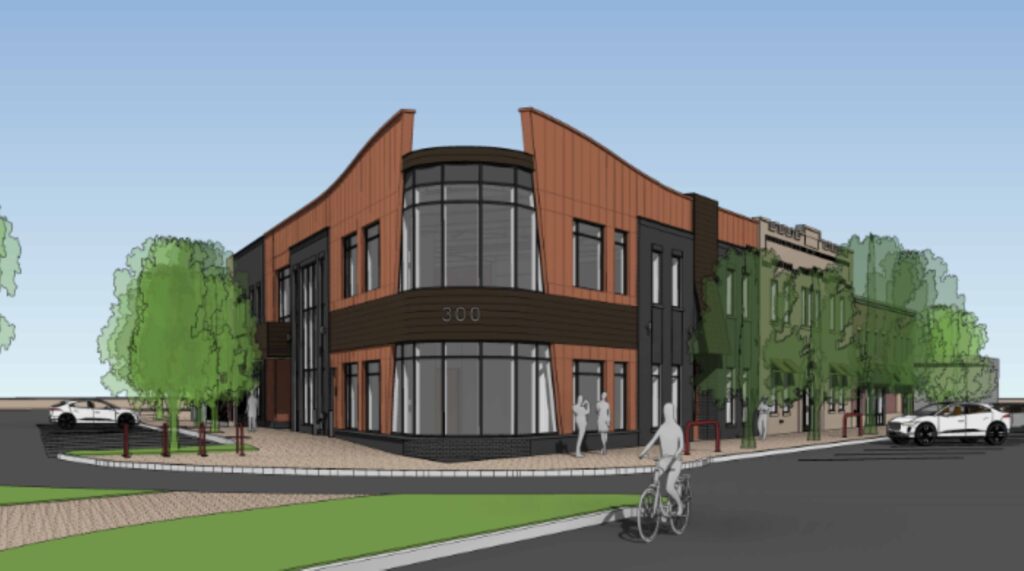
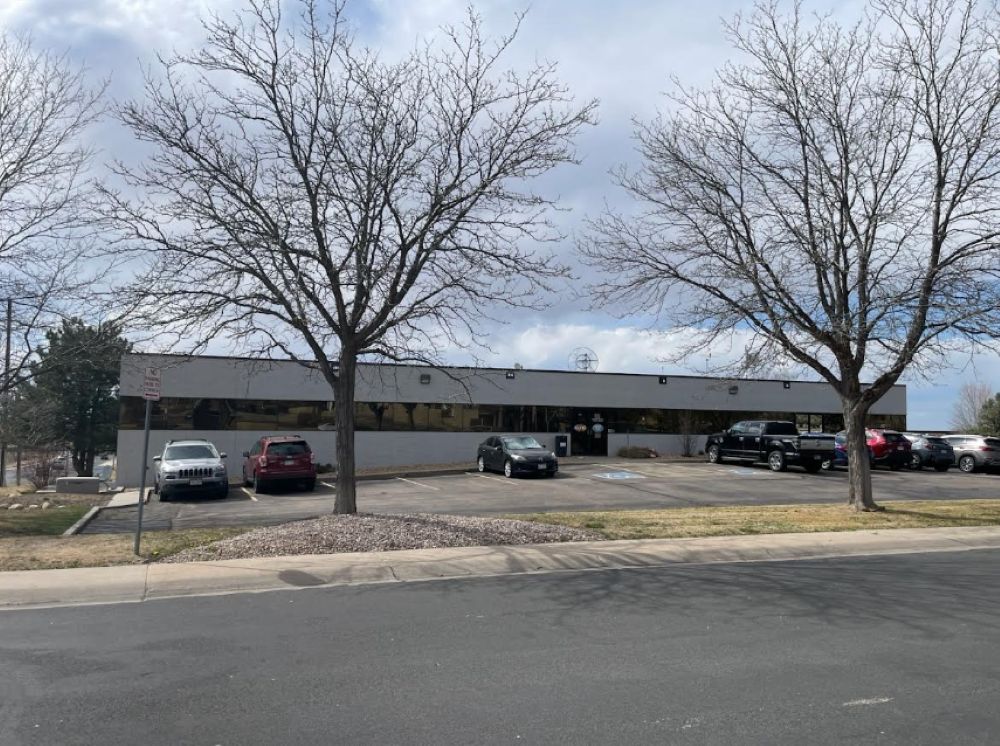
That base of operations will shift westward, however. KUNC and The Colorado Sound will move by early 2027 from the space they now lease at 1901 56th Ave. in Greeley into a new $3.5 million facility under development at 300 E. Mountain Ave. in Fort Collins. The Bohemian Foundation, a nonprofit organization based in Fort Collins and founded by billionaire philanthropist Pat Stryker, is offering a 10-year, no-cost lease there for the KUNC and KJAC studios and community gathering areas as part of a new 7,000-square-foot, three story building that its real estate arm, the Bohemian Cos., is building as an expansion of the Armory music venue. KUNC and KJAC are in the midst of a $3.5 million campaign to raise the money to outfit their space with updated studio technology, office equipment and other needs.
The loss of $453,000 a year from the CPB forced KUNC to lay off 10 people, about 25% of its staff of 38, last September. In addition to the layoffs, CRNC staff also were furloughed for five days — with the furloughs required to be complete by the end of March — and contributions to their 403(b) retirement plans were ended.
The new building in Fort Collins will include a green room for performers at the adjacent Armory music venue and an expanded bar that will be shared by both buildings, according to documents submitted to Fort Collins city planners.
“Construction is underway,” said Tammy Terwelp, president and CEO of KUNC and The Colorado Sound. “Pending any things that could perhaps be out of our control such as supply chains, tariffs, things like that, we are anticipated to have the building complete by the end of December, into January.”
Mountain said donations to both entities since the federal funding cuts have experienced the same type of “bump” that KGNU’s Russo mentioned.
“The pickup in both of our organizations has been happening after federal funding was taken away,” she said. “There was a huge response in the community to a lot of public media organizations, ours included, and that’s really where the outpouring of support started. And we’re continuing to be reminded of how many people in Colorado really care about what we do and want to invest in it, because they know we need it.”
And like Russo, Mountain and Terwelp are developing strategies for sustainability after the bump subsides.
“We’re working together as organizations to be sure that we can ensure continued funding,” Terwelp said. “Our business operations need to stay strong and healthy to continue to serve the community. Amanda and I and our boards have had great conversations.”
But she said the infrastructure is already sound.
“Our music service, The Colorado Sound, has members and donors all over the world,” she said. “We purposely focus on Colorado music. That’s where we are and our identity. But certainly the identity of Colorado has a life of its own, as many of us, myself included, are transplants here because of the culture and the environment, the mountains, the West, all of that. People, even if they’re sitting in cubicles in Indiana, there’s an attraction to Colorado, and The Colorado Sound works to celebrate everything that that means.”
Right now, Mountain said, “our community is helping us fill in that gap left by federal funding. That’s why it’s so important that we’re using this time, this moment in our history, as public media and as our organizations, to come up with a plan for the future so we’re not just constantly stuck in planning for today.”
Listeners and viewers, she said, “expect us to really be charting a course for the future that doesn’t rely on federal funding five years from now, 10 years from now. They want us to be around for their grandkids and their grandkids’ kids.”
Mountain dismissed fears that the merger would create a distant, corporate atmosphere for the staffs or for programming.
“Rocky Mountain Public Media is still public media, just like KUNC and The Colorado Sound,” she said. “We’re all owned and operated in our communities in ways that can’t really be corporatized. There is a difference between commercial media that is owned by a conglomerate and local media that’s locally owned. Our staffs live in the communities that we serve. Our donors and investors are our neighbors in the community.
“We can see that with the potential merger of Nexstar and Tegna,” she said, pointing to the proposal that would, if it survives a bevy of court challenges, leave the news products of four Denver television stations controlled by one company. “This is not that, in no shape or form. We are not laying people off. We are not merging to create ‘efficiencies.’ That is not our motivation.
“Our motivation together is to protect our institutions and grow our impact together for Northern Coloradans and beyond, and to support our staffs through this,” Mountain said. “Any kind of disruption and change is going to create some level of uncertainty and anxiety. And so we’re committed to being transparent and proactive. It’s why we started talking about this so early, because we wanted to bring staff into the conversations and answer these questions that we could answer, to try and inform our plans together, because we know that we can learn from each other.”

The average listener or viewer “isn’t going to hear that much of a difference,” Mountain said. “The new facility and the addition of resources and capacity is going to give us, collectively, more opportunity to be in the community, to be covering more stories or inviting people in for more events. And so I think that the listening experience isn’t going to change from what people know and love and expect. Our hope together is there’s going to be even more opportunities to be with the audience and engage with folks, especially in person.”
The merger “is a strategic move forward, always, in service to our communities and to our audience,” Terwelp said. “I always want to be doing more for the community and reach more people in more areas. We are at CRNC a much smaller operation than Rocky Mountain Public Media, and so together we have the ability to do just that, working together to scale things quicker and faster and more thoughtfully by working together than by ourselves as CRNC on our own.
“We’ve got a strong partner who is literally in the same communities we are, and we want to make the connection to the audience be much deeper and live in their minds and hearts longer, with support and connection with another organization that has exactly the same mission, to inform and engage and celebrate and enlighten Coloradans with news, music, documentaries, everything.”
All that content is meaningless unless people can hear it, Terwelp said.
“We also have over 20 transmitters and translators to maintain in some extremely remote areas, and right now that is happening through one part-time person and a part of a full-time person’s job.
“And so being able to have the resources to ensure that our communication and distribution methods are maintained well is going to be a really strong piece of the puzzle,” she said. “There are more people with Rocky Mountain Public Media who have that training and that background that are able to share those resources across both of our distribution methods that are physically located in challenging places here in Colorado.”
Part of their combined mission, Terwelp said, is “letting people know that when you tune to KUNC or The Colorado Sound or The Drop or KUVO, those services are going to sound as they always have been. They’re going to stay focused on their distinct missions and audiences, and so it’s going to be KUNC and The Colorado Sound, but better. Having the resources to be able to deliver on some of the things that our audience wants is something that’s really exciting.”
Colorado has 18 public media organizations working to serve Coloradans, Mountain said, “and when federal funding went away, the whole of direct funding was $9.7 million every single year across all of those organizations. With RMPM there’s over 120,000 members. With KUNC and The Colorado Sound, there’s over 16,000 members. Together, we will be one of the largest membership organizations in the state, if not the largest.”
Donors, she said, “want to know we’re putting their investment to good use and that we have a bigger vision than just our organizations alone to help address what is going to be a structural gap. It’s not going to go away because of an influx of donations for one year. We’re going to have to think about things differently. We’re going to have to have a bold vision for the future that leans into collaborations like this.
“Not every collaboration is a merger like this one,” Mountain said, “but Tammy’s and my organizations work with every public media outlet in the state to deliver Coloradans content that they need in ways that are a wise use of their money and their investment.

Student media avoids the fray
Rocky Mountain Student Media at Colorado State University receives no federal funding, said Linda Carpio Shapley, a Colorado media veteran who serves as its interim president and CEO.
She said 55% of its operating expenses comes from student government fees through the Associated Students of CSU, “and the other part is underwriting.
“Also, people can donate, and we have a contribution portal and do fundraising and that kind of work.”
Rocky Mountain Studio Media includes KCSU-FM 90.5, the Rocky Mountain Collegian, College Avenue magazine, Tree Stump Films documentaries, a video production unit called “Fifty03” and CTV campus television, which produces shows three nights a week during the school year.
“It’s all student run,” Shapley said.
“It’s never a great time to be looking at the finances of news organizations,” she said, “but honestly there’s a way we’re trying to make sure students are serving the community and getting on-the-job experience.
“That’s our mission,” she said. “It’s good to be able to focus on that and not to be beset by that stress of federal funding. We have our own stresses.”

Executives at public media outlets in the Boulder Valley and Northern Colorado say congressional votes to cut federal funding will not disrupt their missions.

Related Posts
-

Fort Collins and Boulder announced steps Thursday to deal with water shortages caused by the…
-

BOULDER — A Boulder divorce support professional and a Fort Collins licensed therapist will jointly…
-
FORT COLLINS — The Fort Collins Peach Festival is returning to Old Town’s Civic Center…
-

FORT COLLINS — Are you ready to listen? Fort Collins, according to a report in…
