
Serenity Forge designs video games that are meaningful, fun
Prolonged illness led founder to build value-driven games

BOULDER — In his freshman year at the University of Colorado, a blood disorder left Zhenghua Yang so lifeless — blood oozed from any orifice — that nurses handed him a will, told him he had a few hours and left him in a dark room to die.
He somehow survived that night, but it was just the start of a desolate journey that left him with no inkling of any future, even at such a young age. The only thing that saved him, he says today, was video games.
He was always a fan of video games. They were his favorite pastime, and he played them with his parents as a way to bond with them. But during those two years in the hospital, with nothing better to do other than watch Jerry Springer, he played a LOT of video games.
The games not only got him help from an online player who had connections to a world-renowned hematologist, they also saved him in another way: They gave him hope.
“The characters in these games faced hopeless situations too, but they weren’t afraid of it,” Yang said in an interview. “I thought, ‘Maybe I can do that too.’ That made me so empowered. Maybe I can develop better habits, start taking my meds more seriously.”
He calls the moments he’s alive today “bonus time.” He sees the world differently than most, he says today.
“Instead of, ‘What can I get out of it?’” Yang said. “It’s, ‘What can I do to give back the most to society?’”
This is the ethos of Serenity Forge LLC, a video-game company based in Boulder that makes so-called value-driven games, or games designed to help players through difficult moments in life. He got the idea after realizing the impact that video games had on his recovery. What if, he thought, people made games that had the actual intent of helping others?
He called the first game he developed “Loving Life,” a visual novel about his illness. He was making the game for a friend who had severe depression.
“One of my bigger regrets in life is the day before I finished it,” Yang said, “he took his own life.”
Yang released it anyway, online for free, and a few months later, a kid from Spain reached out to him: He was planning to take his own life, but the video game saved him. Today, Yang still sends him games: The kid is now a video game journalist.
“That was a moment I didn’t become Zuckerberg,” Yang said of the Facebook founder, “but I saved someone’s life.”
Serenity Forge both develops and publishes games, and many of them deal with some problem. One, “Long Gone Days,” is about language barriers and the human cost of war. In “Cyanide & Happiness,” you play as a “weird, unpopular ginger-headed orphan” trying to save the world. In “Land of Screens,” a character embarks on a mission to discover some real-world relationships after her social media is destroyed.
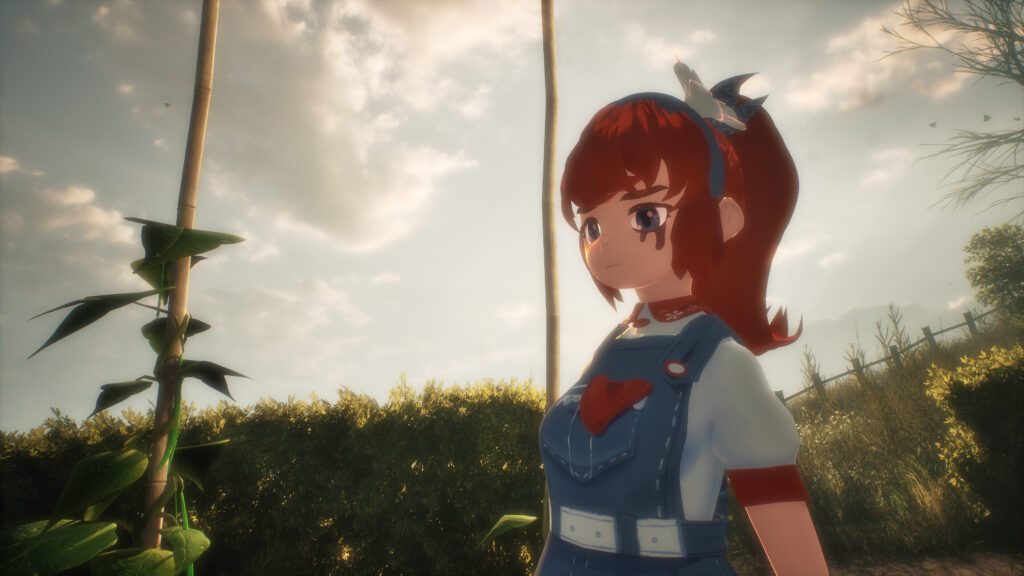
Serenity Forge announced its latest game, Fractured Blooms, June 6. The game seems like a wholesome farming simulator until graphic horror elements emerge that hint of a woman trying to survive abuse, trauma and the way that both haunt her home.
“Stamina is consumed while tending to your garden, so be mindful when planning which crops to plant and harvest,” the description reads. “Experiment with harvested ingredients to unlock new recipes that boost stamina and provide more time to complete nightly chores. Manage your home, face your responsibilities and beware of what blooms in the night.”
The game could have lots of meanings, but Yang would say only that it’s based on a true story and is the most personal game to date, one based on his family.
“We don’t want to talk about the specific meaning behind a game,” Yang said. “We want people to come to the realization of what it’s about themselves.”
A few popular games in the past have explored deeper meanings, such as Undertale, The Last of Us and SOMA. But it’s still a relatively new thing in the video-game world. Other forms of entertainment have done this for decades, sometimes as popcorn flicks, sometimes as serious dramas and sometimes, as in The Avengers: Endgame, as both. Music is much the same way, Yang said.
“We are finally at the stage where we have more nuance in gaming,” Yang said.
It is a tricky balance, he admits: Before this interview, he’d just had a long meeting with developers about how to make games meaningful but still fun.
They found that magic in the company’s most popular game to date, Doki Doki Literature Club!, released in 2017 and recently eclipsed 30 million downloads. It looks like a pleasant dating simulator with the goal of finding poems each girl would like, but it turns into a psychological horror game with serious mental health undertones.
“It invites players to ridicule culture,” Yang said, “but gain a stronger understanding of it.”
These are the kinds of things that Serenity Forge works toward even as it acknowledges that the game industry is tough and being an independent developer can be problematic in a world where Microsoft laid off 9,000 people, many in its Xbox division in early July.
“It’s always been our approach,” Yang said, “that meaningful can be more fun and not less.”
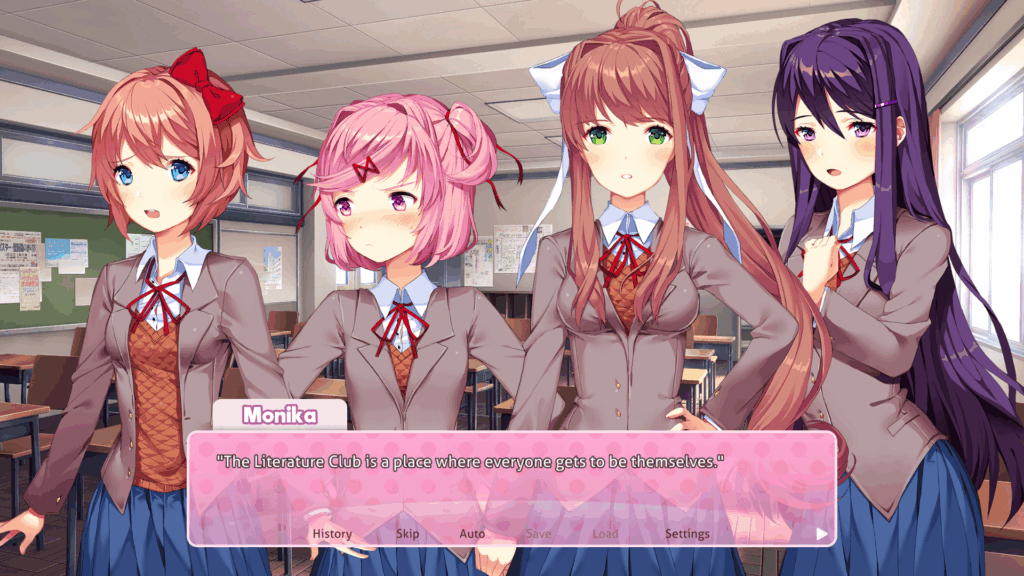
Serenity Forge LLC makes so-called value-driven video games, or games designed to help players through difficult moments in life.

Related Posts
-

Is Mustard’s Last Stand — the Boulder institution that’s been slinging Chicago-style hot dogs on…
-

BOULDER — Prior to COVID-19, roughly 60,000 commuters would travel to Boulder daily for work.…
-

Rare earth metals are critical components of many electronic devices, but the elements, which have…
-
BOULDER — In a world of ever-increasing connectivity, Vijay Khatri seems a fitting choice to…
