
Contractors cite frustrations in getting projects over finish line
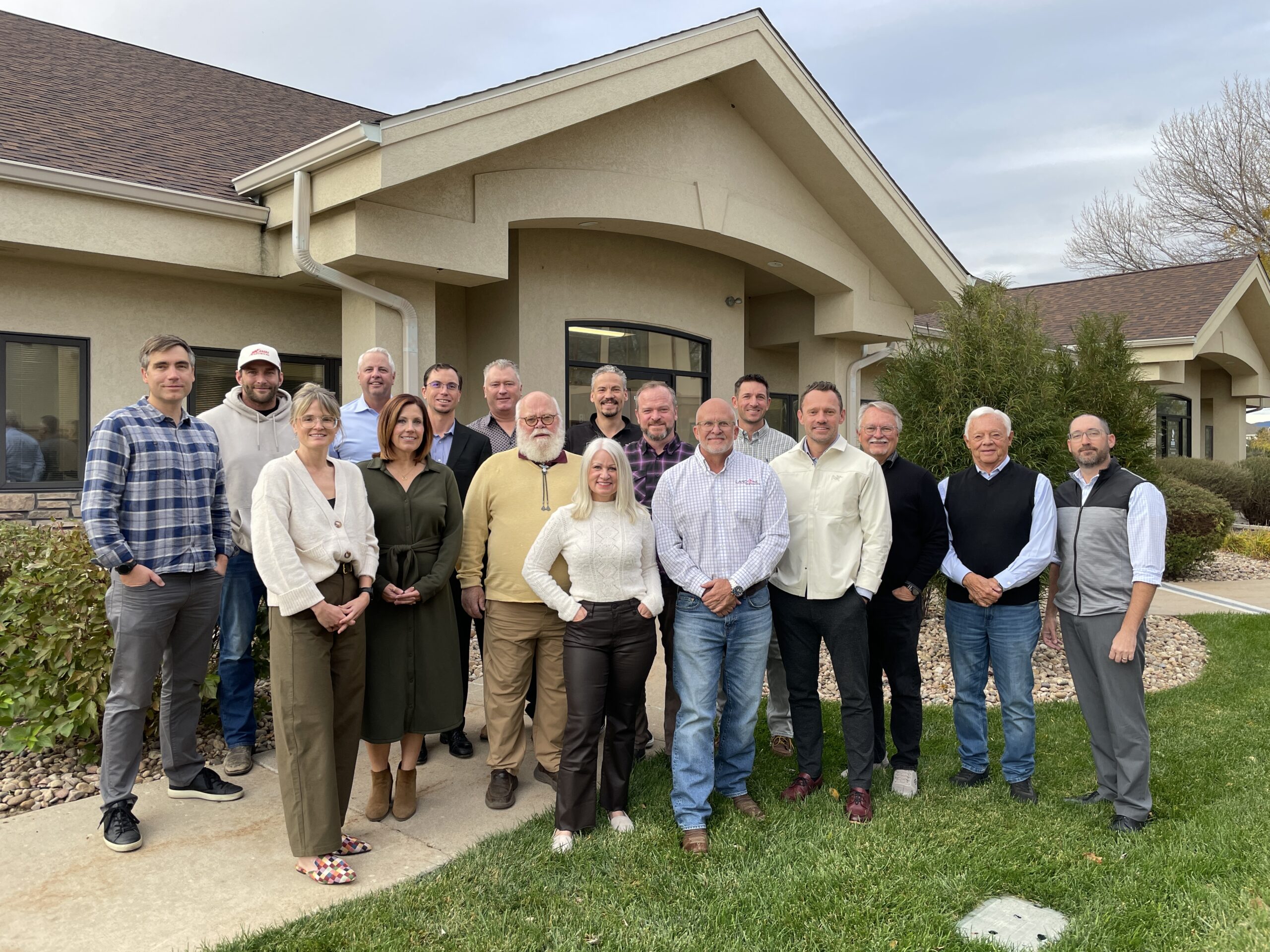
WINDSOR — City planners and building department staff members would not have wanted to be flies on the wall during the BizWest CEO Roundtable for the construction industry Tuesday. Too many fly swatters would have made the eavesdropping perilous.
Executives of construction, engineering, architectural, electrical and other building trades expressed deep frustration with the relationships that they have with public officials charged with approving projects in Northern Colorado. The roundtable was conducted at the Better Business Bureau Serving Northern Colorado and Wyoming outside Windsor.
“It’s not our job to get your project through,” one builder quoted a building official as saying, and then offered no specifics about why, other than, “We don’t like it.”
The project developer who is among those with the deepest experience in Northern Colorado, Don Taranto of TST Engineering, an EPS Group company, said he’s seeing an economic “hesitation” brought on at least in part by the inability to get projects through the public approval process. “The public sector influences the private more than I’ve seen in awhile. The whole process in getting things approved has become elongated, and costly,” he said. Private developers and builders are doing projects only because they have no other choice but to endure the process, not because they have a desire to invest in the economy, he said.
Michelle McLaughlin, chief visionary officer at MAC Electric & Lighting, said the ability to do business in Northern Colorado “comes down to the regulations. I feel like Northern Colorado isn’t where it’s at. Government has to make things easier so people want to build in Northern Colorado. … Things really have to change in the regulations for Northern Colorado to grow again. People are building in Wyoming because it’s too hard to build here. If they want it to grow, they have to figure it out,” she said.
“To get a commercial EV charging station takes six months with one review after another. Then a new person comes forward with a new comment. They have a “let’s electrify” goal, but then it’s $30,000 to tap into an existing transformer.”
Participants in the roundtable cited case after case of government-related situations that escalated costs for projects beyond what they considered reasonable.
Thomas Beck, principal architect at TW Beck Architects, told of a project that “between COVID and (Fort Collins city) staff turnover took 10 years to complete. New people (at the city) work in siloed departments, and they keep generating new comments,” he said. A similar project for the same client in Commerce City took six weeks from preliminary design to footing and foundation permit, he said.
Daniel Hull, principal at LandOne Engineering LLC, called getting regulatory approvals “a nightmare. … It’s a post-COVID hangover. You don’t get responses. It keeps getting worse and worse and worse. We have projects on the eighth, ninth, 10th submittal. What is going on here? Their solution is to add another tax. That’s not the solution. The last thing I want to do is rely on government to solve the problem,” he said.
Said Taranto: “There’s a fundamental misunderstanding of economics and how things work” on the part of government.
Said Ed Goodman, principal at Spiral Experiences LLC, a company that takes pride in pushing for creativity in design: “In this area, there’s a major disconnect between the strategic goals (of communities) and the actual comp plans and processes. They’re completely opposed to one another. On one hand there’s a demand for affordable housing and on the other there’s processes that add cost. Departments are completely siloed. They should be in the business of possibilitators (his word). We see projects accomplished with fair ease when that thinking exists.”
Said Taranto: “Jurisdictions feel like combatants. Like an enemy in the process. I’ve been in this business a long time and this is the first time I’ve seen it like that. It’s almost like obstruction. Their goal is to obstruct. This is a competition; the region is in competition. They don’t understand that. They live in a bubble of idealistic thinking. It’s getting worse.”
Said Daniel Hull, owner of LandOne Engineering: “They (governments) have all the time in the world. “
Said Taranto: “Staff is unaccountable.”
Said Ted Johnson with ECI Site Construction Management, “Each month (of delay) increases the project cost by a half a percent.”
Said Chris Aronson, principal architect at VFLA Architecture & Interiors: “We want clients who are the visionaries. Northern Colorado needs that to survive. People have phenomenal ideas, but then they connect with the city review, and it’s roadblock after roadblock. I feel like a memo has been sent out that says, ‘the answer is no.’ It feels like ‘shut this down.’
“There’s got to be a wakeup call with Northern Colorado communities. If you have people with phenomenal ideas, they’re not going to come back.”
Participants wondered whether changes in the form of government, shifting to a strong-mayor form instead of the council-manager form, might be an answer.
Daulton Schmitt, a senior audit manager at accounting firm Plante Moran, a CEO Roundtable sponsor, said only a few cities have strong-mayor systems, and they might be doing better. I don’t know if that’s THE solution, but…”
Mayors in council-manager forms of government tend to be short-term, so more decisions are made by managers than by councils, said Tim Johnson, regional director for GH Phipps Construction Co.
Patrick Elder, president of Elder Construction Inc., which has operations in Northern Colorado and Colorado Springs, said barriers “are pervasive among all municipalities but Colorado Springs has had a successful effort to make things more efficient.” Colorado Springs has a strong-mayor form of government.
He said Colorado Springs has a “well-defined strategy and vision and departments are aligned. They are actively competing for industry and business and winning. Northern Colorado is down 20% in construction spend, and Colorado Springs is up 20%. It all has to do with speed to business. Businesses aren’t out three to four years in business planning, but three to six months. When you have longer processes, it stifles creativity, ingenuity, or they move.”
Lance Cayko, principal at F9 Productions Inc., said Denver does better than many communities. “Denver is kicking butt. I’m getting replies back from planners and building officials within hours and approvals within 30 days,” he said. Denver also has a strong-mayor form of government.
Larry Myers, an attorney for Berg Hill Greenleaf Ruscitti, a Boulder law firm that sponsors BizWest’s CEO Roundtables, said government is aware of the problem. “From their side of the table, they say ‘we know it’s a problem, we’re working on it.’ Their solution: ‘You need to be more proactive, be more aggressive in contacting us.’”
Other headwinds
While vocal about their disappointment with the regulatory environment, builders also shared other headwinds.
Tim Johnson said his company is doing a lot of work in the public sector and “we will double our revenue in Northern Colorado this year because of that market sector. That’s a positive blip but … private sector residential is very challenged right now,” he said, citing “dysfunction at the level of tariffs” and inflation.
Stephanie Dohn, president of Dohn Construction Co., said her family-operated company has pivoted away from student housing and residential into public work, even though “that’s a hard world to live in.”
With mortgage rates so high that new homebuilding has stalled to a degree, Justin Heller, general manager of Eggers Electric Inc., said his small company has “dipped into home service stuff, remodeling, exterior projects, small upgrades. We can’t compete with larger companies on commercial (projects) even though we have the ability. A lot of people are pushing back on pricing. Material pricing has gone up; copper is insane. And we’re in the midrange on pricing in the marketplace,” he said.
Travis Thornton, vice president for commercial lending at Elevations Credit Union, another sponsor of the CEO Roundtable, said interest rates are just one factor. “From the banker perspective, people aren’t complaining about rates, but about the structure” of loans. “They’d like a longer interest-only period,” he said, which reflects concerns about how long it takes to get projects approved.
Goodman said big investors seem to be “on the sideline. ‘We don’t want to talk to you about your cool project until it’s rezoned, approved.’ So there’s no more risk up front. When the process gets too long, they just go someplace else. It’s not that way everywhere. I’m afraid the ego of Colorado in general has gotten kind of big. You have to have creativity and vision and keep innovating. If you have a new vision, you hear, ‘that might be kinda hard.’”
Participants agreed that if mortgage rates came down to, say, 5%, it would open up the housing industry considerably.
“Things would change overnight,” Taranto said.
Still, “Interest rates in the past were much higher. How’d they do it then? All these fees, the stack of fees that go into every house,” are also a factor, Hull said.
Goodman said he believes that national homebuilders “don’t understand the demographics” of the region. “Why are they building houses with no soul for markets that have changed. They’re missing the market, I believe,” he said. He advocated “smaller homes with soul.”
Bright spots
Contractors remained optimistic, despite the headwinds. They’re finding niches in the industry.
Beck said the Sundance Film Festival and work on the Stanley Hotel’s film venue are bright spots.
Aronson said “adaptive reuse is big,” with generational change in business ownership causing some operators to get out and new businesses to move into those spaces.
Said Cayko, “Our biggest sector in 2025 was adaptive reuse. … Adaptive reuse should be simple,” he said, but noted barriers that had to be overcome in a recent Longmont project and another in Loveland.
BizWest CEO Roundtables are held monthly in Northern Colorado and in the Boulder Valley. Sponsors in NoCo are accounting firm Plante Moran, law firm Berg Hill Greenleaf Ruscitti, and Elevations Credit Union. Sponsors present Tuesday were Daulton Schmitt and Josh Billiard of Plante Moran, Ashley Legan and Larry Myers of Berg Hill, and Travis Thornton of Elevations.
City planners and building department staff members would not have wanted to be flies on the wall during the BizWest CEO Roundtable for the construction industry Tuesday. Too many fly swatters would have made the eavesdropping perilous.
Related Posts
-
Four projects in Northern Colorado are among 13 in Colorado that will share $178,075 in…
-

The nonprofit group is expanding the shelter — the only one of its kind serving…
-
Independent sellers of beer, wine and spirits in the Boulder Valley and Northern Colorado are…
-

Accurately labeling the potency of cannabis flower products can be a tricky process, researchers have…
